
Can You Get Dental Implants If You Have Gum Disease?
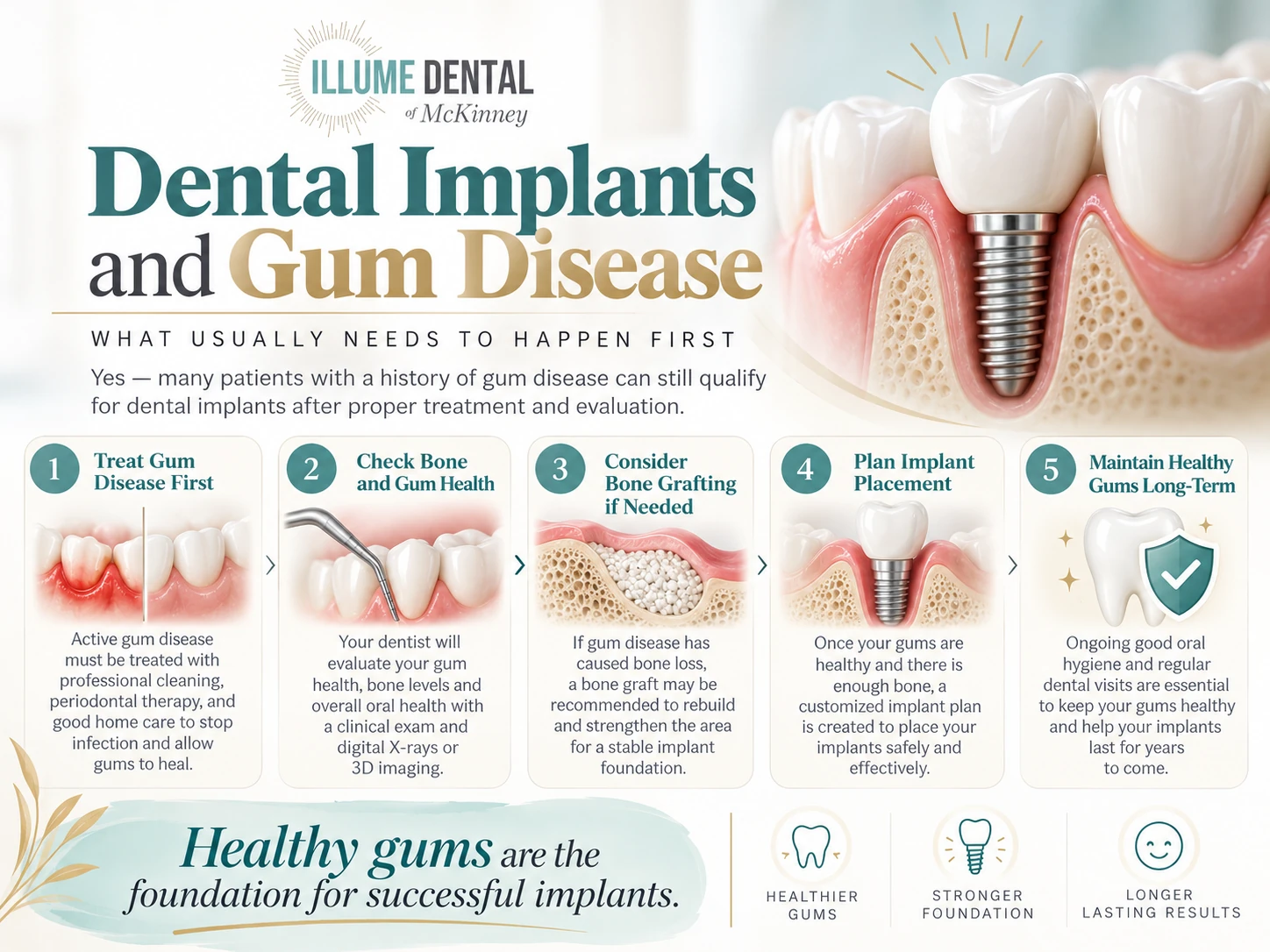
Yes, some people with a history of gum disease can receive dental implants, but active periodontal disease generally needs treatment and stabilization first. Previous gum disease does not automatically rule out implants, although it can increase the risk of future complications. Candidacy depends on your current gum health, available bone, medical history, and ability to maintain the restoration. An examination and appropriate imaging help your dental team determine whether implants are suitable and what preparation is needed before treatment.
Key Takeaways
- Active gum disease should be addressed before proceeding with implant treatment.
- Previous periodontitis can increase the risk of disease around implants.
- Bone loss may affect implant placement and make grafting necessary.
- Daily plaque control and ongoing professional maintenance remain essential.
- An implant replaces a missing tooth; it does not eliminate susceptibility to inflammatory disease.
What Does This Mean for Patients?
“Gum disease” includes conditions with different levels of severity.
Gingivitis involves inflammation of the gums without the supporting bone loss associated with periodontitis. Plaque-related gingivitis can often be reversed with effective cleaning and appropriate professional care.
Periodontitis affects the tissues supporting the teeth and can cause bone loss, looseness, and tooth loss. Treatment aims to control the disease and maintain stability.
For someone considering dental implants, the important distinction is whether disease is active or controlled. Previously treated periodontitis requires continued monitoring rather than being considered permanently resolved.
Why Does Gum Disease Affect Implant Planning?
Implants depend on supporting bone and healthy surrounding tissues. Periodontitis can reduce available bone, while a history of the disease is a recognized risk factor for peri-implant disease.
Two conditions can affect tissues around implants:
- Peri-implant mucositis: inflammation of the surrounding soft tissues without associated supporting bone loss.
- Peri-implantitis: inflammation accompanied by loss of supporting bone.
Implants cannot develop tooth decay, but they are still vulnerable to these inflammatory complications. Smoking, poor plaque control, and diabetes are additional factors your team may assess.
What Treatment May Be Needed Before Implants?
Your dentist or periodontist will assess the extent of disease and develop a treatment plan. This may include professional cleaning, scaling and root planing, improved home care, and, in more advanced cases, periodontal surgery.
After treatment, your team should reassess periodontal stability and your ability to control plaque. Completing a cleaning appointment alone does not establish readiness for implant placement.
If there is insufficient bone at a proposed implant site, bone grafting may be recommended. Grafting is not necessary for everyone, and it does not replace treatment of active gum disease. The sequence and timing depend on the individual case.
How Can You Protect Implants After Treatment?
Maintain a daily cleaning routine that reaches around the implants and beneath any connected restoration. Your dental team should demonstrate suitable tools and techniques for your replacement teeth.
Keep professional maintenance appointments even when the implants feel comfortable. An ongoing care program should include periodic assessment of the tissues around the implants, with treatment when inflammation is detected.
Tell your team about smoking, diabetes, medications, and changes in your health. These factors can influence treatment planning and healing.
When Should You See a Dentist?
Arrange an evaluation for bleeding gums, persistent bad breath, gum recession, swelling, or loose teeth. Gum disease can require care even when pain is mild or absent. Diagnosis involves examining the gums, measuring periodontal pockets, and assessing bone levels when indicated.
If an existing implant feels loose or painful, contact your dental provider promptly. Difficulty breathing or swallowing with significant mouth or neck swelling requires emergency assessment.
Questions to Ask at Your Visit
- Do I have gingivitis or periodontitis, and is it currently active?
- What treatment is needed before implant placement?
- How will you confirm that my periodontal condition is stable?
- Is there enough bone, or would grafting be necessary?
- How does my gum disease history affect implant risks?
- What cleaning and maintenance schedule should I follow?
How Illume Dental Can Help
Illume Dental of McKinney lists both gum disease treatment and dental implant services. An evaluation can help identify your current periodontal needs and the next steps for replacing missing teeth.
If you are considering dental implants with gum disease, contact Illume Dental to discuss your gum health, treatment history, and restoration goals.
Frequently Asked Questions
Does gum disease automatically disqualify me from implants?
No. Implants may be an option after appropriate treatment and assessment, provided the tissues and bone can support the planned restoration.
How long must I wait after gum disease treatment?
There is no universal waiting period. Your team must reassess disease control, healing, bone requirements, and the overall treatment plan.
Can gum disease affect implants after placement?
Yes. Inflammation can develop around implants, and peri-implantitis can damage their supporting bone. Previous periodontitis increases this risk.
Will removing affected teeth eliminate the risk?
No. Replacing teeth with implants does not remove the need for plaque control or ongoing care. A history of periodontitis remains relevant to long-term implant risk.