
What Can You Eat During Full-Arch Dental Implant Recovery?
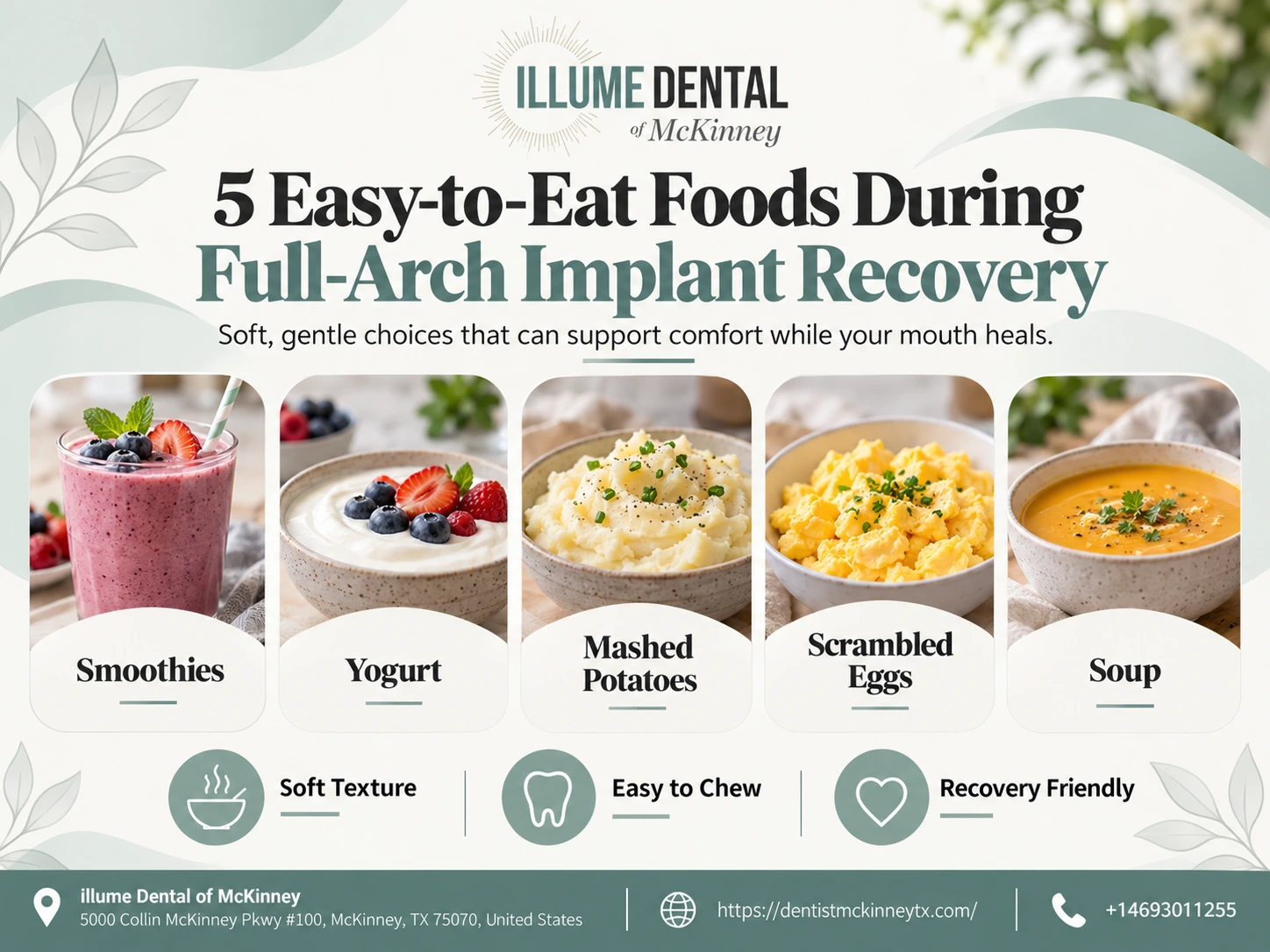
During full-arch dental implant recovery, choose foods that match your treating team’s instructions, usually starting with liquids, purees, or very soft foods. Yogurt, applesauce, smooth soups, and mashed potatoes are common early options. The goal is to maintain nutrition while protecting surgical tissues and limiting pressure on healing implants. Your diet may differ depending on extractions, bone grafting, implant stability, and the restoration provided. Follow your personalized restrictions rather than assuming that temporary replacement teeth are ready for normal chewing.
Key Takeaways
- Follow your team’s specific instructions about food texture and chewing.
- A soft diet and a no-chew diet are different; ask which applies to you.
- Choose nourishing foods that provide protein and enough calories.
- Return to firmer foods only when your treating team approves.
- Keep follow-up visits even when soreness has improved.
What Does This Mean for Patients?
Having a full arch of replacement teeth does not mean the implants have finished healing. The implants need time to integrate with the surrounding jawbone, a process called osseointegration. This deeper healing continues beyond the initial recovery of the gums.
Diet restrictions help avoid stressing the treatment area during healing. Illume Dental’s published full-arch aftercare instructions advise avoiding chewing on surgical sites until the dentist gives clearance.
If you have been instructed not to chew, select smooth foods that require no chewing. Foods described as “soft,” such as pasta or fish, may still require more chewing than your current plan permits.
Which Foods Can You Eat?
The following are examples to discuss with your treating team. Their suitability depends on your prescribed texture restrictions.
| Diet Instruction | Possible Food Choices | Preparation Tips |
| Liquids or smooth purees | Smooth yogurt, applesauce, blended soup, protein drinks | Remove lumps and follow temperature instructions |
| No-chew meals | Smooth mashed potatoes, pureed vegetables, blended beans, smooth custard | Blend thoroughly; add suitable liquid or sauce when needed |
| Soft foods, once chewing is allowed | Scrambled eggs, soft tofu, well-cooked pasta, tender flaked fish | Keep foods moist and avoid crusts or crisp coatings |
| Broader diet after clearance | Gradually reintroduced foods approved by your dentist | Follow the team’s guidance about biting and chewing |
These examples reflect oral-surgery nutrition guidance. They are not a timetable for advancing your diet.
Include protein sources such as yogurt, eggs, tofu, or appropriately prepared beans. Protein supports tissue repair. If your appetite is poor, smaller, more frequent meals may help you maintain intake.
Which Foods and Drinks Should You Avoid?
During the restricted phase, avoid foods that require forceful biting or chewing. Examples include nuts, chips, hard bread crusts, raw carrots, chewy meat, and sticky candy.
Illume Dental advises avoiding hard, hot, and spicy foods early after full-arch surgery. Broader implant aftercare guidance also advises avoiding straws immediately after surgery and avoiding alcohol during early healing. Follow the duration specified in your own instructions.
Allow soups and drinks to cool before consuming them. A food can have an appropriate texture but still be too hot for the surgical area.
What Should You Expect During the Process?
Your team should explain when to start eating, whether chewing is permitted, and when food textures can change. There is no single recovery menu or schedule that fits every full-arch procedure. Nutrition needs and restrictions vary with the extent of surgery and its effect on oral function.
As soreness improves, continue following the prescribed diet. Implant integration can take several months or longer, although that does not mean everyone needs the same dietary restrictions for that entire period.
Keep scheduled reviews so your team can assess healing and the restoration before approving changes.
When Should You Contact Your Dental Team?
Contact your treating office promptly for:
- Severe or worsening pain.
- Swelling is increasing rather than settling, especially with fever.
- Heavy bleeding or bleeding that does not stop with the measures provided.
- An implant or restoration that feels loose or damaged.
Difficulty breathing or swallowing, particularly with increasing mouth or neck swelling, requires immediate emergency assessment.
Questions to Ask at Your Visit
- Am I following a liquid, pureed, no-chew, or soft-food diet?
- Which foods are suitable for my temporary restoration?
- When can I start chewing or introduce firmer textures?
- How should I clean my mouth after meals?
- What should I do if I cannot eat or drink enough?
- Which symptoms require an urgent call?
How Illume Dental Can Help
Illume Dental of McKinney publishes full-arch dental implant aftercare instructions covering diet, chewing restrictions, hygiene, and follow-up care.
If Illume Dental is managing your treatment, contact the team for clarification before changing your recovery diet. Ask for specific guidance that matches your surgery and restoration.
Frequently Asked Questions
How long will I need a soft diet?
It varies. Your treating team should specify the duration and review your progress before approving normal chewing. Do not use a general online schedule as clearance.
Can I eat normally if my temporary teeth feel secure?
Not necessarily. Temporary teeth can be provided while implants are still integrating with bone. Continue following your chewing restrictions.
Are scrambled eggs and pasta suitable immediately?
They may fit a soft-food diet, but they still require some chewing. If your instructions require liquids or purees, wait until your team approves these textures.
Can I drink smoothies or protein shakes?
These may help maintain nutrition when their texture matches your instructions. Avoid straws during the period specified by your surgical team.