Inlays/Onlays vs. Traditional Crowns: Saving Your Natural Tooth Structure
Inlays and onlays vs traditional crowns is an important comparison for patients who want to repair damaged teeth while preserving as much healthy natural tooth structure as possible. Inlays restore damage within a tooth’s chewing surface, onlays cover one or more weakened cusps, and traditional crowns cover nearly the entire visible tooth. The best option depends on how much tooth structure remains and how much protection the tooth needs.
For patients in McKinney, TX, choosing a dental restoration does not have to mean automatically selecting the biggest option available. At Illume Dental of McKinney, Dr. Eileen Chen-Mizuuchi and the dental team emphasize individualized restorative treatment. Understanding the differences between fillings, inlays, onlays, and crowns can help patients ask better questions and make informed decisions about protecting their natural teeth.
Not Every Damaged Tooth Needs a Full Dental Makeover
Imagine a homeowner discovering that one section of a wooden floor has been damaged.
Would replacing every floorboard in the house make sense?
Probably not, especially when most of the floor remains in excellent condition.
Dental restorations involve a similar principle.
When a tooth develops decay, fractures, or damage around an existing filling, the dentist must determine which parts require treatment and which healthy structures can remain.
Sometimes, a small filling is sufficient.
Other situations require a restoration that protects one or more weakened cusps.
And when a tooth is extensively damaged, a traditional crown may provide the more predictable solution.
The challenge is finding the right balance.
Removing too much healthy tooth structure is irreversible. However, leaving dangerously weakened tooth structure unsupported may increase the risk of fracture.
That is why inlays and onlays vs traditional crowns should be evaluated according to the condition of each tooth rather than a general preference for smaller or larger restorations.
The goal is not simply to use less dental material.
It is to preserve healthy natural tissue while restoring comfortable chewing and appropriate function.
Inlays, Onlays, and Crowns: Three Restorations With Different Jobs
Before comparing advantages, patients need to understand how these restorations differ.
Although all three can repair damaged teeth, they do not cover the same amount of tooth structure.
What Is a Dental Inlay?
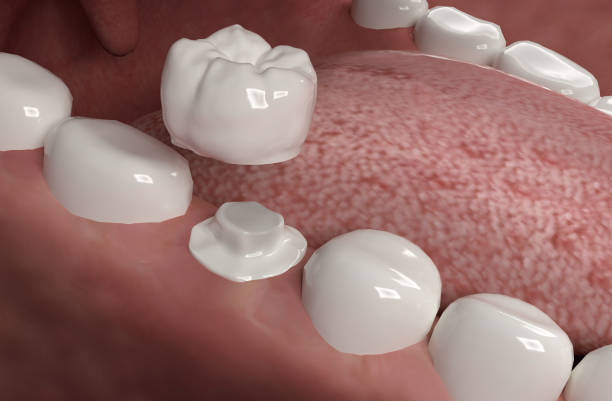
A dental inlay is a custom-made restoration placed within the chewing surface of a tooth.
It fits between the cusps, which are the raised points found on the chewing surfaces of back teeth.
An inlay replaces damaged or missing tooth structure without covering those cusps.
It may be considered when the central portion of a tooth requires restoration but the surrounding structure remains sufficiently strong.
What Is a Dental Onlay?
An onlay covers a larger area.
It restores damaged tooth structure and extends over one or more cusps.
This provides additional protection for areas that might otherwise be vulnerable to fracture.
Onlays are sometimes called partial crowns because they cover selected portions of the tooth without necessarily surrounding the entire visible crown.
What Is a Traditional Dental Crown?
A traditional crown is a restoration that fits over the prepared visible portion of a tooth.
The dentist usually reshapes the tooth around its circumference to create room for the crown.
Full crowns are commonly used when extensive decay, fractures, large restorations, or other problems have weakened substantial portions of the tooth.
How Much Tooth Structure Is Covered?
| Restoration | Coverage | Common consideration |
| Filling | Repairs a localized defect directly | Smaller areas of decay or damage |
| Inlay | Fits between the tooth’s cusps | Internal damage with strong surrounding cusps |
| Onlay | Covers one or more cusps | Larger damage requiring selected cusp protection |
| Traditional crown | Covers most of the visible tooth | Extensive structural weakness or damage |
These descriptions are general.
A dentist must examine the specific tooth before deciding which restoration is appropriate.
Why Natural Tooth Structure Is Worth Protecting
Natural enamel and dentin are remarkable biological materials.
They allow teeth to withstand everyday chewing while maintaining a complex relationship with the surrounding tissues.
Dental restorations can repair damage effectively, but they cannot regenerate natural enamel that has been removed.
Enamel Does Not Grow Back
Once enamel is physically lost through fracture, wear, or tooth preparation, the body does not replace it naturally.
Early mineral loss may undergo remineralization, but missing tooth structure does not regenerate.
This makes preserving healthy enamel an important consideration during restorative treatment.
Healthy Tooth Structure Supports Future Options
A restoration may function successfully for many years.
However, no dental restoration is guaranteed to last a lifetime.
If treatment is needed again later, the amount of remaining healthy tooth structure can affect which options are available.
Preserving usable tooth structure today may help maintain future restorative choices.
Less Drilling Is Not Always Better
This is where the comparison becomes interesting.
An onlay might preserve more natural tooth structure than a full crown.
However, if the remaining tooth walls are already severely weakened, preserving them may not provide a predictable result.
A full crown may be the more appropriate choice when broader protection is necessary.
Conservative Dentistry Is About Appropriate Treatment
Conservative restorative dentistry aims to preserve healthy tissues while treating disease and structural problems effectively.
It does not mean avoiding all tooth preparation.
Instead, it involves selecting a restoration that provides sufficient protection without removing unnecessary healthy structure.
For patients comparing inlays and onlays vs traditional crowns, that distinction matters more than the size of the restoration alone.
Dental Inlays: A Precision Repair for the Middle of a Tooth
An inlay can be useful when a back tooth has damage within the boundaries of its chewing surface.
Think of it as a carefully fitted replacement piece designed for a specific area.
When Might an Inlay Be Appropriate?
A dentist may consider an inlay when:
- An existing filling needs replacement.
- The damaged area extends across part of the chewing surface.
- The surrounding cusps remain strong.
- The tooth has sufficient healthy structure to support the restoration.
- An indirect restoration offers an appropriate alternative to a direct filling.
How Is an Inlay Different From a Filling?
A traditional composite filling is commonly placed and shaped directly inside the tooth.
An inlay is fabricated outside the mouth, either by a dental laboratory or through a digital manufacturing process.
It is then bonded or cemented into place.
Are Inlays Always Better Than Fillings?
No.
Modern composite fillings can restore many defects effectively.
An inlay may add expense and laboratory or manufacturing steps without providing a meaningful advantage for every tooth.
When a direct filling can reliably restore the damage, it may be the more practical option.
Can Inlays Protect Weak Cusps?
An inlay does not normally cover the cusps.
If a cusp is significantly weakened, an onlay or another restoration may offer more appropriate protection.
This is why the choice should reflect the tooth’s structural needs.
Dental Onlays: The Middle Ground Between Fillings and Crowns
An onlay often enters the conversation when a tooth has too much damage for a straightforward filling but still retains healthy portions worth preserving.
It can rebuild the affected area while covering selected cusps.
Why Cusps Matter
The cusps of molars and premolars experience significant forces during chewing.
When decay or a large filling weakens a cusp, that portion of the tooth may be more vulnerable to fracture.
An onlay can cover the compromised cusp and distribute biting forces across the restoration.
A Common Example
Consider a molar with a large filling and one weakened cusp.
If the other cusps remain structurally sound, a dentist may consider an onlay that covers the affected portion.
A full crown might also provide protection, but it may require additional preparation around healthy parts of the tooth.
Does an Onlay Always Preserve More Tooth?
Often, yes.
Partial-coverage restorations are designed to treat selected areas rather than cover the entire visible tooth.
However, the actual amount of tooth preparation depends on the defect, material, and restoration design.
What Makes Onlays More Complex?
An onlay must fit the remaining tooth accurately and function under chewing forces.
Its success depends on appropriate preparation, bonding or cementation, material choice, and bite management.
Are Onlays a Temporary Alternative?
No.
Onlays are definitive restorations that can function for many years when appropriately selected and maintained.
They are not simply temporary crowns.
However, their lifespan varies, and they may eventually require repair or replacement.
Traditional Crowns: When Full Coverage Is the Smarter Move
It is easy to make crowns sound like the villain in a discussion about preserving teeth.
But full crowns remain an important restorative option.
For extensively damaged teeth, broader coverage may be necessary.
Large Areas of Tooth Loss
A tooth with extensive decay or a large failed restoration may have limited remaining natural structure.
A crown may help restore function and protect the remaining tooth.
Multiple Weak Cusps
If several cusps are cracked or compromised, partial coverage may not provide sufficient protection.
A full crown may be more appropriate.
Certain Cracked Teeth
Cracked teeth require careful evaluation.
Some fractured cusps can be managed with an onlay.
Other cracks may require full coverage.
And certain cracks extend so deeply that neither restoration can predictably save the tooth.
Teeth With Existing Full Crowns
If a tooth has already been prepared for a full crown, replacing it with an onlay usually cannot restore the natural structure removed during the original treatment.
The existing preparation affects future options.
Restorations Supporting Dental Bridges
Traditional crowns can serve as supporting components of certain dental bridges.
An inlay or onlay is not necessarily a direct substitute in these situations.
The Key Question
A crown is not automatically excessive treatment.
It becomes appropriate when the tooth needs the coverage and support it can provide.
The goal is choosing the restoration that protects the remaining tooth predictably.
Inlays and Onlays vs Traditional Crowns: Which Preserves More Tooth?
One of the biggest differences between partial-coverage restorations and full crowns involves tooth preparation.
A traditional crown usually requires reduction around the tooth.
An inlay or onlay may allow the dentist to preserve more of the unaffected surfaces.
However, that advantage depends on how much healthy tooth remains.
Comparing Preparation
An inlay typically requires preparation within the cusps.
An onlay extends across selected cusps.
A crown generally involves preparation around the visible tooth to create space for the restoration.
Why Preparation Cannot Be Reversed
Once natural tooth structure is removed, it cannot simply be placed back.
Future restorations must work with the structure that remains.
Does Greater Preservation Guarantee Better Results?
No.
Preserving additional tissue is beneficial only when that tissue is strong enough to support the restoration.
If an onlay leaves a vulnerable cusp unprotected, the tooth may develop a fracture.
A Better Way to Compare Treatment
Instead of asking which restoration requires the least drilling, patients can ask:
Which option preserves the most healthy tooth structure while providing enough protection for this particular tooth?
That question reflects the real purpose of conservative dentistry.
The Cracked Molar Dilemma: Small Repair or Full Protection?
Cracked molars are a common reason patients need more than an ordinary filling.
However, not all cracks have the same severity.
A Small Fractured Cusp
If the damage is limited to one cusp and sufficient healthy tooth remains, an onlay may be considered.
A Crack Involving Several Tooth Walls
When multiple areas are weakened, a crown may provide broader coverage.
A Crack Extending Toward the Root
Some cracks extend below the gumline or into the root.
These situations can have a poorer prognosis.
A crown does not automatically make a severely cracked tooth restorable.
Why Diagnosis Matters
The dentist may use clinical examination, bite testing, imaging, or other methods to evaluate the tooth.
Some cracks are difficult to identify.
What Patients Should Avoid
Patients should not continue chewing hard foods on a tooth that causes sharp pain when biting.
A professional examination can determine whether restoration or another treatment is appropriate.
Old, Large Fillings: When a Simple Replacement Is No Longer Enough
A filling that has served a tooth for years may eventually need attention.
Sometimes it develops recurrent decay.
Other times, the surrounding tooth structure becomes fractured or weakened.
Why Large Fillings Can Create Structural Challenges
A large filling replaces a substantial portion of the original tooth.
The remaining walls may be thinner than they were before treatment.
Can the Filling Simply Be Replaced?
Sometimes.
If enough healthy tooth structure remains, another filling may be appropriate.
When an Onlay Becomes Useful
An onlay may be considered when one or more cusps require additional protection.
It can restore the damaged area while preserving other healthy portions.
When a Crown May Be Necessary
If most of the visible tooth has been lost or several walls are compromised, a full crown may be more predictable.
Why There Is No Universal Size Rule
A dentist cannot determine the ideal restoration using cavity size alone.
The position of the defect, remaining enamel, crack patterns, bite forces, and material choice all matter.
That is why inlays and onlays vs traditional crowns is ultimately a clinical decision, not a simple measurement contest.

What If the Tooth Has Already Had a Root Canal?
Root canal treatment removes damaged or infected pulp tissue from inside a tooth.
Afterward, the tooth often requires a final restoration.
For many years, full crowns have been commonly recommended for back teeth after root canal treatment.
However, partial-coverage restorations may be appropriate for selected cases.
Remaining Tooth Structure Matters
The most important consideration is how much healthy teeth remain.
A root-canal-treated tooth with substantial remaining walls may have different restorative needs from one with extensive structural loss.
Can an Onlay Protect a Root-Canal-Treated Tooth?
Yes, in certain situations.
An onlay may provide cuspal coverage while preserving suitable natural tooth structure.
Clinical research supports partial-coverage restorations as a legitimate option for appropriately selected teeth.
However, long-term outcomes depend on several factors.
When Is a Crown Better?
A crown may be recommended when extensive damage, cracks, or missing tooth walls require broader coverage.
Does a Root Canal Automatically Mean a Crown?
Not always.
The dentist must evaluate the remaining structure and the forces the tooth will experience.
The most appropriate restoration should be chosen based on the individual tooth rather than the treatment history alone.
Porcelain, Zirconia, and Gold: Does Material Change the Decision?
The material used for a restoration can influence its appearance, thickness requirements, preparation, and performance.
Inlays, onlays, and crowns can be fabricated from several different materials.
Ceramic Restorations
Dental ceramics can provide tooth-colored restorations that blend with surrounding teeth.
However, different ceramics have different strength and bonding characteristics.
Zirconia
Zirconia is a strong ceramic used in many crowns and selected indirect restorations.
Its suitability depends on the restoration design, available space, and clinical situation.
Gold Alloys
Gold restorations have a long history in restorative dentistry.
They can provide favorable wear characteristics and may be appropriate for selected back teeth.
However, their metallic appearance is not preferred by every patient.
Indirect Composite Resin
Certain inlays and onlays may be made from composite materials.
These can offer aesthetic advantages and different repair characteristics.
However, material performance varies.
Is One Material Always the Best?
No.
A restoration appropriate for a back molar exposed to substantial chewing forces may differ from one used on a more visible tooth.
Patients should ask why a material is recommended instead of assuming the most expensive or newest option is automatically superior.
Does Getting an Onlay Hurt Less Than Getting a Crown?
Both procedures commonly involve local anesthesia to keep patients comfortable during tooth preparation.
The actual experience depends on the tooth’s condition and the treatment required.
The Examination Comes First
The dentist evaluates the damaged tooth and determines what preparation is necessary.
Tooth Preparation
Damaged tooth structure is removed, and the remaining tooth is shaped for the selected restoration.
An onlay may require less extensive preparation than a full crown, but that does not guarantee a shorter or more comfortable appointment.
Digital Scanning or Impressions
The dentist records the prepared tooth and surrounding bite relationship.
These details help create a restoration that fits properly.
Fabrication
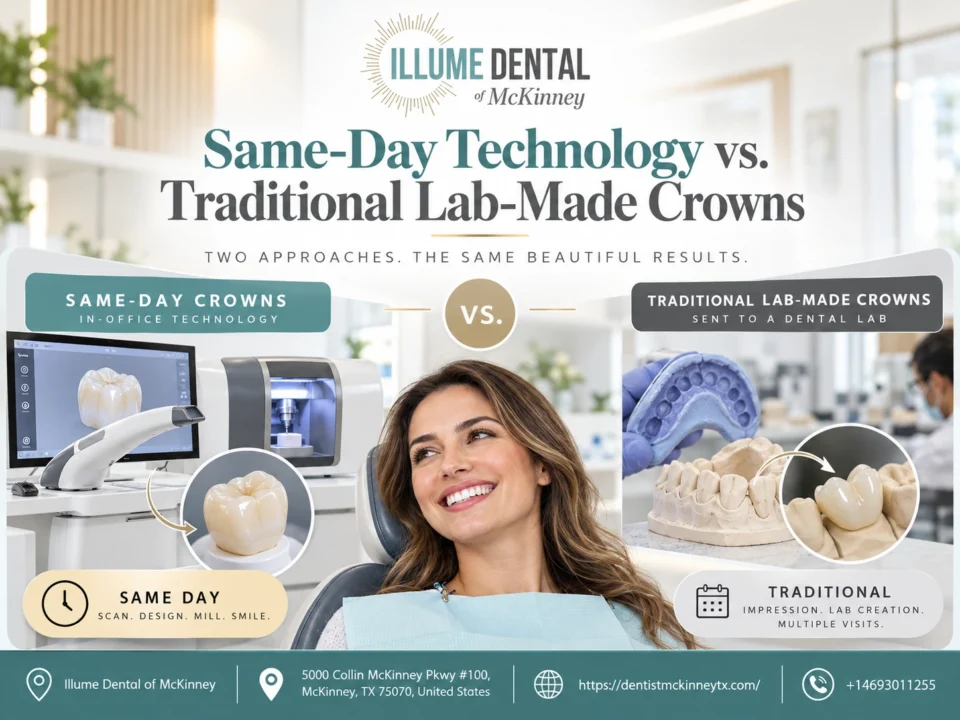
Some restorations are made through a laboratory process, while others may be fabricated using appropriate chairside technology.
Availability depends on the practice.
Placement
The restoration is checked for fit, contacts, and bite relationship before final attachment.
Aftercare
Some temporary sensitivity may occur after treatment.
Patients should contact their dentist if pain becomes severe, the bite feels uneven, or discomfort persists.
The procedure should be explained according to the actual treatment plan rather than assuming that partial coverage always means an easier appointment.
Which Restoration Lasts Longer?
Patients comparing inlays and onlays vs traditional crowns naturally want to know which option will last the longest.
Unfortunately, there is no universal winner.
Both partial-coverage restorations and crowns can perform well over time when appropriately selected.
Crown Longevity
Many crowns function for years, sometimes well beyond a decade.
However, their lifespan depends on oral hygiene, materials, tooth condition, and biting forces.
Inlay and Onlay Longevity
Inlays and onlays can also provide long-term service.
Modern bonding techniques and restorative materials have made them established options for selected teeth.
What Research Suggests
Systematic reviews have reported favorable survival rates for both partial-coverage restorations and crowns.
However, studies differ in materials, patient populations, follow-up periods, and clinical methods.
These differences make it difficult to claim that one restoration consistently outlasts the other.
What Can Shorten Restoration Lifespan?
Several factors may contribute:
- New tooth decay.
- Teeth grinding.
- Excessive biting forces.
- Poor oral hygiene.
- Dental trauma.
- Material fracture.
- Problems involving the underlying tooth.
Why Follow-Up Matters
Routine dental examinations allow dentists to assess restoration condition and surrounding tooth health.
A restoration does not automatically need replacement simply because it has reached a particular age.
The Teeth-Grinding Plot Twist: When Bite Forces Change Everything
A patient may have enough healthy tooth structure for an onlay but also experience substantial nighttime grinding.
That combination requires careful consideration.
Bruxism Places Pressure on Teeth
Teeth grinding and clenching can contribute to wear, fractures, and restoration damage.
Does Grinding Rule Out Onlays?
Not automatically.
The dentist may consider the tooth’s condition, restoration material, cusp coverage, and bite pattern.
Are Crowns Immune to Grinding?
No.
Full crowns can also chip, fracture, wear, or develop complications under excessive forces.
Could a Night Guard Help?
A protective night guard may be recommended for certain patients.
It can help protect teeth and restorations from some grinding-related damage.
However, it does not necessarily eliminate the grinding habit.
Why Treatment Planning Matters
The restoration must work with the patient’s actual bite.
Selecting a larger crown simply because grinding is present is not always necessary.
Likewise, choosing a smaller onlay without considering substantial biting forces may be inappropriate.
Are Inlays and Onlays Cheaper Than Traditional Crowns?
Patients often assume that a smaller restoration must cost less.
However, this is not always true.
Inlays and onlays can involve detailed fabrication, material selection, and bonding procedures.
Their fees may sometimes be comparable to crown treatment.
What Affects the Cost?
Pricing may depend on:
- Restoration material.
- Tooth location.
- Size and complexity of damage.
- Fabrication process.
- Additional procedures required.
- Dental insurance benefits.
- Individual treatment circumstances.
Can Insurance Cover Partial-Coverage Restorations?
Some dental insurance plans provide benefits for inlays or onlays.
However, certain plans may reimburse them differently from crowns or fillings.
Patients should request a benefits estimate rather than assuming full coverage.
What About the Long-Term Cost?
Preserving healthy tooth structure may offer future restorative advantages.
However, an onlay is not automatically the less expensive lifetime choice.
If it is inappropriate for a severely weakened tooth, a later fracture could create additional costs.
Illume Dental’s Published Crown Pricing
Illume Dental of McKinney currently publishes a reference price of $1,701 for dental crowns, while noting that prices can change according to patient needs.
This does not establish an inlay or onlay fee.
Patients interested in partial-coverage restorations should request an individualized evaluation and pricing information.
The goal is to compare appropriate treatments, not simply choose whichever estimate is lowest.
Five Questions That Make a Restorative Consultation More Useful
Patients do not need to arrive at a dental appointment knowing whether they require an inlay, onlay, or crown.
However, asking specific questions can make the recommendation easier to understand.
1. How Much Healthy Tooth Structure Remains?
The dentist should explain which portions are damaged and which remain suitable for preservation.
2. Are Any Cusps Weakened?
Cuspal strength can influence whether an inlay, onlay, or crown is appropriate.
3. Could Direct Filling Still Work?
Some teeth can be restored successfully with a filling.
A larger indirect restoration is not always necessary.
4. What Are the Risks of Choosing a Smaller Restoration?
Patients should understand whether preserving additional tooth structure might leave weakened areas vulnerable to fracture.
5. How Will the Restoration Affect Future Treatment Options?
No restoration lasts forever.
Patients can ask how the chosen treatment may influence future repairs or replacement.
A clear consultation should explain the reasoning behind the recommendation, not simply identify the most expensive or least invasive option.
McKinney’s Tooth-Saving Decision: Small Repair or Full Coverage?
For patients in McKinney, TX, restorative dentistry is about more than repairing visible damage.
It involves protecting the remaining natural tooth while restoring comfortable chewing and function.
At Illume Dental of McKinney, Dr. Eileen Chen-Mizuuchi and the dental team provide individualized restorative care, including fillings and dental crowns.
The practice’s published discussion of inlays, onlays, and traditional crowns also emphasizes that partial-coverage restorations may be appropriate for selected teeth when sufficient sound structure remains.
Evaluating the Tooth’s Condition
A dental examination can help determine whether a damaged tooth needs a filling, partial-coverage restoration, or crown.
Considering Structural Support
The dentist evaluates existing restorations, cracks, weakened cusps, and remaining tooth walls.
Discussing Treatment Alternatives
Patients can ask whether a smaller restoration could provide adequate protection or whether broader coverage is recommended.
Reviewing Material Options
The clinical situation and patient’s preferences help guide material selection.
Understanding Long-Term Care
All restorations require appropriate brushing, interdental cleaning, and professional monitoring.
Patients can learn more about the practice’s Dental Crown Services and broader Restorative Dentistry services.
The right treatment should balance preservation, structural protection, and realistic long-term expectations.
FAQs: Inlays, Onlays, and Traditional Crowns
Are inlays and onlays better than dental crowns?
Not always. Inlays and onlays may preserve more natural tooth structure, but full crowns can be more appropriate for extensively damaged teeth.
Does an onlay require less drilling than a crown?
Often, yes. An onlay generally covers selected damaged areas rather than the entire visible tooth. The exact amount of preparation depends on the tooth and material.
How is an inlay different from an onlay?
An inlay fits between the tooth’s cusps, while an onlay extends over one or more cusps to provide additional coverage.
Can an onlay protect a cracked tooth?
Sometimes. An onlay may protect a weakened cusp, but extensive or deep cracks may require a crown or another treatment.
Are dental onlays as strong as crowns?
Appropriately designed onlays can function successfully under normal chewing forces. However, their suitability depends on remaining tooth structure, material, bonding, and bite conditions.
Can an onlay be used after root canal treatment?
Yes, for selected teeth with sufficient remaining structure. Other root-canal-treated teeth may need full crowns for more extensive protection.
Are onlays always cheaper than crowns?
No. The cost depends on materials, fabrication, clinical complexity, and insurance benefits. A partial-coverage restoration is not automatically less expensive.
How long do inlays and onlays last?
They can function for many years, but longevity varies. Oral hygiene, material, tooth condition, and biting forces affect their lifespan.
Can a filling be replaced with an inlay?
Yes, in certain situations. However, another direct filling or an onlay may be more appropriate depending on the amount of remaining tooth structure.
Does choosing a crown mean too much tooth will be removed?
Not necessarily. A crown may require more preparation than a partial restoration, but it can be the appropriate choice when extensive protection is needed.
Save the Tooth, Not Just the Appointment: Explore Restorative Options at Illume Dental
A damaged tooth does not always need the largest restoration available.
Sometimes, a filling can repair the problem.
Other times, an inlay or onlay may provide sufficient protection while preserving healthy enamel and dentin.
And when significant structural damage is present, a traditional crown may offer the more appropriate solution.
At Illume Dental of McKinney, Dr. Eileen Chen-Mizuuchi and the dental team help patients understand their restorative options through individualized examinations and treatment recommendations.
The practice focuses on evaluating the condition of each tooth rather than assuming every large filling or damaged molar automatically requires the same treatment.
Patients who have been told they need a crown can ask whether a partial-coverage restoration is appropriate.
Those experiencing a fractured filling, tooth sensitivity, or discomfort while chewing can also schedule an evaluation to determine what treatment may be needed.
The most important consideration is choosing a restoration that preserves healthy natural tooth structure while adequately protecting what remains.
This article is for general education and does not replace a dental exam or personalized advice. Treatment recommendations depend on your health history and a clinical evaluation. To discuss your situation, contact Illume Dental of McKinney to schedule a visit.