Gum Contouring vs. Crown Lengthening: What’s the Difference?
Key Takeaways
- Cosmetic treatments work differently on natural enamel and existing restorations.
- The best sequence depends on your bite, tooth condition, and the final shade or shape you want.
- A dentist can help avoid mismatched shades or unnecessary treatment.
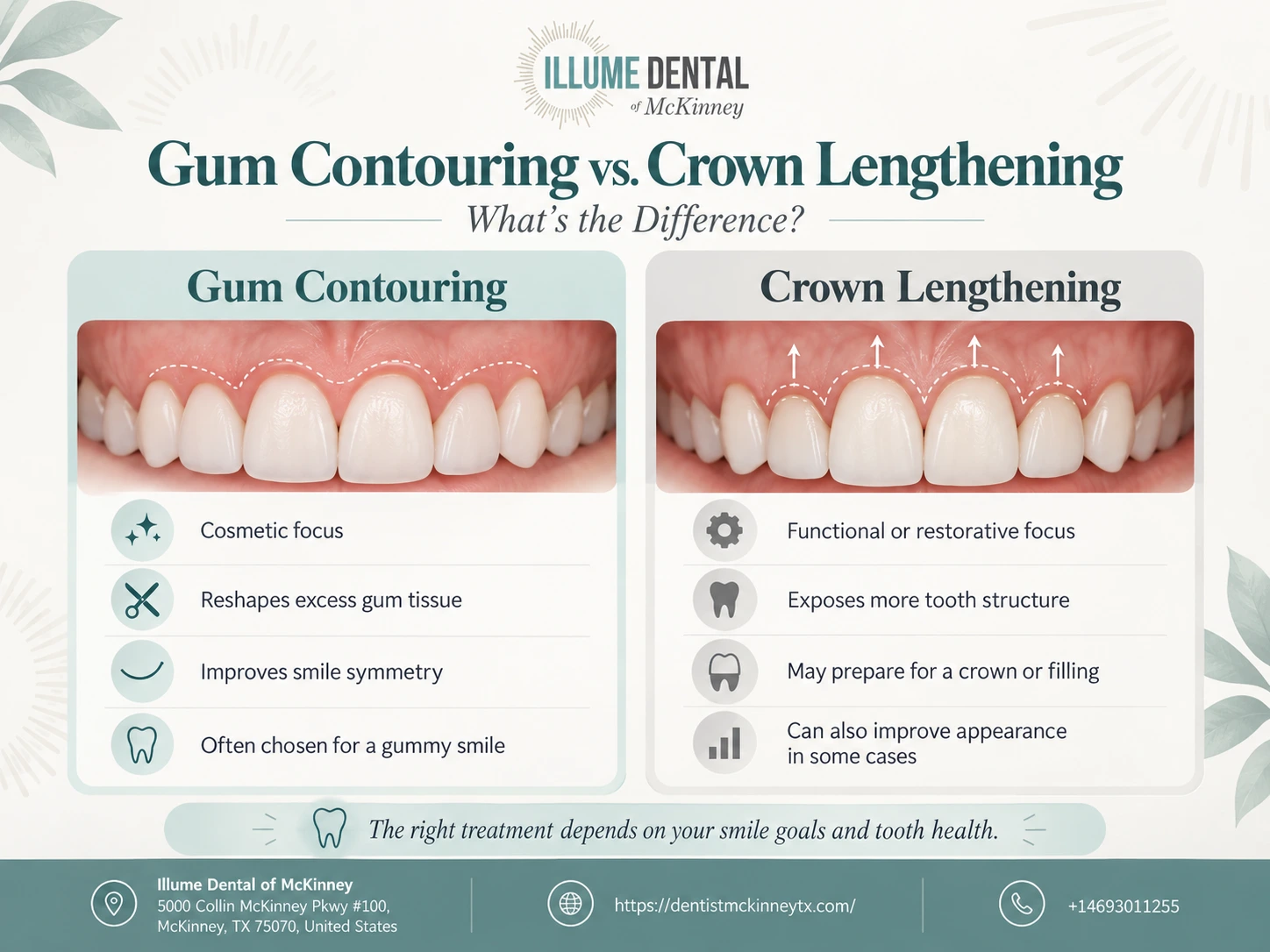
Gum contouring and crown lengthening both reshape gum tissue, but they are performed for different reasons. Cosmetic contouring typically changes the gumline to improve tooth proportions or symmetry. Crown lengthening may remove gum tissue and sometimes bone to expose more tooth structure for a restoration or to address specific functional needs.
What does this mean for patients?
The practical question is not simply whether a treatment or symptom fits a label. It is how the finding affects comfort, function, long-term oral health, and the next decision. A dentist can combine your history with an examination and, when appropriate, dental imaging to identify what is actually happening.
How do the options differ?
| Question | Option 1 | Option 2 |
| Main goal | Preserve or restore function using the first approach | Use the alternative approach when its indications fit better |
| Treatment planning | Depends on anatomy, health, bite, and goals | Depends on the same clinical factors, but with different tradeoffs |
| Best choice | Not determined by a single keyword or symptom | Requires an exam and individualized recommendation |
A comparison is useful for understanding tradeoffs, but it cannot replace diagnosis. The condition of the teeth and supporting tissues often determines which options are realistically available.
When should you see a dentist?
Schedule an evaluation when the issue is persistent, recurring, worsening, or affecting chewing, speaking, sleep, or confidence. More urgent assessment is appropriate for significant facial swelling, fever with dental symptoms, trauma, uncontrolled bleeding, difficulty swallowing or breathing, or rapidly increasing pain.
Questions to ask at your visit
- What is the most likely cause in my case?
- Are there alternatives, and what are the tradeoffs?
- What should I expect during treatment and recovery?
- How will this affect my existing dental work or bite?
- What maintenance will help protect the result long term?
How Illume Dental Can Help You Choose the Right Treatment
If you are comparing gum contouring and crown lengthening, a dental evaluation can help you understand which procedure best addresses your concerns. Your dentist can assess your gum tissue, tooth structure, gum health, and cosmetic goals before discussing suitable treatment options.
Your treatment plan should consider your oral health, desired results, and whether the procedure is needed for cosmetic or restorative purposes.
Frequently Asked Questions
Can this be diagnosed from symptoms alone?
Usually not. Symptoms can overlap across several dental conditions, so an examination is often needed to identify the cause and appropriate treatment.
Should I wait if the problem is not painful?
Pain is not the only sign that care may be needed. Bleeding, looseness, swelling, changes in fit, persistent odor, or functional problems can justify an evaluation even without significant pain.
Will everyone need the same treatment?
No. Dental treatment is individualized based on diagnosis, anatomy, health history, existing restorations, bite, and personal goals.