Why “Cheap Crowns” From Discount Clinics End Up Costing You 3x More
Cheap dental crowns can look like an excellent deal until unexpected repairs, replacement appointments, and additional dental treatment increase the final bill. A low initial price does not automatically mean a crown is poorly made, but an inadequate fit, untreated decay, or an incomplete treatment plan can create expensive complications. In some situations, the combined cost of correcting problems may reach three times the original price or more.
For patients in McKinney, TX, comparing dental crown prices should involve more than finding the smallest number on a website. At Illume Dental of McKinney, Dr. Chen and the dental team emphasize individualized restorative care, material selection, and clear treatment planning. Understanding what makes a crown reliable can help patients choose an option that supports their teeth and their budget over time.
The $500 Crown That Turned Into a $1,500 Problem
Imagine finding an advertisement for a dental crown priced at $500.
Compared with an estimate of $1,500 or more from another dental office, the discount looks impressive.
The patient might start calculating everything that could be purchased with the savings.
A weekend getaway? New furniture? Several months of groceries?
Unfortunately, dental restorations are not always as simple as buying two versions of the same product.
A crown is a custom-made restoration that must fit the prepared tooth, interact properly with neighboring teeth, and function within the patient’s bite.
If problems develop, the original savings can disappear.
A Hypothetical Crown Cost Breakdown
Consider this illustrative scenario:
| Expense | Amount |
| Initial discounted crown | $500 |
| Evaluation and diagnostic imaging after complications | $150 |
| Removal and replacement of the unsuccessful crown | $850 |
| Total spent | $1,500 |
The patient has now spent three times the original $500 price.
And the total could increase further if the underlying tooth requires additional treatment.
Important: This is a hypothetical example showing how costs can accumulate. It is not evidence that discount-clinic crowns typically fail or cost three times more. Many lower-priced crowns function well, and expensive crowns can also develop complications.
The useful lesson is that the advertised price and the eventual cost of treatment are not always the same thing.
Why Cheap Dental Crowns Can Be Tempting
Dental crowns represent a meaningful expense for many families.
When a patient needs to restore a cracked tooth, protect a weakened molar, or address extensive decay, the procedure may not have been included in the monthly budget.
Finding cheap dental crowns can therefore feel like a practical solution.
The Appeal of a Lower Upfront Price
A lower quoted fee can make treatment seem more accessible.
For uninsured patients or those with limited remaining insurance benefits, the difference between estimates may be substantial.
There is nothing wrong with comparing prices or asking about affordable treatment options.
The important question is whether the estimates cover equivalent care.
Not Every Discount Clinic Provides Poor Treatment
A practice may charge less because of lower overhead, a negotiated laboratory rate, a temporary promotion, or a different business model.
A lower fee alone does not establish that the crown is inferior.
Similarly, a higher fee does not automatically guarantee excellent results.
The quality of care depends on clinical assessment, treatment planning, preparation, materials, fabrication, and follow-up.
Why Dental Crown Quotes Can Be Misleading
Two offices may advertise the same general service while including different items in their estimates.
One price might cover the crown only.
Another may include certain diagnostic or placement services.
Additional treatment, such as a core buildup, may be necessary depending on the condition of the tooth.
Patients should compare complete written treatment plans rather than isolated promotional prices.
The Crown Itself Is Only Part of What Patients Pay For
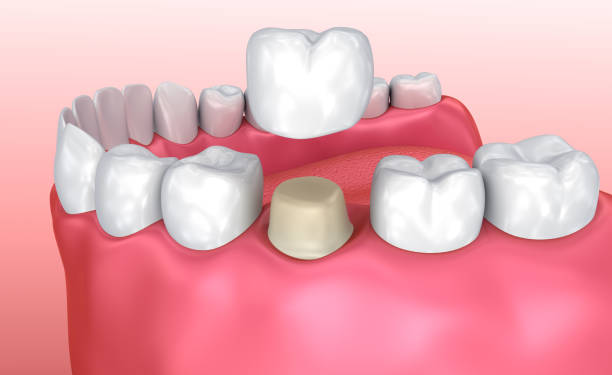
A dental crown is a protective restoration that covers the visible portion of a prepared tooth.
However, the success of crown treatment depends on much more than the material patients eventually see in their smiles.
Examination and Diagnosis
Before placing a crown, a dentist should evaluate the tooth and surrounding tissues.
This may involve checking for decay, cracks, gum disease, infection, or damage to existing restorations.
Dental imaging may be recommended when clinically appropriate.
Tooth Preparation
A tooth usually requires reshaping so the crown can fit properly.
The dentist must preserve sufficient tooth structure while creating appropriate space for the restoration.
How much preparation is needed depends on the material, tooth condition, and clinical situation.
Digital Scans or Impressions
A crown must match the prepared tooth and fit alongside neighboring teeth.
Accurate impressions or digital scans help communicate the necessary information for fabrication.
Crown Fabrication
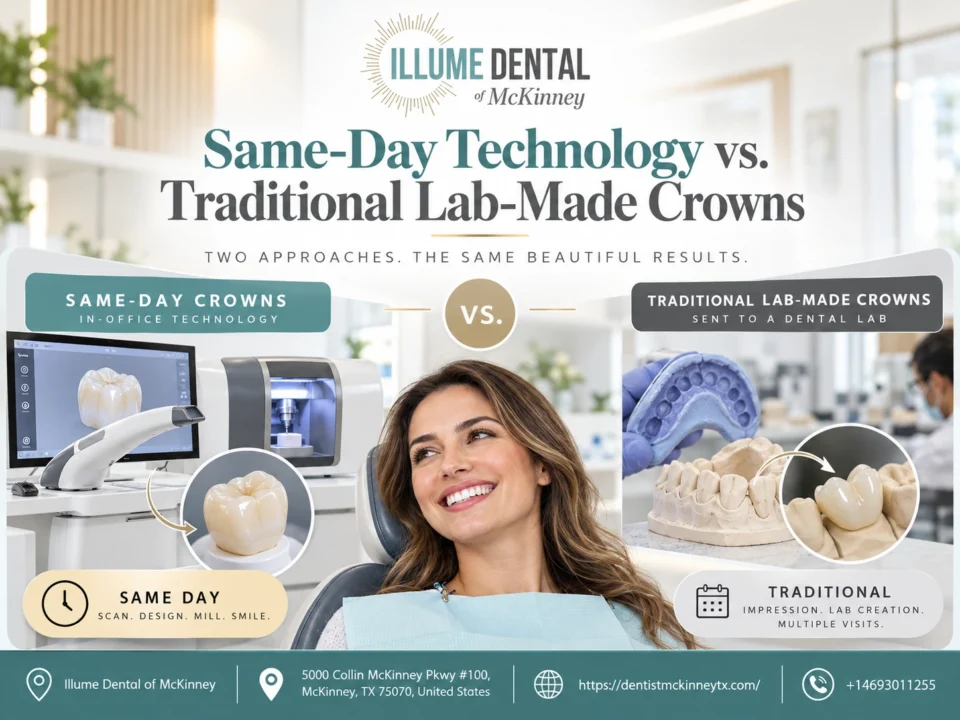
Dental laboratories or chairside manufacturing systems create crowns according to the dentist’s specifications.
Different materials and fabrication techniques have different advantages and limitations.
Fitting and Placement
Before a crown is permanently attached, the dentist evaluates its fit, contacts, appearance, and relationship with the patient’s bite.
Adjustments may be necessary.
Follow-Up Care
Some patients need additional appointments to evaluate discomfort or make minor adjustments.
Not every concern indicates that a crown has failed.
A well-planned crown treatment considers the entire process rather than only the final restoration.
The Crown Fit Problem: When Small Gaps Create Bigger Concerns
A dental crown should fit appropriately against the prepared tooth.
The margin, or the point where the crown meets the tooth, is particularly important.
An inadequate margin may create areas where plaque and food debris are harder to manage.
Why Crown Margins Matter
Teeth remain vulnerable to decay around crown edges.
If a crown has a defective margin or if plaque accumulates in difficult-to-clean areas, the risk of problems may increase.
However, decay around a crown is not always caused by poor dental work.
Dietary habits, dry mouth, oral hygiene, and individual cavity risk also matter.
When Food Gets Trapped
A poorly functioning contact between a crown and its neighboring tooth may allow food to collect.
Repeated food trapping can be uncomfortable and may contribute to gum irritation.
However, food becoming stuck does not always mean the crown needs replacement.
A dentist must identify the actual cause.
Can a Crown Be Too Loose?
Yes.
A crown may become loose because of cement failure, changes in the underlying tooth, or other factors.
Some loose crowns can be recemented when the tooth and restoration remain suitable.
Others require replacement.
Why This Can Become Expensive
If a crown must be removed and replaced, the patient may face additional evaluation, preparation, and laboratory costs.
The most significant expense may arise when the underlying tooth has also developed damage.
This is one reason cheap dental crowns should be compared according to fit, treatment planning, and clinical suitability not price alone.
Bite Problems: When a New Crown Feels Like a Pebble in a Shoe
A dental crown should function comfortably when the patient bites and chews.
A restoration that contacts the opposing teeth too heavily may cause discomfort.
It can feel similar to walking with a tiny pebble in a shoe.
The object may be small, but the irritation becomes difficult to ignore.
What Happens When a Crown Is Too High?
If a new crown contacts first when the patient bites, the tooth may experience uncomfortable pressure.
Possible symptoms include tenderness while chewing or the sensation that the bite no longer fits correctly.
Can This Cause Crown Failure?
Unfavorable biting forces can contribute to restoration complications in some circumstances.
However, not every bite adjustment problem leads to crown failure.
Often, a minor adjustment can resolve the concern.
What About Teeth Grinding?
Patients who grind or clench their teeth may place substantial forces on crowns and other restorations.
These forces can contribute to fractures, wear, or loosening.
A dentist may recommend a protective night guard in selected cases.
Why Follow-Up Matters
Patients should report persistent bite discomfort after crown placement.
Waiting while repeatedly chewing on an uncomfortable tooth may allow the underlying problem to continue.
A follow-up examination can determine whether an adjustment or further investigation is appropriate.
The Material Debate: Porcelain, Zirconia, and Metal Crowns
The phrase cheap dental crowns does not identify a specific material.
Different crowns are made from different substances, each with advantages and limitations.
The best choice depends on the tooth’s location, appearance requirements, biting forces, and other clinical factors.
All-Ceramic Crowns
Ceramic materials can provide a natural-looking appearance.
Certain types are especially useful when aesthetics are important.
However, material selection should consider strength, tooth preparation, and the patient’s bite.
Zirconia Crowns
Zirconia is a strong ceramic material frequently used for dental restorations.
It can be appropriate for certain back teeth and other situations.
However, zirconia crowns are not automatically the best choice for every patient.
Porcelain-Fused-to-Metal Crowns
These crowns combine a metal substructure with a porcelain exterior.
They have been used for many years and can provide useful strength and appearance characteristics.
However, porcelain chipping or visible metal near the gumline may be considerations in certain cases.
Gold and Other Metal Crowns
Metal crowns can offer favorable wear and strength characteristics.
Their appearance makes them less desirable for some visible teeth.
Is the Most Expensive Material Always Better?
No.
An appropriately selected, well-fitted crown made from a suitable material may perform better than an expensive restoration chosen without considering the patient’s needs.
Patients should ask why a particular material is recommended.
The value comes from matching the restoration to the tooth not simply choosing the highest-priced option.
The Decay Nobody Saw: When a Crown Hides a Larger Problem
Crowns protect weakened teeth, but they do not make the underlying tooth immune to disease.
Decay can develop near a crown margin.
In some cases, it may extend beneath the restoration.
How Decay Can Develop Around a Crown
Bacteria in dental plaque produce acids after metabolizing fermentable carbohydrates.
Repeated acid exposure can damage natural tooth structure.
Because a crown does not cover every part of the tooth, exposed areas remain vulnerable.
Can Poor Crown Fit Contribute?
An inadequate crown margin may contribute to conditions that make plaque control more difficult.
However, recurrent decay can also occur around properly fitted restorations when other risk factors are present.
What If Decay Is Found Early?
A dentist may be able to address certain limited problems without replacing the entire crown.
Other situations require removal of the restoration and treatment of the affected tooth.
When Decay Becomes More Extensive
Advanced decay can weaken the tooth’s ability to support another crown.
The patient may need a buildup, root canal treatment when indicated, or another restorative procedure.
In severe cases, the tooth may no longer be restorable.
Why the Price Can Multiply
Replacing a crown is one expense.
Treating extensive underlying decay is another.
When multiple procedures become necessary, the total may exceed the original crown price considerably.
However, the exact treatment and cost depend on the tooth’s condition.
What If a Cheap Crown Cracks or Breaks?
Dental crowns are designed to handle normal chewing forces.
Still, no crown is guaranteed to last forever.
A crown may chip, fracture, loosen, or require replacement for several reasons.
Excessive Biting Forces
Chewing ice, biting hard objects, and teeth grinding can place additional stress on dental restorations.
Material-Related Problems
Different crown materials have different mechanical properties.
A restoration that is not suitable for the clinical situation may face a greater risk of complications.
Limited Remaining Tooth Structure
A tooth with extensive damage may have less natural structure supporting its restoration.
This can influence the long-term prognosis.
Accidents and Trauma
A sports injury or fall may damage a crown regardless of its original price.
Can a Broken Crown Be Repaired?
Some minor chips may be repairable.
Other fractures require crown replacement.
The dentist should examine the crown and underlying tooth before recommending treatment.
An expensive crown can also fracture, which reinforces the importance of evaluating the entire clinical situation rather than assuming price predicts durability.
The 3x Cost Scenario: How Repeated Treatment Adds Up
A crown that requires replacement can generate several different expenses.
The following example demonstrates how a low initial fee could become a more expensive outcome.
Hypothetical Scenario
A patient initially chooses a $600 crown.
Several years later, the restoration develops a problem that requires replacement.
The dentist also discovers damage that needs additional treatment.
| Expense | Hypothetical amount |
| Initial crown | $600 |
| Evaluation and imaging | $150 |
| Tooth buildup | $300 |
| Replacement crown | $900 |
| Total | $1,950 |
In this example, the combined spending is 3.25 times the original $600 price.
However, this illustration does not establish that the initial discount caused the later problem.
Crowns can fail because of new decay, trauma, grinding, changes in oral health, or other factors that occur regardless of the original provider.
What This Example Really Shows
The important financial risk is the potential cost of repeated treatment.
Even when a replacement procedure is clinically successful, it may require additional time and money.
Patients should focus on minimizing avoidable complications while recognizing that no crown has a guaranteed lifespan.
A Crown Replacement May Cost More Than the Original Crown
Replacing a crown is not always identical to placing one for the first time.
The dentist must evaluate what has changed since the original treatment.
Removing the Existing Crown
A defective restoration may need to be removed.
Depending on the material and condition, removal can require additional work.
Evaluating the Tooth Underneath
After removal, the dentist can assess whether the underlying tooth has decay, fractures, or other concerns.
Rebuilding Missing Structure
Some teeth require a core buildup before another crown can be placed.
This may involve an additional fee.
Treating Pulp Problems
If the dental pulp is severely inflamed or infected, root canal treatment may be necessary.
However, a failed crown does not automatically mean a root canal is needed.
Considering Whether the Tooth Can Be Saved
Severe decay or fractures can sometimes make a tooth impossible to restore predictably.
Extraction may then become a consideration.
Why Early Evaluation Helps
Patients who notice crown movement, persistent discomfort, or repeated food trapping should schedule a dental appointment.
Prompt evaluation may help prevent additional damage, although it cannot guarantee that further treatment will be avoided.
How Much Do Dental Crowns Cost in McKinney, TX?
The dental crown cost in McKinney TX varies according to material, clinical complexity, and the services included in the treatment estimate.
Patients may encounter widely different fees.
However, comparing quotes requires understanding exactly what is being priced.
Illume Dental’s Published Crown Price
Illume Dental of McKinney publishes a crown fee of $1,701 on its dental crowns service page and insurance information page.
The practice notes that treatment prices may change and depend on patient needs.
Its insurance information also lists a $325 core buildup fee when that service is required.
These published figures provide a reference point, not a guaranteed quote for every patient.
Why a Higher Quote Might Include Different Care
A comprehensive estimate may reflect materials, fabrication, professional time, and individualized treatment planning.
However, patients should still ask which services are included.
A higher price does not prove that every component is superior.
How to Compare Two Crown Estimates
Patients should request written estimates covering the same tooth and proposed treatment.
They should also ask whether the fees include:
- Examination and diagnostic imaging.
- Tooth preparation.
- The permanent crown.
- Temporary crown placement when needed.
- Core buildup if necessary.
- Cementation.
- Bite adjustments.
- Follow-up evaluation.
- Any separately billed services.
The best price comparison uses the complete anticipated cost.
Are Discount Dental Clinics Always a Bad Choice?
No.
Affordable dental care is important, and lower-cost practices can provide appropriate, effective treatment.
Patients should not assume that a clinic offers poor care simply because its prices are lower.
The more useful question is whether the clinic provides clear clinical recommendations and explains the treatment.
What Makes a Lower-Cost Option Worth Considering?
A practice may offer a reasonable price while maintaining appropriate standards.
Patients can evaluate the dentist’s qualifications, treatment explanation, proposed materials, and written fees.
Warning Signs That Deserve Questions
Certain situations justify closer discussion:
- A crown is recommended without a clear explanation of why it is needed.
- The quoted price excludes important services without making that clear.
- The material or restoration type cannot be identified.
- Questions about treatment alternatives are discouraged.
- Patients feel pressured to agree immediately.
- The office will not explain how complications or follow-up concerns are handled.
These are reasons to request more information, not proof of misconduct.
Why a Second Opinion May Help
When treatment is expensive or the recommendation is unclear, a second dental opinion can provide a useful perspective.
Different dentists may reasonably recommend different options based on clinical findings and treatment philosophy.
Patients should feel comfortable asking questions before committing.
Can a Filling Be a Better Value Than a Crown?
Sometimes, yes.
Not every damaged tooth requires a crown.
For certain smaller areas of decay or structural damage, a filling may provide adequate restoration.
When Fillings May Be Appropriate
A filling can restore a limited amount of lost tooth structure.
The decision depends on the extent and location of the damage.
When Crowns May Be Recommended
A crown may be appropriate when a tooth has extensive damage, a large existing restoration, or structural weakness that makes another filling less predictable.
Why More Treatment Is Not Always Better
Crowns generally require preparation of the natural tooth.
When a more conservative restoration can predictably address the problem, it may preserve more tooth structure.
What About Onlays?
In some cases, an onlay or another partial-coverage restoration may be considered.
These options are not suitable for every tooth, and the dentist must evaluate the clinical circumstances.
The Financial Lesson
A lower-cost filling is not automatically preferable to a needed crown.
Likewise, an expensive crown is not automatically necessary when a smaller restoration would be sufficient.
Choosing an appropriate treatment is usually more important than choosing the least expensive procedure.
Dental Insurance Can Change the Price Comparison
Dental insurance may significantly affect the amount a patient pays for a crown.
However, coverage depends on the specific policy.
Some plans provide partial benefits for crowns when the restoration meets the insurer’s criteria.
Other plans may impose waiting periods, annual maximums, or limitations on replacement.
In-Network vs. Out-of-Network Pricing
An in-network dentist may have contracted fees with an insurance company.
An out-of-network practice may charge its published fees, with reimbursement determined by the patient’s benefits.
Neither arrangement alone establishes treatment quality.
Replacement Frequency Limitations
Some dental insurance plans limit how often they cover replacement crowns.
If a restoration needs replacement earlier than the plan permits, the patient may have a greater out-of-pocket expense.
Preauthorization and Predetermination
Certain plans allow patients to obtain an advance benefits estimate.
This can help with planning but does not guarantee final payment.
Illume Dental’s Insurance Information
Illume Dental explains its out-of-network approach and published fees on its insurance information page.
Patients can review this information and discuss expected benefits before treatment.
For an accurate comparison, the relevant figure is the patient’s estimated out-of-pocket responsibility, not just the office’s advertised fee.
How Long Should a Quality Dental Crown Last?
Dental crowns commonly function for many years.
Illume Dental’s crown information describes an average lifespan of approximately 10 to 15 years with proper care, while acknowledging that longevity varies.
However, no specific lifespan can be promised.
Factors That Affect Crown Longevity
These include:
- The condition of the underlying tooth.
- Crown material.
- Biting forces.
- Teeth grinding.
- Oral hygiene.
- Dietary habits.
- Gum health.
- Decay risk.
- Dental injuries.
Does a Longer Warranty Guarantee a Better Crown?
Not necessarily.
A warranty may cover certain issues but exclude damage caused by accidents, grinding, or changes in oral health.
Patients should read the terms carefully.
How to Protect a Crown
Brush twice daily with fluoride toothpaste, clean between teeth, and attend appropriate dental examinations.
Avoid using teeth to open packages or bite hard nonfood objects.
Patients with bruxism may benefit from a professionally recommended protective appliance.
When Should a Crown Be Checked?
Patients should contact a dentist if the crown feels loose, develops a sharp edge, causes persistent discomfort, or repeatedly traps food.
Routine dental visits also allow the dentist to monitor crown condition.
Why Fixing the Same Tooth Twice Can Be More Than a Financial Problem
Repeated restorative treatment can affect the natural tooth.
Removing a crown may require evaluating and sometimes removing additional damaged tooth structure.
Each procedure should preserve as much healthy tissue as clinically appropriate.
Tooth Structure Is Limited
Natural enamel and dentin do not grow back after being removed during a restorative procedure.
This makes conservative planning valuable.
Complications Can Affect Daily Comfort
A damaged crown may make chewing uncomfortable.
A loose restoration can also create uncertainty about eating or speaking.
Additional Appointments Take Time
Repeat treatment may require time away from work, school, or family responsibilities.
These indirect costs are rarely included in advertised prices.
Recovery Can Vary
Some crown replacements are relatively straightforward.
Others involve additional treatment and longer recovery.
Patients should understand the potential implications before proceeding.
Why Prevention Still Matters
Even a well-made crown requires ongoing oral hygiene and monitoring.
Choosing appropriate care is important, but the patient’s habits also influence long-term outcomes.
Seven Questions to Ask Before Choosing a Dental Crown
Patients comparing cheap dental crowns vs. quality crowns can make a more informed decision by asking practical questions.
1. Why Is a Crown Recommended?
The dentist should explain the condition of the tooth and whether other restorations are reasonable options.
2. Which Material Is Being Used?
Patients should understand the proposed crown material and why it suits the tooth.
3. What Is Included in the Quote?
The estimate should identify the crown fee and any separate charges that may apply.
4. Is a Core Buildup Needed?
Some teeth require rebuilding before crown placement.
Others do not.
5. How Will the Dentist Check the Fit?
Patients can ask how crown contacts, margins, and bite function will be evaluated.
6. What Happens If the Crown Feels Uncomfortable?
The office should explain how patients can request follow-up evaluation.
7. What Is the Estimated Insurance Responsibility?
Patients should understand what their insurance may cover and what they may owe.
These questions are useful regardless of whether the dental office advertises premium services or discounted prices.
McKinney’s Crown Comparison: Think Beyond the Sticker Price
Patients in McKinney, Allen, Frisco, and surrounding communities have different budgets and restorative dental needs.
Some are replacing an older crown.
Others are restoring a tooth after extensive decay or damage.
The appropriate treatment depends on the condition of the tooth, not the size of the advertisement.
At Illume Dental of McKinney, Dr. Chen and the dental team provide crown treatment with an emphasis on individualized planning, restoration fit, and patient communication.
The practice’s published crown process includes consultation, tooth preparation, impressions or digital scanning, temporary crown placement when applicable, and permanent crown fitting.
Understanding the Treatment Recommendation
Patients can discuss why a crown is being considered and what alternatives may be appropriate.
Reviewing Crown Materials
The proposed material should match the clinical requirements and patient’s preferences.
Discussing the Financial Details
Illume Dental publishes crown pricing and encourages patients to discuss insurance and payment considerations before treatment.
Its currently published crown fee is $1,701, although individual treatment needs may change the final estimate.
Protecting the Existing Tooth
The goal is to restore comfortable function while preserving appropriate healthy tooth structure.
Planning for Long-Term Care
After placement, regular examinations and consistent home care help support the restoration.
The value of dental treatment should be evaluated through clinical suitability, transparent pricing, and realistic expectations not unsupported promises about how long a crown will last.
FAQs: What Patients Should Know About Cheap Dental Crowns
Are cheap dental crowns more likely to fail?
Not necessarily. Price alone does not determine crown quality. Fit, tooth condition, material choice, bite forces, oral hygiene, and treatment planning all influence long-term outcomes.
Can a cheap dental crown end up costing three times more?
Yes, in some circumstances. If a crown requires replacement and additional treatment, the combined costs can exceed the original price by three times or more. However, this is a possible scenario, not a typical or guaranteed result.
How much does a dental crown cost at Illume Dental of McKinney?
Illume Dental’s published crown fee is $1,701. The practice notes that prices may change and depend on individual treatment needs. Additional services, such as a core buildup, may involve separate fees.
How can a patient tell whether a crown fits properly?
A well-fitted crown should feel comfortable during normal function. Persistent bite discomfort, looseness, food trapping, or gum irritation deserves evaluation. Some problems require professional examination and cannot be diagnosed by appearance alone.
Does an expensive crown last longer than a cheap crown?
Not automatically. Crown longevity depends on material, clinical planning, biting forces, tooth condition, oral hygiene, and other factors. A higher fee does not guarantee longer service life.
Can an old crown be replaced without a root canal?
Yes. Many crown replacements do not require root canal treatment. A root canal may be necessary if the dental pulp is severely inflamed or infected, but the decision depends on clinical findings.
Does dental insurance cover crown replacement?
Some plans cover eligible crown replacements, but frequency limits, deductibles, annual maximums, and other restrictions may apply. Patients should review their individual policy.
Is it better to get a crown or a filling?
The appropriate restoration depends on how much tooth structure is damaged and how the tooth functions. A filling may be suitable for smaller defects, while a crown may be recommended for more extensive damage.
A Crown Should Protect a Smile, Not Create Another Bill
The appeal of cheap dental crowns is understandable. Dental treatment is a significant investment, and patients deserve options that respect their financial circumstances.
However, the smallest upfront fee does not always represent the lowest long-term cost.
A restoration that requires replacement, repeated adjustments, or additional tooth treatment can increase the overall expense.
That does not mean every discounted crown is inferior or that an expensive crown cannot fail.
The better approach is to understand the treatment, compare complete estimates, and choose a dentist who explains the available options clearly.
At Illume Dental of McKinney, Dr. Chen and the dental team provide personalized restorative dentistry designed around each patient’s oral health, function, and preferences.
The practice offers dental crowns made from appropriate restorative materials and emphasizes careful preparation, fitting, and patient education.
Patients considering a first crown or evaluating an existing restoration can schedule a consultation to learn whether a crown, filling, or another treatment is suitable.
Illume Dental also publishes crown pricing information to help patients begin planning their dental expenses.
Instead of focusing only on cheap dental crowns, patients can compare the total proposed treatment cost, material options, and long-term maintenance considerations.
This article is for general education and does not replace a dental exam or personalized advice. Treatment recommendations depend on your health history and a clinical evaluation. To discuss your situation, contact Illume Dental of McKinney to schedule a visit.