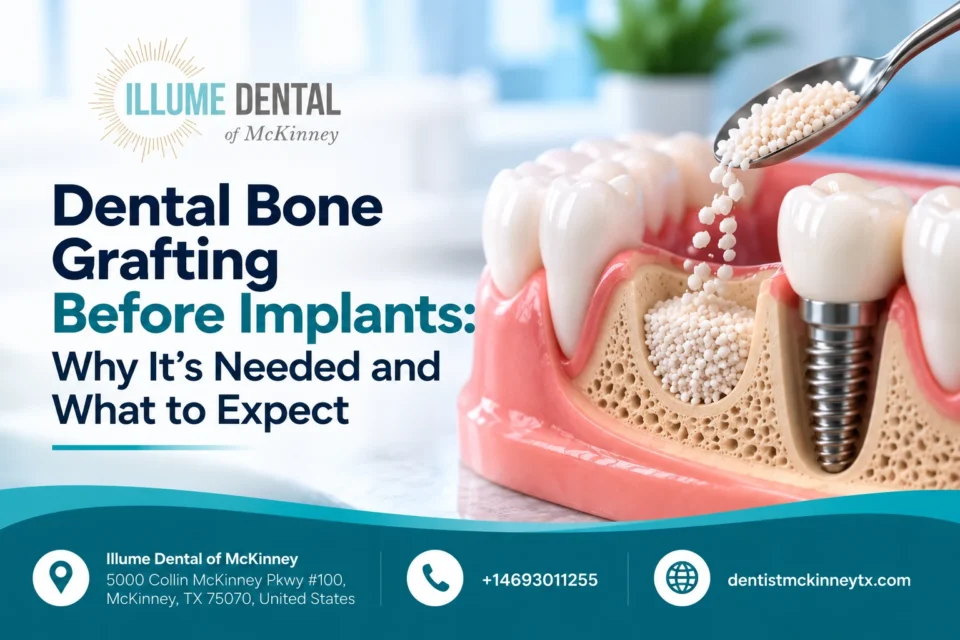

The “Commuter Clench”: Why McKinney-to-Frisco Drivers May Be Waking Up With Headaches
Many McKinney-to-Frisco commuters blame screens, traffic, stress, or sleep for chronic headaches. They may be right. But one overlooked factor is jaw clenching.
The direct answer: commuting does not “cause” migraines by itself. But stress, posture, concentration, and unconscious jaw clenching during long drives can aggravate jaw muscles and TMJ problems, which may contribute to headaches or trigger migraine episodes in some patients. The American Migraine Foundation notes that temporomandibular disorders can trigger headaches or migraines, while Mayo Clinic lists headaches, jaw pain, and tooth damage as possible effects of frequent bruxism.
For North Texas drivers sitting in stop-and-go traffic on 121, the Dallas North Tollway, or US-75, the pattern can be subtle:
You grip the wheel.
Your shoulders rise.
Your teeth touch.
Your jaw stays loaded for 30 to 60 minutes.
Then you do it again on the way home.
That is the “commuter clench.”
Waking Up With Headaches After Your Drive?
Morning jaw pain and headaches may be tied to clenching. Call today to schedule an evaluation and get relief.
Signs Your Headaches May Be Jaw-Related
Jaw clenching is not always obvious. You may not hear grinding. You may not wake up in pain every day.
Common clues include:
- Morning headaches
- Temple pain
- Jaw soreness or tightness
- Tooth sensitivity without a clear cavity
- Worn, flattened, or chipped teeth
- Clicking or popping in the jaw
- Neck or facial muscle tension
- Headaches after stressful drives or workdays
Cleveland Clinic notes that bruxism can strain the teeth and jaws and lead to headaches, jaw pain, and dental damage.
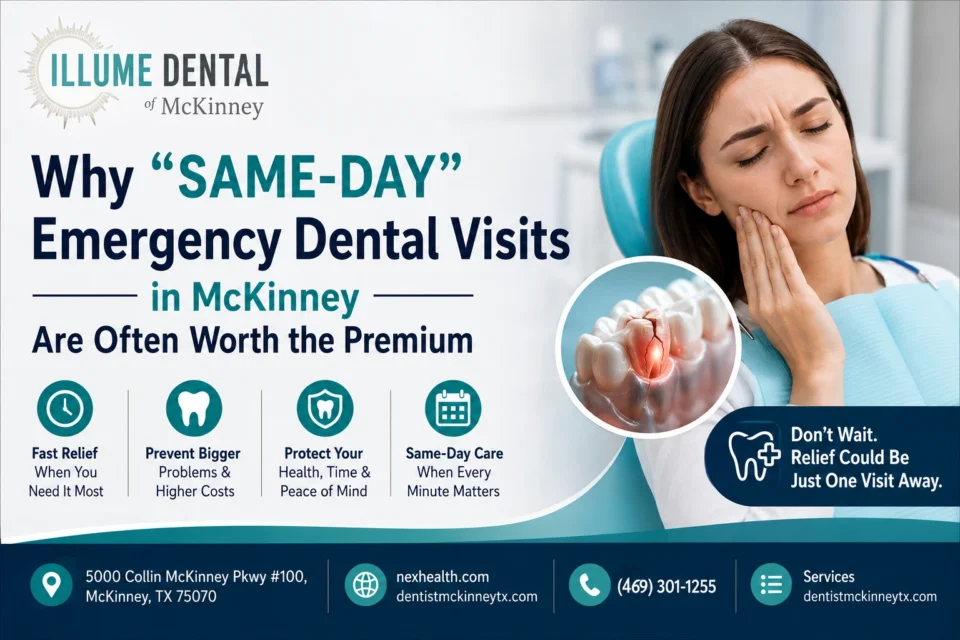
 When you're dealing with a severe toothache, a broken tooth, or facial swelling, the question isn't usually: "What's the cheapest…
Is It Migraine, TMJ, or Teeth Grinding?
It can be more than one. That is the frustrating part.
A true migraine is a neurological condition. A dental night guard will not “cure” migraine. But if jaw tension is one of your triggers, reducing clenching may lower the amount of muscle stress feeding into the problem.
A dental exam can help identify whether your teeth show signs of clenching, grinding, bite trauma, cracked enamel, or TMJ overload. It cannot diagnose every headache disorder. Severe, new, or changing headaches should be evaluated medically.
What Treatment Usually Involves
For many patients, the first step is conservative:
- A custom night guard if nighttime grinding is suspected
- Bite evaluation
- Checking for cracked teeth or worn enamel
- Jaw relaxation habits during the day
- Stress and sleep review
- Referral to a physician, neurologist, or physical therapist when symptoms suggest a non-dental cause
Mayo Clinic notes that some TMJ symptoms may go away without treatment, but persistent symptoms may need a combination of conservative therapies.
What Does This Cost?
Costs vary depending on what is actually happening.
A basic exam and X-rays are usually the starting point. A custom dental night guard often costs more than an over-the-counter guard, but it is made to fit your bite and protect your teeth more precisely. The bigger cost risk is ignoring clenching until teeth crack, crowns fail, or jaw pain becomes chronic.
When to See a Dentist
See a dentist if headaches come with jaw soreness, tooth wear, tooth sensitivity, cracked teeth, or morning facial tension.
See a physician urgently if you have a sudden severe headache, neurological symptoms, fever, vision changes, head injury, or a headache pattern that is new or worsening.
A Practical Next Step
If your McKinney-to-Frisco commute leaves you with temple pain, jaw tension, or morning headaches, an exam can help separate dental causes from medical ones. Illume Dental of McKinney can check for signs of clenching, grinding, cracked teeth, and bite stress before you commit to treatment.
Stop Letting Stress Ride Home With You
If your McKinney-to-Frisco commute is causing jaw tension, we can help. Call now for professional care.