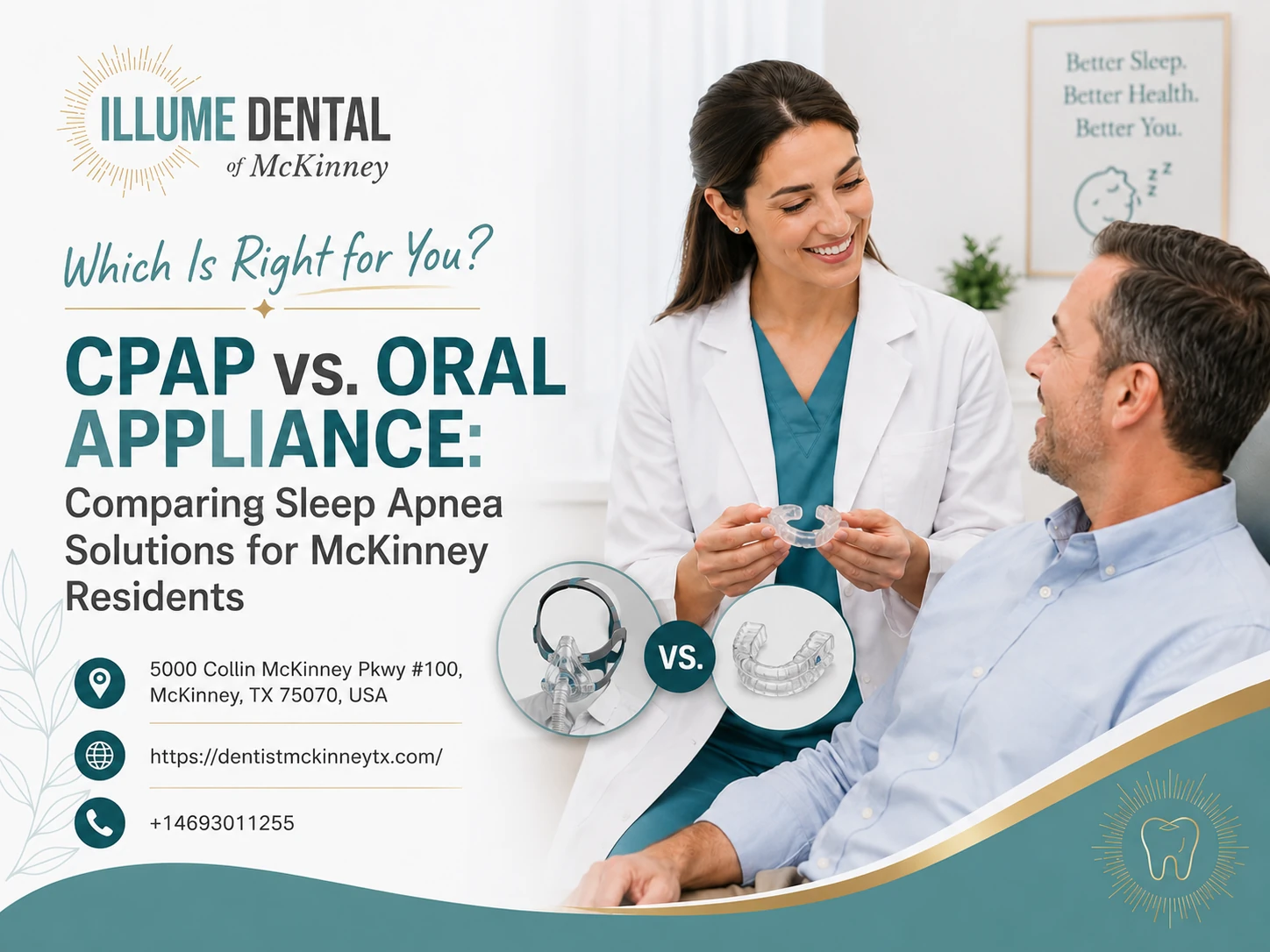
CPAP vs. Oral Appliance: A Sleep Apnea Showdown for McKinney Residents
If you have sleep apnea, CPAP is usually the most powerful treatment.
But the “best” treatment is the one you can actually use every night.
For many McKinney adults, that is where oral appliance therapy enters the conversation.
The short answer
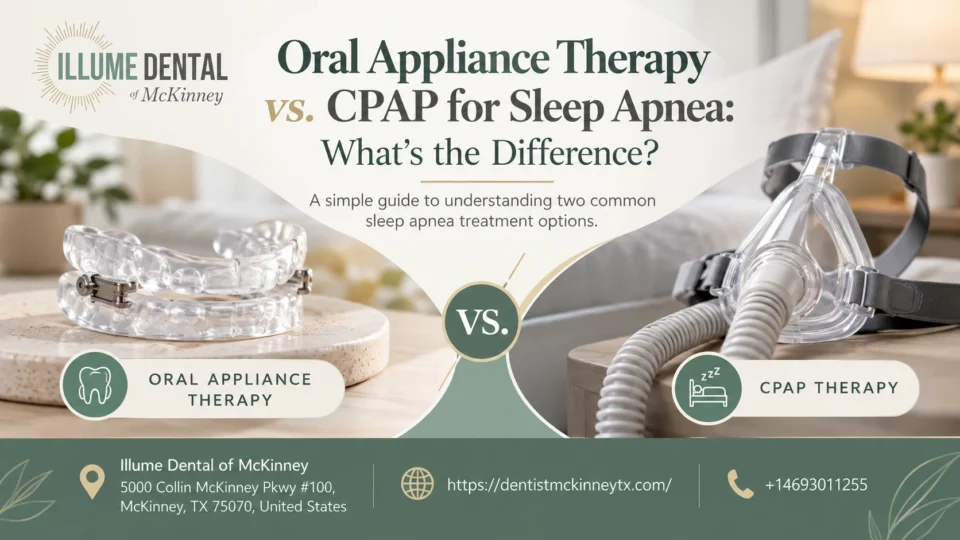
CPAP is typically the first-line option, especially for moderate to severe obstructive sleep apnea. It uses air pressure to keep the airway open while you sleep.
Oral appliances are custom mouthpieces that move the lower jaw slightly forward to help keep the airway open. They are often used for mild to moderate sleep apnea, snoring, or for patients who cannot tolerate CPAP. Mayo Clinic notes oral appliances can be an alternative for some mild or moderate cases and for severe cases when CPAP is not tolerated.
Tired of Your CPAP?
Ask about a custom oral appliance designed to support easier, more comfortable sleep.
CPAP wins on power
CPAP is often better at lowering apnea events because it directly prevents airway collapse with pressurized air.
It may be the better fit if you have:
- Moderate to severe sleep apnea
- Low oxygen levels during sleep
- Significant daytime sleepiness
- Heart or blood pressure concerns
- A physician who strongly recommends it
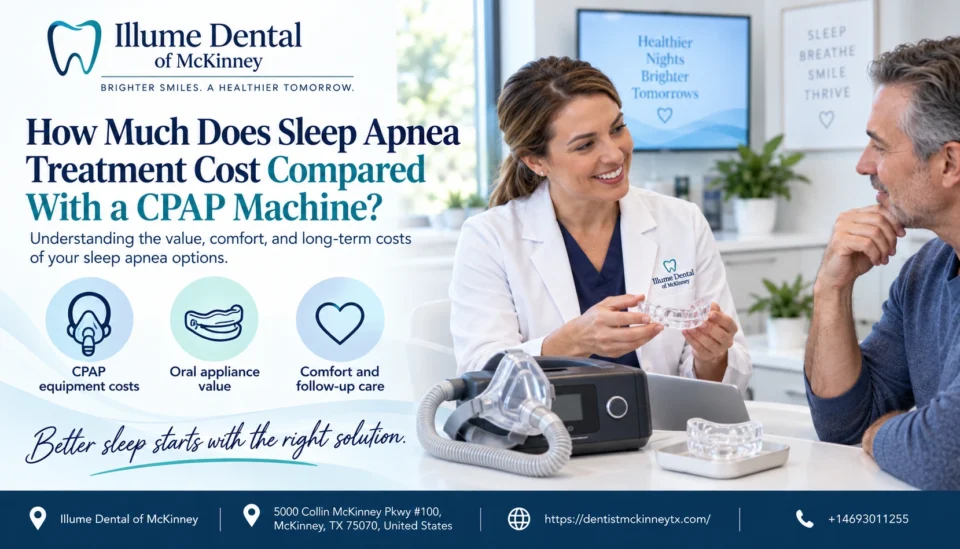
The downside is comfort. Some patients struggle with the mask, hose, pressure, dry mouth, noise, or feeling trapped.
Oral appliances win on convenience
Oral appliances are smaller, quiet, portable, and easier to travel with. Many patients like them because they feel less medical than a CPAP machine.
They may be a good fit if:
- Your sleep apnea is mild to moderate
- Your main issue is snoring
- You cannot tolerate CPAP
- You travel often
- You want a less bulky option
The ADA emphasizes that dentists can play an important role in identifying and helping manage sleep-related breathing disorders, but treatment should be collaborative with medical providers.
The blunt truth: neither works if you do not use it
A CPAP machine sitting in the closet helps no one.
A custom oral appliance that is uncomfortable and stays in the drawer also helps no one.
That is why the real question is not just “Which one works better in a study?”
It is:
Which one will you wear consistently enough to protect your health?
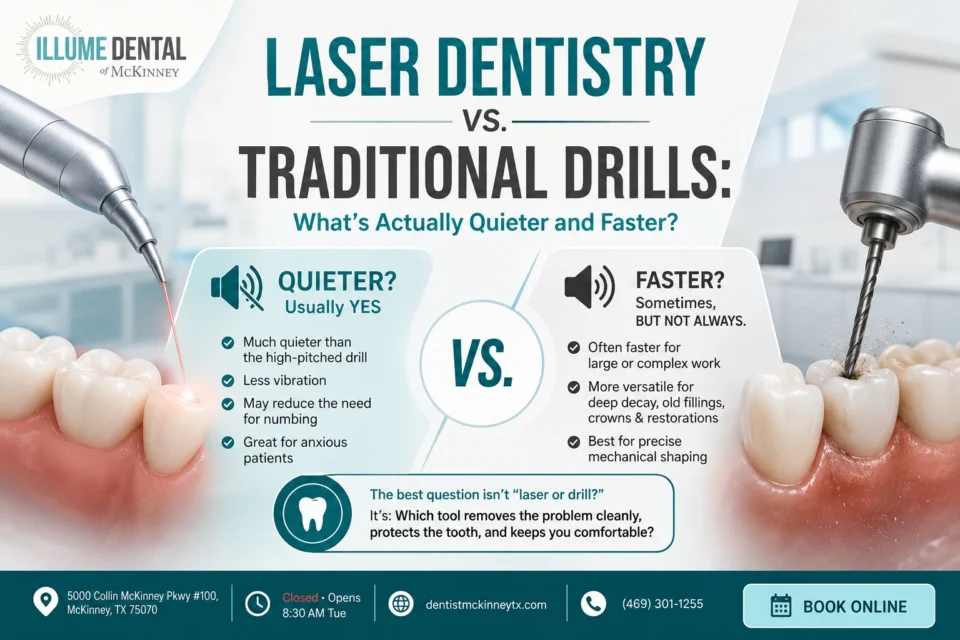
 Lasers can be much quieter than the high-pitched dental drill, which is why anxious patients often like them. They may…
Oral appliances are not for everyone
An oral appliance may not be appropriate if you have:
- Central sleep apnea
- Severe untreated sleep apnea without physician oversight
- Major TMJ problems
- Unstable teeth
- Advanced gum disease
- Too few healthy teeth to support the appliance
Cleveland Clinic notes oral appliances are not used for central sleep apnea because that condition involves brain signaling problems, not just airway blockage.
What McKinney patients should do first
Do not self-diagnose sleep apnea based only on snoring.
Start with a sleep study and medical diagnosis. Then compare options with your sleep physician and dentist.
At Illume Dental of McKinney, the dental role is to evaluate whether your teeth, bite, jaw joints, and airway-related symptoms make you a reasonable candidate for an oral appliance. The medical role is to diagnose sleep apnea and confirm whether the treatment is actually working.
Bottom line
CPAP is usually stronger. Oral appliances are often easier to live with.
For some patients, CPAP is the safest choice. For others, a custom oral appliance is the reason they finally treat their sleep apnea instead of ignoring it.
The best treatment is not the trendiest one. It is the one that keeps your airway open, protects your health, and fits your real life.
Find Your Better Sleep Option
Get professional guidance on CPAP alternatives and oral appliance therapy in McKinney.