Can TMJ Problems Affect Your Sleep? The Jaw-Sleep Connection
Key Takeaways
- The same symptom can have more than one cause, so diagnosis matters.
- Treatment choices should be based on the condition of the tooth, gums, bite, and overall health.
- Seek professional care when symptoms persist, worsen, or interfere with eating, sleeping, or daily life.
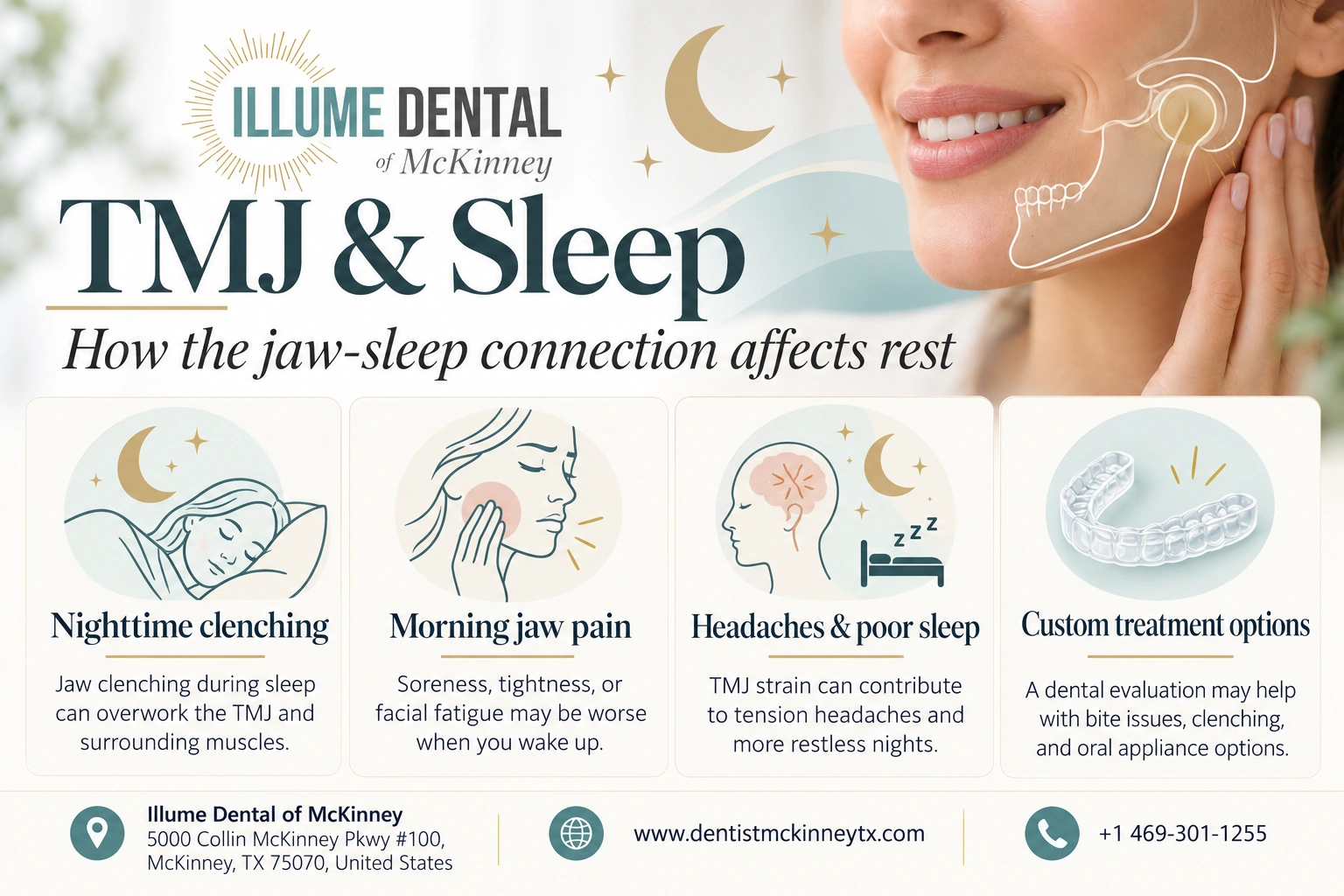
Jaw pain and sleep problems can overlap. TMD symptoms may make it uncomfortable to fall asleep or may worsen with nighttime clenching and grinding. Separately, sleep-related breathing disorders can coexist with bruxism or morning jaw symptoms. Because several conditions can produce similar complaints, persistent symptoms deserve a careful evaluation rather than a single-cause assumption.
Tired of Waking Up With Jaw Pain?
TMJ problems may be affecting your sleep. Call today for a professional evaluation and personalized care.
What does this mean for patients?
The practical question is not simply whether a treatment or symptom fits a label. It is how the finding affects comfort, function, long-term oral health, and the next decision. A dentist can combine your history with an examination and, when appropriate, dental imaging to identify what is actually happening.
What are common reasons this happens?
Common explanations depend on the topic, but dental symptoms often reflect a combination of plaque and inflammation, tooth wear or damage, bite forces, dry mouth, infection, or changes in restorations. Some symptoms can also come from outside the mouth, which is why persistent or unusual problems deserve a broader evaluation.
When should you see a dentist?
Schedule an evaluation when the issue is persistent, recurring, worsening, or affecting chewing, speaking, sleep, or confidence. More urgent assessment is appropriate for significant facial swelling, fever with dental symptoms, trauma, uncontrolled bleeding, difficulty swallowing or breathing, or rapidly increasing pain.
Questions to ask at your visit
- What is the most likely cause in my case?
- Are there alternatives, and what are the tradeoffs?
- What should I expect during treatment and recovery?
- How will this affect my existing dental work or bite?
- What maintenance will help protect the result long term?
How Illume Dental Can Help Address Your Concerns
If you experience jaw discomfort, teeth grinding, or interrupted sleep, a dental evaluation can help identify possible contributing factors. Your dentist can assess your jaw movement, bite alignment, teeth, and surrounding muscles to better understand your symptoms.
The right approach should consider your oral health, sleep concerns, and individual needs rather than relying on general treatment recommendations.
 Got a dental issue that can’t wait? A walk-in dentist could be just what you need. Skip the long wait…

Frequently Asked Questions
Can this be diagnosed from symptoms alone?
Usually not. Symptoms can overlap across several dental conditions, so an examination is often needed to identify the cause and appropriate treatment.
Should I wait if the problem is not painful?
Pain is not the only sign that care may be needed. Bleeding, looseness, swelling, changes in fit, persistent odor, or functional problems can justify an evaluation even without significant pain.
Will everyone need the same treatment?
No. Dental treatment is individualized based on diagnosis, anatomy, health history, existing restorations, bite, and personal goals.
Is Jaw Pain Keeping You Awake?
Don't let TMJ discomfort ruin your sleep. Schedule a professional jaw evaluation and get the relief you need.