
Laser Dentistry vs. Traditional Drills: What’s Actually Quieter and Faster?
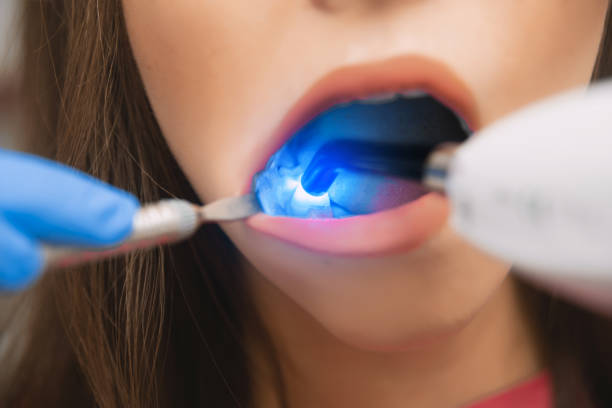
Lasers can be much quieter than the high-pitched dental drill, which is why anxious patients often like them. They may also reduce vibration and, in some cases, reduce the need for numbing. Cleveland Clinic notes that dental lasers use light energy and can treat both hard and soft tissue problems.
But lasers are not magic. They are a tool. When used appropriately, dentists can combat gum disease with laser technology while targeting affected soft tissue with greater precision.
Ready for a Quieter Dental Visit?
Discover whether laser dentistry can mean less noise and faster treatment. Call today to schedule your visit.
When lasers may be better
Laser dentistry can be helpful for:
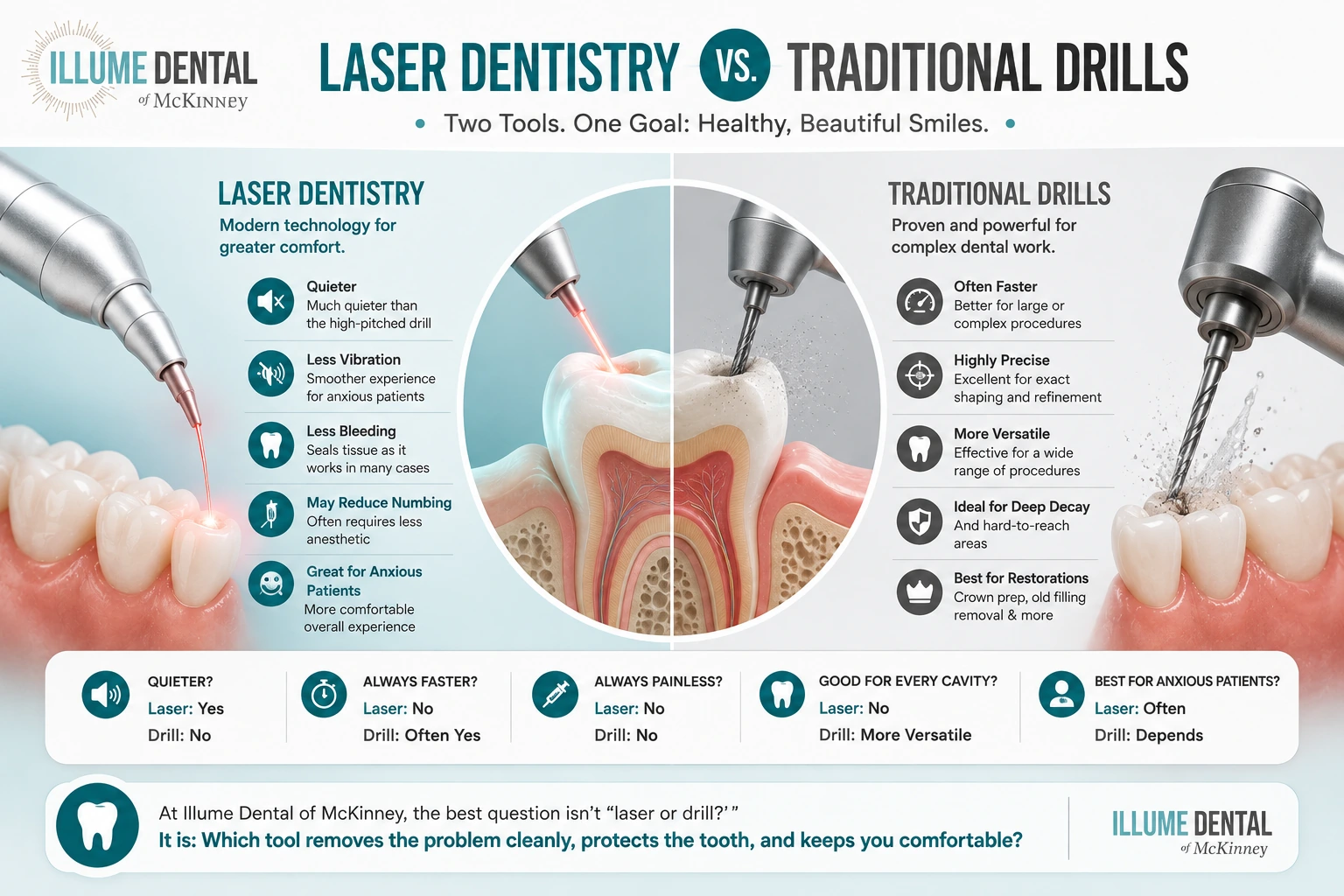
- Small to moderate cavities
- Gum contouring
- Soft-tissue procedures
- Treating tissue with less bleeding
- Patients who hate drill noise
- Some children or anxious adults
The AAPD recognizes lasers as useful in pediatric restorative and soft-tissue care when used appropriately.
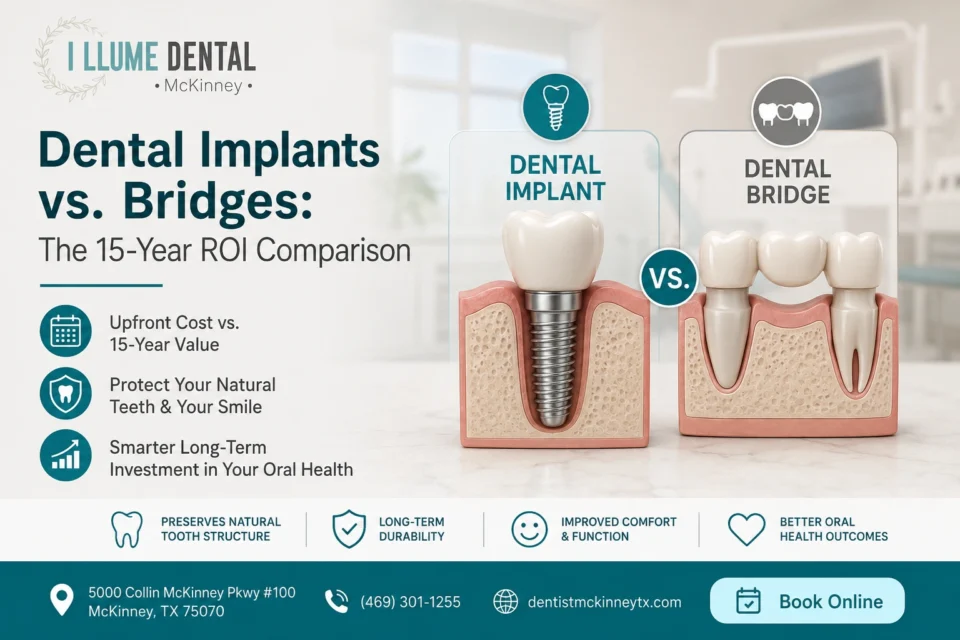
 When patients compare a dental implant and a bridge, they often ask the wrong first question: “Which one is cheaper?”…
When drills are still faster
Traditional drills may be faster or more practical for:
- Large cavities
- Deep decay
- Old filling removal
- Crown preparation
- Shaping teeth for restorations
- Cases where exact mechanical refinement is needed
The Academy of General Dentistry notes that lasers are useful but not appropriate for every dental procedure.
The honest comparison
| Question | Laser | Drill |
| Quieter? | Usually yes | Usually no |
| Less vibration? | Usually yes | No |
| Always faster? | No | Often faster for large work |
| Always painless? | No | No |
| Good for every cavity? | No | More versatile |
| Best for anxious patients? | Often | Depends |
Bottom line
If your biggest fear is the sound and vibration of the drill, laser dentistry may feel much calmer.
But if the tooth needs major reshaping, an old filling removed, or a crown prepared, the traditional drill may still be the faster and better tool.
At Illume Dental of McKinney, the best question is not “laser or drill?” It is: Which tool removes the problem cleanly, protects the tooth, and keeps you comfortable?
Skip the Sound of the Drill
Experience a more comfortable approach to dental care with modern laser technology. Call now to book an appointment.