
Composite vs. Amalgam Fillings: Which Lasts Longer?
For pure longevity, amalgam “silver” fillings often have the edge, especially in large back-to-tooth cavities where chewing forces are heavy. The ADA describes amalgam as durable, affordable, and effective.
But that does not mean amalgam is always the better choice.
Not Sure Which Filling Is Right?
Choose a filling built for your smile and long-term needs. Call today to schedule your dental visit.
The short answer
Composite white fillings are usually preferred when appearance matters, when the cavity is small to medium, or when preserving tooth structure is a priority. These are among the common options for dental fillings for cavity treatment.
Amalgam silver fillings may last longer in some large, high-pressure back teeth, but they are less aesthetic and are used less often today.
Why composite fillings are so popular
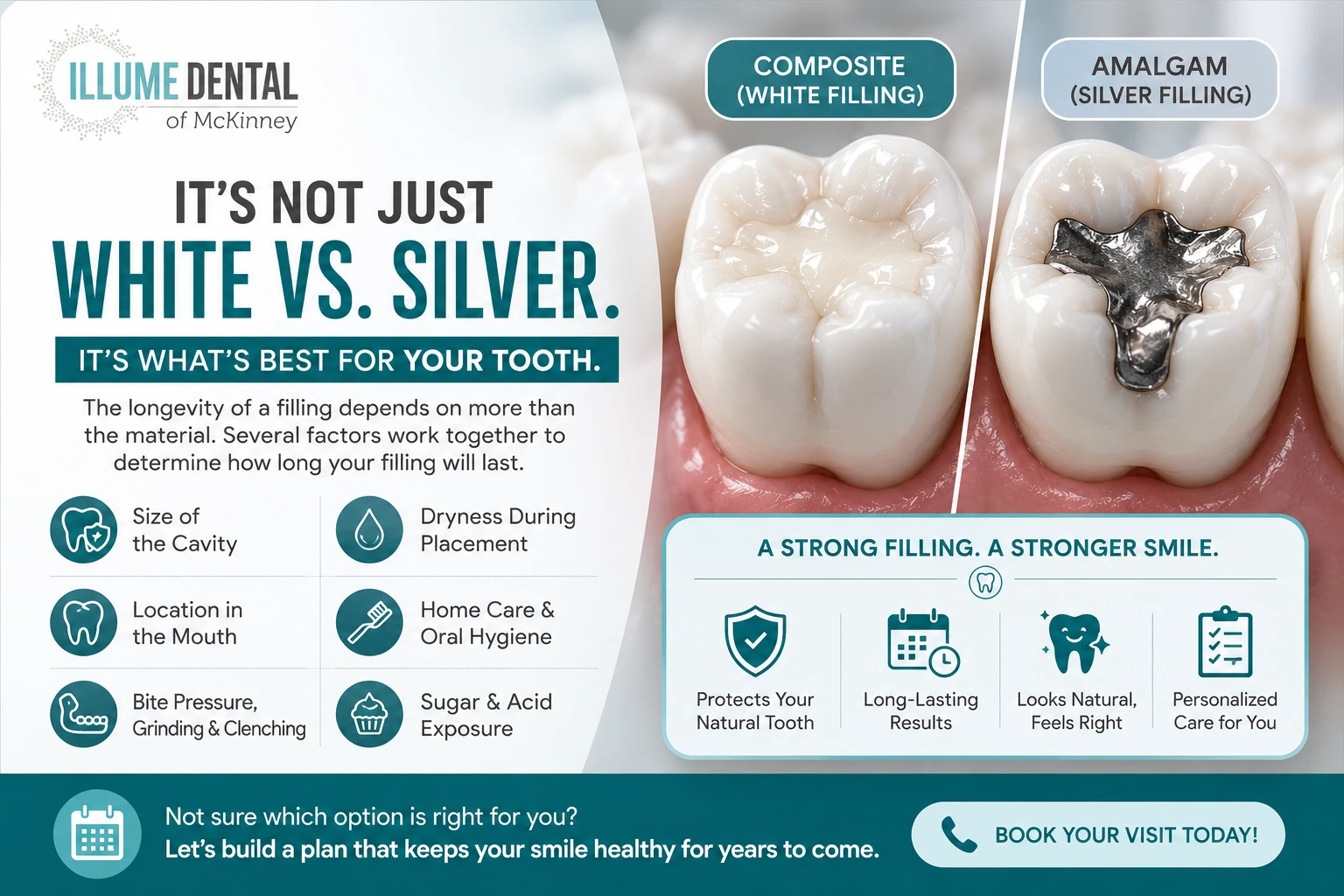
Composite fillings match the tooth color, bond directly to enamel, and work well for many small to mid-size cavities. The ADA notes that composites provide good durability for small to mid-size fillings under moderate chewing pressure.
They are a strong choice for:
- Front teeth
- Visible premolars
- Small to moderate cavities
- Patients who do not want silver-colored restorations
The tradeoff: composite is more technique-sensitive. The tooth has to be kept dry during placement. If moisture contaminates the filling, it may not bond as well.
Why amalgam lasted so long historically
Amalgam is tough. It tolerates moisture better during placement and performs well in heavy chewing areas. That is why many older silver fillings lasted 10, 15, or even 20 years.
But amalgam has downsides:
- It does not match tooth color
- It requires more mechanical retention
- It can darken the surrounding tooth
- Old amalgams can crack, leak, or weaken over time
- Some patients prefer to avoid mercury-containing materials
The FDA says patients should not remove good amalgam fillings just because they are concerned about mercury, but treatment options should be discussed with a dentist.
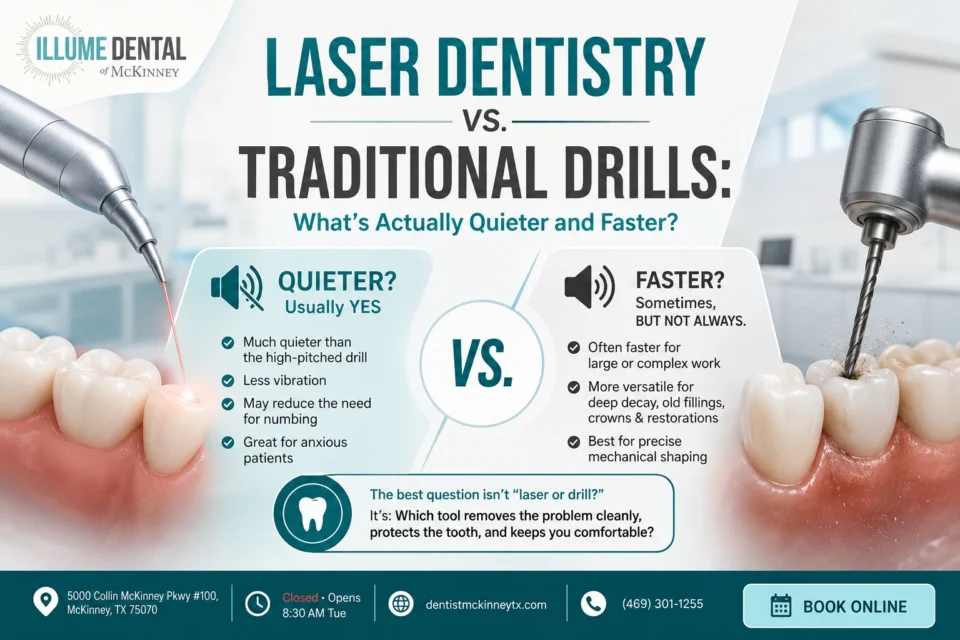
 Lasers can be much quieter than the high-pitched dental drill, which is why anxious patients often like them. They may…
The real longevity battle
A filling’s lifespan depends less on the material alone and more on:
- Size of the cavity
- Location in the mouth
- Bite pressure
- Grinding or clenching
- Dryness during placement
- Home care
- Sugar and acid exposure
- Whether decay forms around the edges
A beautifully placed composite can outlast a poorly placed amalgam. A huge composite on a heavily cracked molar may fail sooner than expected.
When a crown may be smarter than either filling
Here is the blunt part: sometimes patients are debating composite vs. amalgam when the tooth is already past the “filling” stage.
A crown may be better if the tooth has:
- A very large old filling
- Cracks
- Missing cusps
- Root canal treatment
- Heavy bite pressure
- Repeated filling failure
Putting a bigger filling in a weakened tooth can be cheaper today but more expensive later. When a filling is still appropriate, composite materials can discreetly address cavities with tooth-colored fillings.
Bottom line
If you want the most natural-looking option, composite usually wins.
If the tooth is a large back molar under heavy chewing stress, amalgam may have a longevity advantage, though it is less commonly chosen today.
The best choice is not “white vs. silver.” It is: what restoration gives this specific tooth the best chance of lasting?
At Illume Dental of McKinney, that decision starts with the size of the cavity, the strength of the remaining tooth, your bite, your cosmetic goals, and your long-term risk, not just the filling color.
Need a Filling? Don’t Wait
Address decay before it becomes a bigger dental problem. Call now to have your tooth evaluated.