
Why Your Jaw Clicks: Addressing TMJ in McKinney’s High-Stress Corporate Culture
If your jaw clicks every time you yawn, chew, or open your mouth wide, you’re probably wondering one thing:
Should I be worried?
The answer is: maybe but not necessarily.
A clicking jaw is one of the most common symptoms associated with TMJ disorders (temporomandibular joint disorders), and in many cases, it’s not an emergency. However, when clicking is accompanied by pain, headaches, muscle tension, locking, or difficulty chewing, it’s worth getting evaluated. For patients, understanding the effects of TMJ dysfunction can make it easier to recognize when symptoms need professional attention.
Here in McKinney, we see a unique pattern among professionals, executives, entrepreneurs, and remote workers: high stress levels often show up in the jaw before they show up anywhere else.
Stop Ignoring That Jaw Click
Jaw clicking or popping may signal TMJ strain. Get professional care and find out what’s causing the problem.
What Is the TMJ?
The temporomandibular joints (TMJs) connect your lower jaw to your skull.
You have one on each side of your face, just in front of your ears.
These joints allow you to:
- Talk
- Chew
- Yawn
- Smile
- Move your jaw side to side
They’re among the most frequently used joints in the body.
When something interferes with how they function, symptoms can develop.
Why Does My Jaw Click?
A clicking or popping sound often occurs when the small disc inside the joint moves out of position and then snaps back into place during jaw movement.
Think of it like a door sliding slightly off its track and then catching again.
Common causes include:
Teeth Grinding and Clenching
This is one of the biggest contributors we see.
Many patients don’t realize they’re clenching until they start experiencing:
- Jaw soreness
- Headaches
- Worn teeth
- Facial muscle fatigue
Stress
McKinney’s growing corporate workforce includes:
- Technology professionals
- Healthcare administrators
- Sales executives
- Business owners
- Remote workers managing long hours
Stress often leads to unconscious muscle tension throughout the day and nighttime clenching while sleeping.
Bite Imbalances
Sometimes the way the teeth fit together contributes to uneven pressure on the jaw joints and muscles.
Injury or Trauma
A previous sports injury, car accident, or impact to the face can affect TMJ function.
Arthritis and Joint Changes
In some patients, age-related joint changes can contribute to clicking, stiffness, or discomfort.
When Is Jaw Clicking Harmless?
A jaw that clicks without pain isn’t always a problem.
If:
- You have full jaw movement
- There is no pain
- Your jaw doesn’t lock
- Symptoms aren’t getting worse
monitoring may be all that’s needed.
However, it’s still worth mentioning during a dental exam so your dentist can evaluate the joint and surrounding muscles.
When Should You Be Concerned?
Jaw clicking deserves attention if you also experience:
Pain
Pain in the jaw joint, face, neck, or around the ears can indicate a more significant TMJ issue.
Locking
If your jaw occasionally gets stuck open or closed, professional evaluation is important.
Frequent Headaches
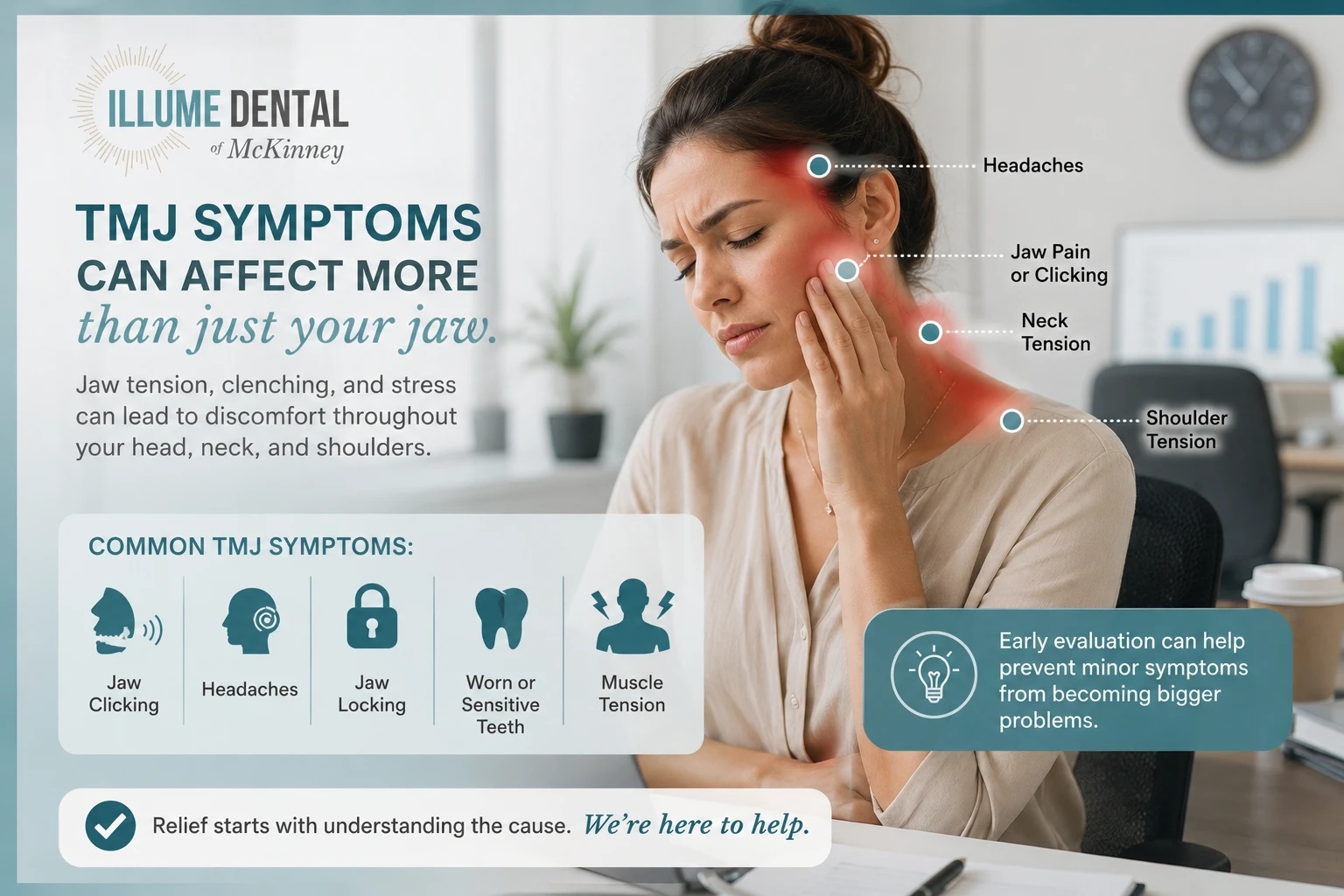
Many patients assume they have stress headaches when the source is actually jaw muscle tension.
Difficulty Chewing
Pain while eating can indicate joint or muscle dysfunction.
Tooth Wear
Flattened, chipped, or cracked teeth often suggest ongoing grinding or clenching.
The Hidden Link Between Stress and TMJ
One of the most overlooked causes of TMJ symptoms is chronic stress.
Many busy professionals carry tension in their:
- Shoulders
- Neck
- Face
- Jaw muscles
Over time, those muscles can become overworked and painful.
Patients are often surprised to learn that their jaw discomfort isn’t caused by chewing, it’s caused by clenching while answering emails, sitting in traffic, or sleeping.
Treatment Doesn’t Always Mean Surgery
This is one of the biggest misconceptions about TMJ disorders.
Most TMJ cases do not require surgery.
In fact, conservative treatment is usually the first step.
Depending on the cause, treatment may include:
Custom Night Guards
A professionally fitted night guard can help reduce the effects of grinding and clenching.
Stress Management Strategies
Reducing muscle tension often improves symptoms significantly.
Bite Evaluation
Sometimes adjusting how forces are distributed across the teeth can help.
Physical Therapy
Targeted exercises may improve jaw function and reduce discomfort.
Lifestyle Modifications
Simple changes such as avoiding excessive gum chewing or minimizing jaw strain can help calm irritated joints.
What McKinney Professionals Often Miss
Many people treat headaches, neck pain, and facial tension as separate problems.
In reality, they can be connected.
A patient may spend months addressing:
- Migraines
- Neck stiffness
- Ear discomfort
- Facial pain
without realizing the jaw joint is contributing to the issue.
That’s why a comprehensive evaluation matters.
Can TMJ Go Away on Its Own?
Sometimes mild symptoms improve.
But persistent clicking, pain, or jaw dysfunction often continues unless the underlying cause is addressed.
The sooner a problem is identified, the more conservative treatment can usually be.
The Bottom Line
A clicking jaw isn’t always serious, but it shouldn’t be ignored if it’s accompanied by pain, headaches, locking, muscle tension, or difficulty chewing.
For many McKinney professionals, TMJ symptoms are closely tied to stress, clenching, and the demands of modern work life. The good news is that most cases can be managed with conservative, non-surgical treatment when caught early.
If your jaw clicks, aches, feels tired, or causes recurring headaches, a dental evaluation can help determine whether you’re dealing with a minor annoyance or an underlying TMJ disorder that deserves attention.
At Illume Dental of McKinney, Dr. Eileen Chen-Mizuuchi and the team can evaluate your jaw function, identify contributing factors, and help you understand which treatment options make sense before symptoms become more disruptive.
Frequently Asked Questions
Is a clicking jaw always TMJ?
Not necessarily. A clicking jaw is often associated with TMJ disorders, but a proper evaluation is needed to determine the exact cause.
Can stress really cause jaw pain?
Yes. Chronic stress frequently leads to clenching and muscle tension, which can contribute significantly to TMJ symptoms.
Does a night guard help TMJ?
For many patients who grind or clench their teeth, a custom night guard can reduce strain on the teeth and jaw muscles.
Should I worry if my jaw clicks but doesn’t hurt?
Not always. Many people have painless clicking. However, it should still be evaluated if symptoms change or worsen.
Can TMJ cause headaches?
Absolutely. Jaw muscle tension and joint dysfunction are common contributors to headaches, especially around the temples and sides of the head.
Jaw Clicking After a Stressful Day?
Workplace stress and jaw tension can take a toll. Schedule a TMJ evaluation in McKinney today.