Same-Day Technology vs. Traditional Lab-Made Crowns
Same-day crowns vs traditional crowns come down to more than appointment speed. Same-day crowns use digital design and in-office manufacturing technology to create a restoration during one visit, while traditional lab-made crowns are fabricated by a dental laboratory and generally require a second appointment. Both options can restore damaged teeth, but the right choice depends on the tooth’s condition, available materials, appearance requirements, and treatment complexity.
For patients exploring dental crowns in McKinney TX, understanding these differences can make restorative treatment easier to plan. At Illume Dental of McKinney, Dr. Eileen Chen-Mizuuchi and the dental team provide customized crown treatment using dental impressions or digital scanning and laboratory fabrication. Knowing how modern crown technology compares with traditional laboratory craftsmanship helps patients understand what matters beyond convenience.
The Crown Showdown: One Appointment or Two?
Dental crowns have come a long way from the days when restorative dentistry relied almost entirely on traditional impressions and laboratory techniques.
Today, some dental practices use computer technology to design and manufacture crowns within a single appointment.
Other practices continue to work with dental laboratories that specialize in creating customized restorations.
Both methods have advantages.
Imagine a McKinney resident who discovers that a cracked molar needs a crown.
There are meetings to attend, errands to finish, children to pick up, and approximately seventeen other things already on the calendar.
The thought of completing treatment in one appointment sounds appealing.
However, another patient may need a front-tooth crown that closely matches the natural color, translucency, and shape of neighboring teeth.
That situation may benefit from additional laboratory customization.
Neither patient necessarily needs the same approach.
The discussion surrounding same-day crowns vs traditional crowns should begin with the tooth itself.
Convenience matters, but so do fit, function, appearance, and long-term oral health.
What Exactly Is a Dental Crown?
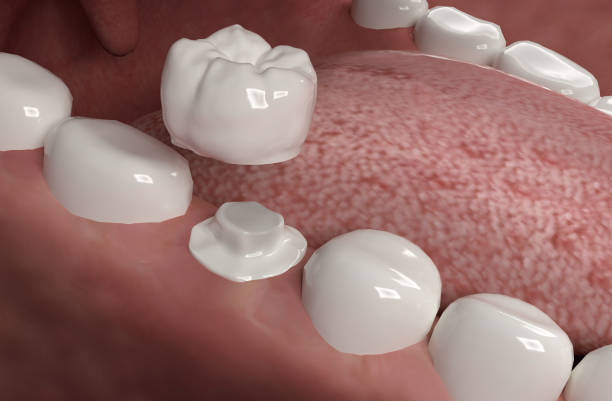
A dental crown is a custom-made restoration that covers the prepared visible portion of a tooth.
It is designed to restore the tooth’s shape, function, and structural protection.
Crowns are commonly recommended when a tooth has lost enough natural structure that a filling alone may not provide sufficient support.
When Might a Crown Be Necessary?
A dentist may recommend a crown for:
- A tooth with extensive decay.
- A fractured or severely weakened tooth.
- A large existing filling that has failed.
- Certain cracked teeth.
- A tooth requiring restoration after root canal treatment.
- A dental implant that needs a final crown.
- Selected cosmetic concerns involving tooth shape or appearance.
Not every damaged tooth requires a crown.
Smaller defects may be treated with fillings or other partial-coverage restorations.
The dentist must evaluate the remaining healthy tooth structure before determining the appropriate treatment.
Why Does Crown Fit Matter?
A crown must fit accurately over the prepared tooth.
It also needs proper contact with neighboring teeth and appropriate alignment with the opposing bite.
An uncomfortable or poorly fitting crown may contribute to irritation, food trapping, or other complications.
This is why crown fabrication involves much more than creating something that looks like a tooth.
The restoration must work as part of the patient’s entire mouth.
Same-Day Crowns: When Dental Technology Takes the Fast Lane
Same-day crowns are restorations designed and manufactured within a dental practice, typically during one appointment.
These systems commonly use computer-aided design and computer-aided manufacturing, known as CAD/CAM.
How Does CAD/CAM Technology Work?
CAD stands for computer-aided design.
CAM stands for computer-aided manufacturing.
Together, these technologies allow dentists to create digital models and manufacture restorations based on those designs.
A typical same-day crown process may include the following steps.
Step 1: Examining the Tooth
The dentist examines the tooth and determines whether a crown is appropriate.
Any decay or structural problems must be addressed.
Step 2: Preparing the Tooth
The tooth is reshaped to accommodate the restoration.
The amount of preparation depends on the tooth’s condition and the crown material.
Step 3: Taking a Digital Scan
A small scanning device records the prepared tooth and surrounding structures.
The computer creates a digital model.
Step 4: Designing the Crown
Specialized software helps the dentist design the restoration.
The shape, dimensions, contacts, and bite relationship are considered.
Step 5: Manufacturing the Crown
A milling machine produces the restoration from a suitable block of dental material.
Some systems may involve additional finishing, staining, glazing, or firing steps.
Step 6: Checking and Placing the Crown
The dentist evaluates the restoration’s fit, appearance, and bite.
Once appropriate adjustments are completed, the crown is attached using the suitable bonding or cementation technique.
The result may be a permanent crown completed during one appointment.
However, same-day does not mean instantly manufactured or automatically suitable for every tooth.
The entire process still requires careful diagnosis and clinical judgment.
Traditional Lab-Made Crowns: Why the Classic Method Still Has Staying Power
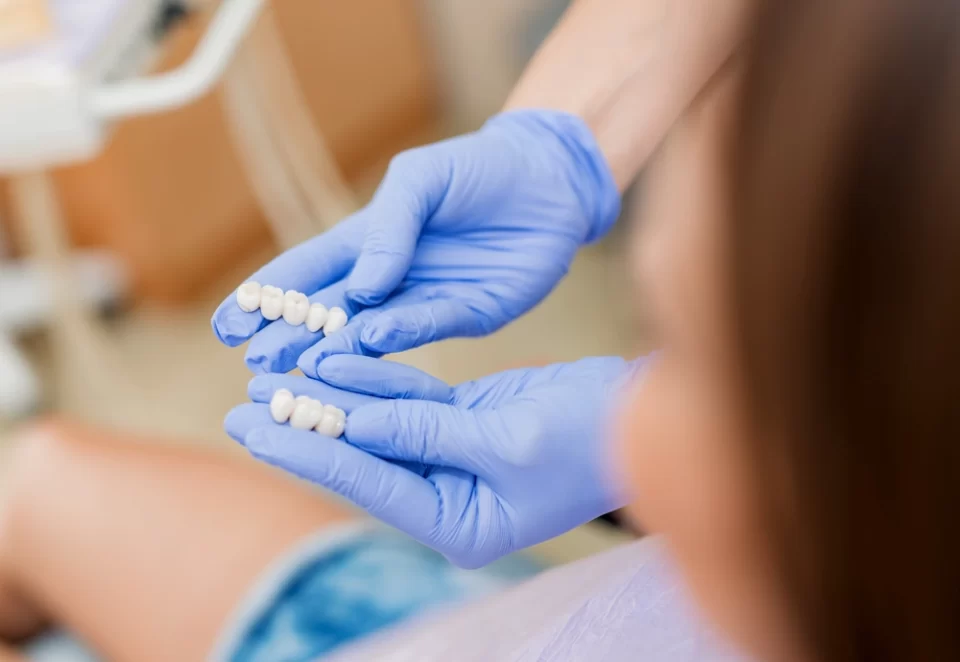
Traditional lab-made crowns are custom restorations fabricated outside the dental office.
A dental laboratory uses impressions or digital scan information supplied by the dentist.
The process commonly requires two appointments, although individual timelines vary.
The First Appointment
During the initial visit, the dentist examines and prepares the tooth.
A conventional impression or digital scan captures the necessary details.
The information is then sent to the dental laboratory.
Temporary Crown Placement
A temporary crown is often placed while the permanent restoration is being made.
The temporary helps protect the prepared tooth and maintain function.
However, it is not designed to perform exactly like the final restoration.
Laboratory Fabrication
Dental technicians use the provided information to create the permanent crown.
Depending on the workflow, the crown may be designed digitally, milled, cast, pressed, or finished using other laboratory techniques.
The Second Appointment
Once the crown is ready, the patient returns to the dental office.
The temporary restoration is removed.
The dentist checks the permanent crown’s fit, contacts, appearance, and bite before attachment.
Why Does Laboratory Fabrication Take Longer?
Laboratory fabrication involves scheduling, production, finishing, and communication between the dental office and the technician.
Custom work may require additional steps.
The process can take several days to a few weeks depending on the practice and laboratory.
Does Traditional Mean Outdated?
Not at all.
Modern laboratories frequently use sophisticated scanning, design software, milling equipment, and advanced materials.
A lab-made crown may be digitally designed even when the patient receives it during a second appointment.
Traditional laboratory delivery does not necessarily mean old-fashioned manufacturing.
Same-Day Crowns vs Traditional Crowns: The Side-by-Side Comparison
For patients comparing same-day crowns vs traditional crowns, a clear overview can help explain the practical differences.
| Feature | Same-day crowns | Traditional lab-made crowns |
| Appointment schedule | Often one visit | Commonly two visits |
| Crown fabrication | Usually performed in the office | Performed at a dental laboratory |
| Impression method | Typically digital scanning | Conventional impressions or digital scanning |
| Temporary crown | Often unnecessary | Commonly used |
| Material options | Depend on the office’s manufacturing system | May include a broader variety of materials and fabrication methods |
| Appearance customization | Digital design and available finishing techniques | Digital design plus potential laboratory customization |
| Fit | Depends on scanning, design, fabrication, and placement | Depends on impressions or scanning, fabrication, and placement |
| Longevity | Can provide years of service | Can provide years of service |
| Cost | Varies by practice and case | Varies by practice and case |
Neither method automatically guarantees a superior result.
An appropriately fabricated same-day crown can perform well.
A carefully planned lab-made crown can also provide excellent function and appearance.
The best option depends on individual clinical circumstances.
Digital Scanning vs. Traditional Impressions: Goodbye to the Goopy Stuff?
One of the most noticeable developments in dental crown technology is digital scanning.
Traditional impressions often use a soft material placed in a tray.
The material records the shape of the prepared tooth and surrounding structures.
For some patients, particularly those with a sensitive gag reflex, conventional impressions can feel uncomfortable.
How Digital Scanners Work
An intraoral scanner captures digital images of the teeth and surrounding tissues.
Specialized software combines the information into a three-dimensional model.
The dentist can review the scan and identify whether additional information is needed.
Does Digital Scanning Improve Comfort?
Many patients find digital scanning more comfortable than conventional impression materials.
However, individual experiences vary.
Are Digital Impressions Always More Accurate?
Not necessarily.
Both conventional and digital impression systems can produce clinically acceptable results when used appropriately.
Accuracy depends on the scanner, clinical conditions, operator technique, and restoration requirements.
Can Digital Scans Be Used for Lab-Made Crowns?
Yes.
This is an important detail in the same-day crowns vs traditional crowns discussion.
A digital scan does not automatically mean a same-day crown.
The dentist can send the digital file to a dental laboratory for fabrication.
That allows practices to combine modern scanning technology with traditional laboratory workflows.
Illume Dental of McKinney’s published crown process describes the use of a conventional impression or digital scan, followed by laboratory fabrication and permanent crown placement.
The Temporary Crown Question: Do Patients Really Need One?
Temporary crowns are commonly associated with traditional laboratory crown treatment.
They protect the prepared tooth while the permanent restoration is being fabricated.
However, temporary crowns have their own limitations.
Why Temporary Crowns Are Used
They help cover exposed prepared tooth structure and maintain the tooth’s general function.
They can also help preserve spacing and appearance during the fabrication period.
Can Temporary Crowns Feel Different?
Yes.
Temporary crowns may feel slightly different from natural teeth or permanent restorations.
Their materials and attachment methods are intended for short-term use.
What Foods Should Patients Avoid?
Dentists often recommend avoiding very sticky or particularly hard foods while wearing a temporary crown.
These foods may loosen or damage it.
What Happens if the Temporary Falls Off?
Patients should contact their dental office for guidance.
They should not use household adhesives to reattach it.
Why Same-Day Crowns May Be Convenient
A successful same-day workflow can eliminate the temporary-crown stage.
This may be appealing to patients who want fewer visits and less time managing a temporary restoration.
However, avoiding a temporary crown should not take priority over selecting the most appropriate permanent restoration.
Do Same-Day Crowns Fit Better Than Traditional Crowns?
Crown fit is one of the most important aspects of restorative treatment.
Patients may assume that computer manufacturing automatically produces a more accurate crown.
Others believe that laboratory technicians always create a better fit.
Neither generalization is reliable.
What Determines Crown Fit?
Several factors contribute:
- Accuracy of the tooth preparation.
- Quality of the digital scan or conventional impression.
- Clarity of the restoration margins.
- Accuracy of design and fabrication.
- Appropriate material selection.
- Quality of bonding or cementation.
- Careful evaluation of the bite.
Can Digital Technology Reduce Errors?
Digital systems can improve workflow consistency and allow dentists to review scanned information before fabrication.
However, scanners and software do not eliminate human judgment or technical limitations.
Can Lab-Made Crowns Fit Just as Well?
Yes.
Well-made laboratory crowns can achieve clinically acceptable fit and function.
Laboratories may use digital or conventional manufacturing methods.
What Does Clinical Research Suggest?
Research comparing CAD/CAM and conventional crown production has found that both can produce acceptable clinical outcomes.
However, results differ depending on the study, materials, manufacturing techniques, and evaluation criteria.
Why the Dentist’s Evaluation Remains Essential
Even a computer-designed crown must be checked inside the patient’s mouth.
The dentist may need to adjust contacts or bite relationships before final placement.
A crown should not be considered successful merely because the manufacturing software completed its job.
Which Crown Looks More Natural?
Appearance matters, particularly when a crown is placed on a visible tooth.
Patients generally want a restoration that blends with surrounding teeth rather than announcing its presence every time they smile.
Same-Day Crown Appearance
Modern same-day crown systems can produce attractive tooth-colored restorations.
Digital design and available finishing techniques help customize shape and appearance.
Traditional Lab-Made Crown Appearance
Dental technicians may use additional layering, staining, and finishing techniques to reproduce complex tooth characteristics.
This can be useful when matching highly visible front teeth.
Why Front Teeth Can Be Challenging
Natural teeth are not one uniform shade.
They may have differences in translucency, brightness, surface texture, and color across different areas.
Matching a single front tooth can therefore be more demanding than restoring a less visible molar.
Are Lab-Made Crowns Always More Beautiful?
No.
Some same-day restorations achieve excellent aesthetic results.
Likewise, laboratory crowns do not automatically look natural.
The outcome depends on the material, design, finishing, and clinical execution.
When Might Laboratory Customization Help?
Patients requiring particularly detailed shade matching or complex cosmetic work may benefit from additional laboratory involvement.
The dentist should explain which approach can best meet the desired appearance.
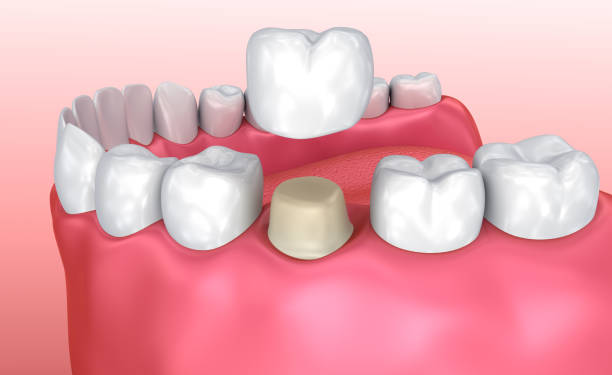
The Material Matters: Zirconia, Ceramic, Porcelain, and Metal
The material used for a crown can influence its strength, appearance, preparation requirements, and suitability.
This is why same-day crowns vs traditional crowns cannot be judged by manufacturing speed alone.
Lithium Disilicate
Lithium disilicate is a glass-ceramic material used for certain tooth-colored crowns.
It offers useful aesthetic properties and can provide appropriate strength for selected restorations.
Its suitability depends on tooth location, preparation, and biting forces.
Zirconia
Zirconia is a strong ceramic used for many dental restorations.
It may be appropriate for back teeth and other situations involving significant chewing forces.
However, material thickness, surface finishing, and individual bite conditions still matter.
Porcelain-Fused-to-Metal
These crowns combine a metal framework with a porcelain exterior.
They have a long history in restorative dentistry.
Laboratory fabrication is commonly used for these restorations.
Gold and Other Metal Alloys
Metal crowns can provide favorable wear and strength characteristics.
Their appearance makes them less desirable for some visible teeth.
Are All Materials Available With Same-Day Systems?
No.
Available materials depend on the practice’s milling or manufacturing equipment and the specific restorative system.
Some materials require processing steps that may not fit a same-day workflow.
Can Dental Labs Offer More Choices?
Laboratories may offer additional fabrication methods and materials.
However, the actual options depend on the laboratory and dental practice.
What Should Patients Ask?
Rather than focusing only on whether the crown is made in one day, patients should ask why the recommended material is suitable for their tooth.
Are Same-Day Crowns as Strong as Traditional Crowns?
Patients sometimes assume a crown manufactured quickly must be weaker than one made over several days.
That is not necessarily true.
The strength of a crown depends on the material, design, thickness, and clinical conditions.
Manufacturing Time Is Not the Same as Material Strength
A material does not become automatically stronger simply because fabrication takes longer.
Likewise, rapid computer manufacturing does not make a restoration automatically durable.
What About Back Molars?
Back teeth experience substantial chewing forces.
The dentist may recommend a material and design intended to tolerate those loads.
Can Same-Day Crowns Crack?
Yes.
Like other dental restorations, same-day crowns can chip, fracture, or require replacement.
Can Lab-Made Crowns Break?
Yes.
Traditional laboratory crowns are also vulnerable to damage from grinding, trauma, decay, or other factors.
Why Remaining Tooth Structure Matters
A crown depends on the prepared natural tooth for support.
If the underlying tooth has extensive damage, its condition may influence the long-term outcome.
Does More Expensive Mean Stronger?
Not automatically.
The most appropriate crown balances material properties, structural needs, appearance, and clinical judgment.
The Longevity Debate: Which Crown Lasts Longer?
One of the most common questions about same-day crowns vs traditional crowns involves lifespan.
Patients want to know whether the faster option sacrifices years of service.
Research does not support a simple universal answer.
Both Methods Can Produce Long-Lasting Restorations
Clinical studies have documented successful outcomes with CAD/CAM crowns and conventionally fabricated crowns.
However, results vary across different materials, study designs, follow-up periods, and patient populations.
What Can Cause Crown Failure?
Common contributing factors include:
- New decay around crown margins.
- Excessive biting forces.
- Teeth grinding.
- Crown fracture.
- Problems with cementation.
- Damage to the underlying tooth.
- Gum disease or other oral health problems.
Does a Crown Last Forever?
No.
Crowns can function for many years, but replacement may eventually become necessary.
There is no guaranteed lifespan for either manufacturing method.
Why Comparing Studies Can Be Difficult
A study of ceramic same-day crowns may not be directly comparable to research involving laboratory-made metal-ceramic crowns.
Different materials and clinical circumstances influence the results.
What Is the Most Useful Conclusion?
A well-selected crown made using an appropriate manufacturing method can provide lasting service.
Patients should prioritize the restoration’s suitability and quality of care rather than assuming that one fabrication technique always lasts longer.
Dental Crown Costs in McKinney: Does Faster Mean Cheaper?
Speed does not automatically translate into lower cost.
Same-day crown technology requires substantial equipment, specialized software, materials, and staff training.
Traditional lab-made crowns involve laboratory fabrication fees and multiple appointments.
Why Same-Day Crown Pricing Varies
A dental office may account for:
- Digital scanning equipment.
- Design software.
- Milling machinery.
- Ceramic materials.
- Manufacturing and finishing time.
- Professional treatment and placement.
Why Lab-Made Crown Pricing Varies
A traditional crown fee may reflect:
- Examination and preparation.
- Impression or digital scan.
- Temporary crown.
- Laboratory services.
- Material selection.
- Permanent fitting and placement.
Can Same-Day Crowns Cost Less?
Sometimes.
However, some offices charge similar or higher fees because of equipment and manufacturing expenses.
Can Lab-Made Crowns Be More Affordable?
In certain situations, yes.
Prices vary by practice, materials, insurance arrangements, and treatment complexity.
Illume Dental’s Published Crown Fee
Illume Dental of McKinney publishes a reference fee of $1,701 for dental crowns on its service page.
The actual cost may vary depending on patient needs and additional procedures.
This is not a same-day crown quote.
What About Insurance?
Dental plans may provide benefits for medically or dentally necessary crowns, subject to policy restrictions.
Coverage depends on the procedure, network status, deductibles, waiting periods, and annual maximums.
How Should Patients Compare Estimates?
A written estimate should clarify the crown material, proposed treatment, additional services, and expected patient responsibility.
The lowest advertised price does not always represent the lowest complete treatment cost.
When Same-Day Crowns May Be a Practical Choice
Same-day crowns can be particularly appealing when convenience matters and the tooth is suitable for the available technology.
Busy Professionals
Patients with demanding work schedules may appreciate fewer office visits.
Parents With Limited Free Time
Arranging childcare or transportation for multiple dental appointments can be challenging.
A one-visit treatment may reduce those logistical concerns.
Patients Who Prefer Digital Scanning
Digital scanning may be more comfortable for some individuals than conventional impression materials.
Patients Who Want to Avoid a Temporary Crown
A same-day workflow can often eliminate the need for a temporary restoration.
Selected Back-Tooth Restorations
Certain molars and premolars may be suitable for same-day ceramic crowns when the clinical circumstances and available materials support that approach.
The Important Limitation
Same-day fabrication should not be used simply because it is convenient.
The dentist must determine whether the technique and available materials are appropriate for the tooth.
When Traditional Lab-Made Crowns May Make More Sense
Traditional laboratory fabrication remains important for many restorative situations.
Highly Visible Front Teeth
Patients seeking detailed aesthetic matching may benefit from laboratory customization.
Complex Restorative Cases
Some cases require specialized fabrication, communication, or techniques that are more suitable for a dental laboratory.
Specific Material Preferences
Certain crown materials may be more readily available through laboratory workflows.
Multiple Crowns
When several teeth require coordinated restorations, laboratory planning may provide useful flexibility.
Challenging Bite Relationships
Some patients have complicated bite patterns that require additional design and evaluation.
Existing Restorative Work
A new crown may need to match nearby crowns, bridges, or other restorations.
Laboratory customization can sometimes be helpful.
Does a Second Visit Mean Lower-Quality Technology?
No.
A two-appointment treatment plan may still involve modern digital impressions, advanced manufacturing systems, and highly customized restorations.
The number of appointments does not determine the sophistication of the treatment.
Does Crown Preparation Hurt? What Patients Can Expect
Regardless of whether the crown is made in one day or at a laboratory, tooth preparation usually follows similar clinical principles.
Local Anesthesia
Local anesthesia is commonly used to numb the treatment area.
Removing Damage
The dentist removes decay or compromised tooth structure when necessary.
Preparing the Tooth
The tooth is shaped to accommodate the selected restoration.
Recording the Tooth’s Shape
A digital scan or conventional impression captures the necessary details.
Fitting the Restoration
The dentist evaluates the crown before final placement.
Aftercare
Some temporary sensitivity may occur.
Patients should contact their dentist if the crown feels too high, pain worsens, or chewing becomes uncomfortable.
A faster fabrication process does not automatically eliminate postoperative sensitivity.
The underlying tooth’s condition and treatment complexity also influence recovery.
The Teeth-Grinding Problem: Can Either Crown Survive Bruxism?
Teeth grinding and clenching can create substantial pressure on dental restorations.
This condition, called bruxism, may occur during sleep or while awake.
How Grinding Affects Crowns
Repeated excessive forces may contribute to wear, fractures, and other complications.
Are Same-Day Crowns More Vulnerable?
Not necessarily.
The risk depends on the material, crown design, and patient’s biting forces.
Are Lab-Made Crowns Stronger Against Grinding?
Not automatically.
A laboratory crown made from an unsuitable material or design may also develop problems.
Can a Night Guard Help?
A dentist may recommend a protective oral appliance for selected patients.
It can help manage forces acting on teeth and restorations.
However, it does not necessarily stop grinding itself.
Why Treatment Planning Matters
Patients with substantial tooth wear or grinding habits should discuss those findings before crown placement.
The restoration should be selected with the patient’s actual bite in mind.
Seven Questions Worth Asking Before Choosing a Crown
Patients can make more informed decisions by asking practical questions during their restorative consultation.
1. Why Does This Tooth Need a Crown?
The dentist should explain the damage and whether a filling or another restoration could be appropriate.
2. Which Material Is Recommended?
The patient should understand why the selected material suits the tooth’s location and condition.
3. Is the Crown Fabricated In-House or at a Laboratory?
This clarifies the treatment schedule and available manufacturing options.
4. Will a Temporary Crown Be Needed?
Patients can prepare for any short-term food or care restrictions.
5. How Will Fit and Bite Be Checked?
The dentist should evaluate the restoration’s relationship with neighboring and opposing teeth.
6. What Is Included in the Cost?
Patients should request an estimate showing the anticipated services and any additional fees.
7. What Happens if the Crown Feels Uncomfortable?
The practice should explain how follow-up concerns and adjustments are handled.
These questions are more valuable than choosing a restoration based on how quickly a machine can produce it.
McKinney’s Crown Technology Conversation: What Illume Dental Offers
Patients exploring same-day crowns vs traditional crowns in McKinney TX deserve an explanation of the actual treatment options available at their dental practice.
At Illume Dental of McKinney, Dr. Eileen Chen-Mizuuchi and the dental team provide customized dental crown treatment using a multi-step restorative process.
The practice’s published dental crown information describes evaluating the tooth, preparing it, taking conventional impressions or digital scans, and sending the information to a dental laboratory.
A temporary crown is typically used while the permanent restoration is being fabricated.
Once the final crown is ready, the patient returns for fitting and placement.
Technology Supports Treatment Planning
Illume Dental describes using digital imaging and three-dimensional scanning technology in restorative dentistry.
These tools help the team evaluate teeth and develop treatment plans.
Laboratory Fabrication Allows Customization
The laboratory process can support the creation of restorations based on the patient’s tooth shape, bite, and material requirements.
Comfort and Function Matter
The dentist checks the permanent crown before final placement.
The goal is to achieve appropriate function and a comfortable fit.
Each Tooth Needs Its Own Plan
A large damaged molar may require different restorative considerations from a visible front tooth.
The appropriate treatment depends on the patient’s clinical needs.
What About Same-Day Crowns?
Illume Dental’s published crown service process describes laboratory-made crowns rather than confirming in-office same-day crown manufacturing.
Patients specifically interested in a one-visit crown should contact the office to ask about current availability and whether the technique is suitable for their needs.
Additional information is available through the practice’s Dental Crowns and Restorative Dentistry service pages.
FAQs About Same-Day Crowns vs Traditional Crowns
Are same-day crowns better than traditional crowns?
Not automatically. Same-day crowns offer convenience, while laboratory-made crowns may provide additional fabrication and customization options. The best choice depends on the tooth and treatment requirements.
Do same-day crowns last as long as lab-made crowns?
Both can provide years of service. Longevity depends on material, fabrication, tooth condition, bite forces, and oral hygiene rather than manufacturing time alone.
Are same-day crowns cheaper?
Not necessarily. Pricing varies by dental practice, equipment, materials, and treatment complexity. Patients should compare complete written estimates.
Do traditional crowns require two appointments?
Usually, yes. The first appointment involves preparation and impressions or scanning. The second generally involves fitting and placing the permanent crown.
Are same-day crowns made from porcelain?
Many same-day crowns are made from dental ceramic materials, including certain glass ceramics and zirconia. Material availability depends on the manufacturing system and clinical situation.
Can lab-made crowns use digital scans?
Yes. Modern dental laboratories frequently work with digital scan information. Digital impressions do not automatically mean the crown will be fabricated on the same day.
Which crown looks more natural?
Both methods can produce attractive restorations. Certain complex aesthetic cases may benefit from additional laboratory customization, but appearance depends on materials and fabrication quality.
Do same-day crowns need temporary crowns?
Often, no. When the permanent crown is successfully manufactured and placed during one appointment, a temporary crown is generally unnecessary.
Does Illume Dental of McKinney offer traditional lab-made crowns?
Yes. Its published dental crown process describes laboratory fabrication, temporary crown placement, and a subsequent appointment for final fitting.
How can patients choose the right crown?
A dental examination can help determine which materials and manufacturing methods are appropriate for the tooth’s condition, location, and functional needs.
The Best Crown Isn’t the Fastest One It’s the One That Fits the Tooth
Technology has transformed restorative dentistry, giving patients more choices in how dental crowns are designed and manufactured.
Same-day crowns can offer convenient one-visit treatment for suitable cases.
Traditional laboratory-made crowns provide an established option with flexible manufacturing and customization methods.
Neither approach automatically guarantees greater strength, better appearance, or a longer lifespan.
At Illume Dental of McKinney, Dr. Eileen Chen-Mizuuchi and the dental team help patients understand their restorative options through individualized examinations and treatment planning.
The practice provides customized crowns designed to restore damaged teeth and support comfortable function.
Its published process combines diagnostic evaluation, impressions or digital scanning, laboratory fabrication, and careful final fitting.
For patients comparing same-day crowns vs traditional crowns, the most important questions involve whether the restoration suits the tooth, how it will function, and what long-term care may be required.
A crown should be selected according to the patient’s dental condition rather than the speed of fabrication alone.
This article is for general education and does not replace a dental exam or personalized advice. Treatment recommendations depend on your health history and a clinical evaluation. To discuss your situation, contact Illume Dental of McKinney to schedule a visit.