Sedation Dentistry Costs: Nitrous vs. Oral Conscious Sedation in TX
Dental appointments are not everyone’s favorite calendar event. For some patients, the thought of sitting in the dentist’s chair brings more anxiety than the actual treatment. Fortunately, sedation dentistry offers ways to make dental visits more comfortable. But how much does sedation dentistry cost in Texas? Nitrous oxide generally costs less than oral conscious sedation, although actual prices depend on the dental practice, procedure length, and level of monitoring required.
Understanding sedation dentistry costs helps patients compare their options before committing to treatment. At Illume Dental of McKinney, patients can explore sedation options that match their comfort needs, medical history, and planned dental procedures. The goal is to make dental care more manageable without leaving patients confused about the financial details.
A Calmer Dental Visit: What Are Patients Actually Paying For?
Sedation dentistry uses medications or inhaled gases to help patients feel more relaxed during dental treatment.
It can be particularly helpful for people who experience dental anxiety, have difficulty tolerating certain procedures, or require extensive restorative work.
However, sedation is not the same as pain control.
Local anesthesia is commonly used to numb the treatment area, while sedation helps reduce anxiety and awareness of the procedure.
The two approaches may be used together.
The cost of sedation generally reflects more than the medication itself.
Depending on the method, the fee may include:
- Sedation medication or gas.
- Equipment used to administer sedation.
- The dental team’s time and training.
- Patient monitoring.
- Additional appointment preparation.
- Recovery observation when necessary.
- Materials and safety procedures.
For oral sedation, the dentist may also need to review medications, evaluate medical conditions, and provide detailed instructions before the appointment.
These steps are important because patients respond differently to sedation.
Sedation dentistry costs also vary because not every patient needs the same level of relaxation.
Someone who feels mildly nervous during a filling may have different needs from a patient with severe dental anxiety who requires several procedures.
The appropriate method should be selected based on safety, clinical needs, and patient preferences—not price alone.
The Texas Price Tag: How Much Does Sedation Dentistry Cost?
Patients researching sedation dentistry costs in Texas will encounter different prices depending on the office and the type of sedation.
Nitrous oxide is generally the less expensive option.
Oral conscious sedation usually costs more because it involves prescribed medication, additional preparation, and potentially longer monitoring or recovery.
Estimated Sedation Dentistry Costs in Texas
| Sedation method | Illustrative Texas price range | Common characteristics |
| Nitrous oxide (laughing gas) | 50–150 per appointment | Mild relaxation, quick onset, relatively fast recovery |
| Oral conscious sedation | 150–500 per appointment | Medication taken before treatment, stronger or longer-lasting relaxation, escort required |
| IV sedation | 400–1,200+ depending on the session | Greater potential sedation depth, more extensive monitoring |
These are broad illustrative ranges drawn from published Texas dental-practice pricing, not statewide averages or quoted fees from Illume Dental of McKinney. Actual fees can fall outside these ranges.
A published price from one Texas practice does not establish what another office will charge.
Some practices have flat sedation fees. Others charge according to appointment duration, sedation level, or additional services.
The underlying dental procedure is also typically billed separately.
For example, someone receiving a filling with nitrous oxide may pay for the filling, sedation, and any other necessary services.
A patient undergoing a longer restorative procedure with oral sedation may have a substantially different total.
This is why patients should request an individualized estimate rather than relying entirely on advertised ranges.
Nitrous Oxide: The Budget-Friendly Route to a More Relaxed Appointment
Nitrous oxide, commonly called laughing gas, is one of the most familiar forms of dental sedation.
Despite its nickname, it does not necessarily make patients laugh.
Instead, it typically produces a mild feeling of relaxation while the patient remains awake and able to respond.
How Nitrous Oxide Works
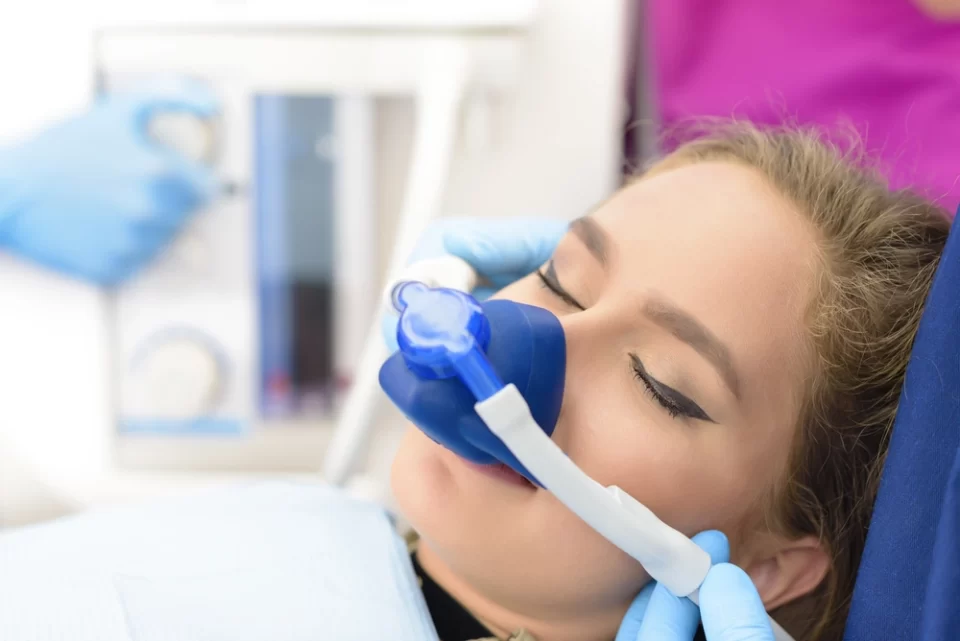
The patient breathes a controlled mixture of nitrous oxide and oxygen through a small mask placed over the nose.
The effects usually begin within minutes.
The dentist can adjust the concentration during treatment according to the patient’s response and clinical needs.
Once the nitrous oxide is stopped, the patient receives oxygen and the sedative effects generally diminish quickly.
What Does Nitrous Oxide Cost in Texas?
Published Texas practice pricing commonly places nitrous oxide around 50–150 per appointment, although some offices charge more.
The exact price depends on the practice and treatment circumstances.
Patients should ask whether the quoted fee covers the entire visit or a specific period.
Why Is Nitrous Oxide Usually Less Expensive?
Nitrous oxide often requires less recovery time than oral conscious sedation.
Its effects can be adjusted during the appointment and generally wear off relatively quickly.
This can make it a practical option for shorter procedures and patients with mild dental anxiety.
Who Might Benefit From Nitrous Oxide?
Nitrous oxide may be appropriate for patients who:
- Feel nervous about dental treatment.
- Want a mild relaxation option.
- Have difficulty tolerating certain procedures.
- Prefer a method with relatively quick recovery.
- Need a filling or another routine dental procedure.
However, nitrous oxide is not appropriate for everyone.
Certain respiratory conditions, medical circumstances, or other factors may influence whether it is recommended.
A dentist should review the patient’s health history before treatment.
Can Patients Drive After Nitrous Oxide?
Many adults can resume ordinary activities after nitrous oxide alone once the dentist confirms that they have recovered adequately.
However, patients should not assume that driving is automatically appropriate.
If additional sedatives were used, or if recovery is incomplete, different restrictions may apply.
Illume Dental of McKinney can explain the appropriate aftercare instructions for the planned procedure.
Oral Conscious Sedation: Paying More for a Different Level of Relaxation
Oral conscious sedation is another option for patients who experience significant nervousness during dental visits.
Unlike nitrous oxide, which is inhaled through a mask, oral sedation involves taking a prescribed medication.
The medication helps the patient relax, often producing greater drowsiness and a longer-lasting effect.
How Oral Conscious Sedation Works
A dentist prescribes medication based on the patient’s medical history, treatment plan, and intended level of sedation.
The medication is taken according to specific instructions before the procedure.
Because oral medications take time to work, patients must follow the schedule provided by the dental team.
What Does Oral Conscious Sedation Cost in Texas?
Published estimates from Texas dental practices often range from approximately 150–500 per appointment.
Some practices charge higher fees depending on the level of sedation, duration, monitoring, and other requirements.
The prescribed medication may be included in the fee or billed separately.
Patients should verify this before their appointment.
Why Does Oral Sedation Often Cost More?
Oral sedation generally requires additional preparation and recovery planning.
Depending on the sedation level, patients may need:
- A more detailed health evaluation.
- A prescription and medication instructions.
- Transportation arrangements.
- Additional monitoring.
- A longer recovery period.
- Someone to accompany them after treatment.
These considerations contribute to the overall cost.
Will the Patient Be Asleep?
Not necessarily.
The term conscious sedation refers to a range of sedation experiences in which patients generally retain some ability to respond.
The actual level of responsiveness depends on the medication, dose, and individual reaction.
Patients may feel drowsy or remember less of the appointment.
However, oral sedation should not be described as guaranteed sleep or complete unconsciousness.
Can Patients Drive Home?
No. Patients receiving oral conscious sedation should arrange for a responsible adult to provide transportation.
Driving, operating machinery, and making important decisions may remain unsafe after treatment.
Patients should follow the dentist’s instructions about recovery and activity restrictions.
Who Might Benefit From Oral Sedation?
Oral sedation may be considered for patients with substantial dental anxiety, those who have difficulty tolerating longer appointments, or individuals who need more relaxation than nitrous oxide can provide.
However, it may not be suitable for everyone.
Medical conditions, other medications, sleep-related breathing concerns, and previous reactions to sedation can influence the decision.
Nitrous vs. Oral Sedation: Which One Delivers Better Value?
The cheapest option is not always the most appropriate one.
A better comparison considers price, anxiety level, recovery time, and the type of dental procedure.
| Comparison factor | Nitrous oxide | Oral conscious sedation |
| Typical cost | Generally lower | Generally higher |
| Administration | Inhaled through a nasal mask | Prescribed oral medication |
| Onset | Usually within minutes | Requires advance planning |
| Sedation effect | Usually mild and adjustable | Often more pronounced and longer-lasting |
| Patient awareness | Usually remains fully responsive | Generally remains responsive but may be drowsy |
| Recovery | Typically faster | Usually requires additional recovery time |
| Transportation | Often unnecessary after full recovery if used alone | Responsible adult escort required |
| Common consideration | Mild anxiety or shorter procedures | Greater anxiety or longer appointments |
When Nitrous Oxide May Be the Better Value
Nitrous oxide may offer sufficient relaxation for a patient who is nervous about a filling but otherwise comfortable with dental care.
In that situation, paying for longer-lasting oral sedation may provide little additional benefit.
However, the decision depends on individual needs.
When Oral Sedation May Be Worth the Additional Cost
A patient with significant anxiety may have difficulty completing treatment with mild sedation alone.
Oral conscious sedation may provide an appropriate alternative when the dentist determines that the patient is a suitable candidate.
The higher fee may be reasonable if the method helps the patient complete recommended treatment comfortably.
Does More Expensive Mean More Effective?
Not automatically.
Sedation methods differ in how they work, their intended depth, and their recovery requirements.
A more expensive option is not necessarily safer, more comfortable, or more appropriate.
The best value comes from choosing the least intensive method that adequately meets the patient’s clinical and comfort needs.
Why Two Texas Dental Offices May Quote Different Prices
Comparing sedation dentistry costs is not always as simple as comparing two numbers online.
Dental practices may structure their fees differently.
Appointment Length
Some practices charge a flat fee per appointment.
Others account for the time sedation is administered.
A short restorative visit and a lengthy treatment session may therefore have different sedation costs.
Sedation Level
Minimal sedation and moderate sedation involve different clinical considerations.
The intended sedation level affects staff training, monitoring, and required precautions.
Medical Complexity
Patients with complicated medical histories may require additional evaluation before sedation can be considered.
In some situations, treatment may need to be coordinated with another healthcare professional or performed in a different setting.
Monitoring Requirements
Depending on the sedation technique and level, additional monitoring equipment and trained personnel may be necessary.
These requirements can affect pricing.
Combining Sedation Methods
A dentist may sometimes recommend combining sedation techniques.
However, combinations can change the intended level of sedation and may require different monitoring or permit requirements.
Patients should ask whether a quote includes more than one medication or sedation method.
Treatment Complexity
The sedation fee is separate from the cost of the underlying treatment at many practices.
A routine filling and a complex restorative procedure will not necessarily have comparable total fees.
The most useful estimate itemizes the charges and explains what is included.
The Hidden Costs That Are Not Always Hidden Just Overlooked
Patients often focus on the advertised sedation price.
However, the complete cost of a visit may include other services.
For example, depending on the treatment plan, a patient may also need a consultation, examination, dental imaging, or restorative work.
These should be discussed before treatment begins.
A Sample Cost Comparison
Consider a hypothetical dental procedure with a treatment fee of $400.
If nitrous oxide is priced at $100, the subtotal would be $500.
If oral sedation is priced at $350 instead, the subtotal would be $750.
That creates a $250 difference.
However, these figures are examples for explaining how estimates work—not actual prices at Illume Dental of McKinney.
Other fees, discounts, insurance benefits, or treatment requirements could change the final total.
Ask What the Sedation Fee Includes
Before scheduling, patients can ask:
- Is sedation charged per appointment or by time?
- Is the prescribed medication included?
- Are monitoring and recovery services included?
- Is a separate consultation required?
- Will additional imaging or testing be necessary?
- Are follow-up appointments included?
- What happens if the treatment takes longer than expected?
These questions help patients compare estimates more accurately.
An itemized treatment plan is particularly useful when considering a more involved procedure.

Does Dental Insurance Cover Sedation in Texas?
Insurance is one of the biggest uncertainties surrounding sedation dentistry costs in Texas.
Coverage depends on the patient’s specific plan, the sedation method, and the reason it is needed.
Nitrous Oxide Coverage
Some dental insurance plans exclude nitrous oxide when it is considered an elective comfort service.
Others may provide benefits in certain circumstances.
Patients should not assume it is covered simply because the underlying dental treatment is covered.
Oral Conscious Sedation Coverage
Oral sedation may also be excluded under some plans.
Coverage may be more likely when the insurer recognizes a qualifying medical or clinical necessity.
However, eligibility and documentation requirements vary considerably.
Medical Necessity Does Not Guarantee Coverage
Even when a dentist recommends sedation for clinical reasons, insurance payment is not automatic.
The insurer determines benefits according to the policy.
Patients may need prior authorization or additional documentation.
What About Deductibles and Annual Maximums?
Even when sedation is covered, out-of-pocket costs may remain.
Plan limitations, deductibles, waiting periods, and annual benefit maximums can affect payment.
Questions for the Insurance Provider
Before treatment, patients can ask whether the proposed sedation method is covered, whether preauthorization is required, and whether separate sedation billing is permitted under their plan.
It is also useful to request the applicable procedure codes from the dental practice.
A written insurance estimate is helpful, although it is not always a guarantee of final payment.
Can an HSA, FSA, or Financing Help With the Cost?
Patients paying out of pocket may have other ways to manage dental expenses.
Health Savings Accounts and Flexible Spending Accounts may be used for eligible dental services, subject to applicable rules and plan requirements.
However, eligibility should be verified rather than assumed.
Sedation associated with qualifying dental treatment may be treated differently from services that are purely cosmetic or otherwise excluded.
Patients should consult their plan administrator when uncertain.
What About Financing?
Some dental practices offer or work with third-party financing providers.
These arrangements may allow patients to divide eligible treatment expenses into payments.
However, interest rates, promotional terms, credit approval, and fees vary.
Patients should review the full repayment terms before agreeing.
Why a Written Estimate Matters
A useful treatment estimate should separate the dental procedure from the sedation fee.
This makes it easier to understand what insurance may cover and what the patient is expected to pay.
It also helps patients compare options without relying on vague advertisements.
What Texas Sedation Rules Mean for Patient Safety
Texas regulates dental sedation through the Texas State Board of Dental Examiners.
Dentists must hold the appropriate permit for the sedation techniques and levels they administer.
The state’s permit categories include nitrous oxide/oxygen inhalation sedation, minimal sedation, moderate sedation through enteral routes, moderate sedation through parenteral routes, and deep sedation or general anesthesia.
These requirements matter because sedation techniques have different safety considerations.
Why a Medical Review Comes First
Before recommending sedation, the dental team should review relevant information such as:
- Current medications.
- Medical conditions.
- Drug allergies.
- Previous reactions to anesthesia.
- Sleep-related breathing concerns.
- Tobacco and alcohol use.
- Other relevant health factors.
Some patients may need a different sedation approach or further medical evaluation.
Can Sedation Eliminate Every Risk?
No medical or dental sedation technique is entirely risk-free.
Potential concerns vary depending on the method, medication, and patient’s health.
The goal is to select an appropriate technique, follow required safety procedures, and monitor the patient according to the intended level of sedation.
Why Patients Should Avoid Choosing Solely by Price
A low sedation fee is not sufficient information for evaluating a dental office.
Patients should also understand who administers the medication, what monitoring is used, and how the team handles unexpected reactions.
An informed decision considers clinical suitability and safety alongside affordability.
When Dental Anxiety Starts Affecting the Budget
Dental anxiety can influence costs in ways that are easy to overlook.
Some patients postpone dental visits because they feel uncomfortable or worried about treatment.
Unfortunately, delaying necessary dental care may allow certain problems to progress.
For example, a small cavity may eventually require a more extensive restoration if decay continues.
However, not every untreated condition becomes worse at the same rate, and sedation itself does not prevent dental disease.
The Value of Completing Recommended Care
When sedation is clinically appropriate, it may help a patient tolerate necessary dental procedures.
That can make it easier to address existing concerns.
Could Several Procedures Be Completed Together?
In some cases, multiple treatments can be planned during one appointment.
This may reduce the number of separate visits.
However, combining procedures is not always appropriate, and it does not automatically reduce the overall cost.
The dentist must consider treatment complexity, appointment duration, and patient safety.
Is Sedation Needed for Every Nervous Patient?
No.
Some patients manage dental anxiety with clear communication, breaks during treatment, or other nonmedication approaches.
Others may benefit from nitrous oxide or oral conscious sedation.
Sedation should be discussed as one possible tool rather than the only way to make dental treatment manageable.
Which Patients Should Consider Each Sedation Option?
The choice between nitrous oxide and oral sedation should reflect the individual patient’s needs.
Patients With Mild Dental Anxiety
Nitrous oxide may be sufficient for individuals who feel uneasy but can generally cooperate during treatment.
Its relatively quick recovery may also be convenient.
Patients With More Significant Anxiety
Oral conscious sedation may be considered when a patient needs greater relaxation.
However, the medical evaluation and transportation requirements must be considered.
Patients With a Strong Gag Reflex
Some individuals have difficulty tolerating certain dental procedures because of a sensitive gag reflex.
Sedation may help in selected cases.
The dentist should evaluate whether it is appropriate for the procedure.
Patients With Longer Treatment Plans
Long appointments can be uncomfortable for some people.
Oral sedation may be considered when the treatment is extensive and the patient is an appropriate candidate.
Patients Who Need to Return to Work
For someone hoping to resume normal activities relatively quickly, nitrous oxide may be more convenient if it provides sufficient relaxation.
Oral sedation generally requires more recovery time and should not be scheduled around activities that require driving or important decisions.
Patients With Complex Medical Histories
Neither method should be selected without reviewing relevant health conditions.
Some patients may need additional precautions or an alternative approach.
How to Compare Sedation Quotes Without Getting Lost in the Numbers
Shopping for dental sedation should involve more than asking which office charges the lowest fee.
A clear comparison starts with understanding what treatment is planned.
Patients should first ask whether sedation is recommended and which method is clinically appropriate.
Next, they should request an estimate showing the sedation fee separately from the dental procedure.
Finally, they should clarify the preparation, monitoring, and recovery requirements.
Seven Questions Worth Asking
- Which sedation method is recommended, and why?
- What is the total estimated sedation fee?
- Is the fee separate from the dental treatment?
- Are there additional medication or monitoring charges?
- Will an adult escort be required?
- How long should recovery take?
- Can the office help explain potential insurance benefits?
A transparent discussion allows patients to plan for both financial and practical needs.
It also reduces the chance of choosing a sedation method based on an incomplete comparison.
McKinney Smiles Deserve More Than a One-Size-Fits-All Sedation Plan
For patients researching sedation dentistry in McKinney, TX, the most useful starting point is an individualized discussion with a dental professional.
Illume Dental of McKinney offers multiple sedation options, including nitrous oxide and oral conscious sedation.
Its published sedation information also describes IV sedation as an available option.
Dr. Chen and the dental team consider factors such as the planned treatment, medical history, and degree of dental anxiety when discussing appropriate sedation.
A Consultation Helps Clarify the Options
A patient who feels mildly nervous before a filling may not need the same method as someone facing a longer procedure.
The goal is to identify an option that balances comfort, safety, and practical considerations.
Treatment Costs Should Be Discussed Beforehand
Because sedation dentistry costs vary, patients should request a current individualized estimate directly from the practice.
The example ranges in this article are not Illume Dental’s published fees.
Recovery Planning Matters
Patients choosing oral conscious sedation should arrange a responsible adult to accompany them and provide transportation.
Patients receiving nitrous oxide alone may have a faster recovery, but they should still follow the dental team’s discharge instructions.
Choosing Comfort Without Guesswork
Patients deserve clear answers about the sedation experience, expected recovery, and potential costs.
Understanding these details can make it easier to plan dental treatment without unnecessary uncertainty.
FAQs: The Questions Patients Ask Before Saying Yes to Sedation
Is nitrous oxide cheaper than oral conscious sedation in Texas?
Usually, yes. Published Texas dental-practice prices commonly place nitrous oxide around 50–150 and oral sedation around 150–500 per appointment. Actual fees vary by practice and treatment.
Does dental sedation cost extra?
Often, yes. Many practices charge sedation separately from the dental procedure. Patients should request an itemized estimate to confirm what is included.
Is oral sedation stronger than laughing gas?
Oral conscious sedation often produces more pronounced and longer-lasting relaxation than nitrous oxide. However, the actual sedation level depends on the medication, dose, and patient’s response.
Can patients drive after nitrous oxide?
Many adults can drive after recovering fully from nitrous oxide alone, but clearance depends on the patient’s condition and whether other medications were administered. Follow the dentist’s instructions.
Will dental insurance pay for sedation?
Some plans provide benefits in qualifying circumstances, while others exclude elective sedation. Coverage depends on the policy, procedure, and documentation requirements.
Is sedation dentistry the same as being unconscious?
No. Nitrous oxide and oral conscious sedation generally allow patients to remain responsive. Deep sedation and general anesthesia are different levels of care.
Can patients request sedation for a routine filling?
Patients can ask about sedation for a filling or another procedure. The dentist will determine which options are appropriate based on medical history, treatment needs, and the patient’s anxiety level.
Does Illume Dental of McKinney offer nitrous oxide and oral sedation?
Yes. Illume Dental’s published sedation dentistry information lists both nitrous oxide and oral conscious sedation among its available options. Patients should contact the office for current availability, suitability, and pricing.
A More Comfortable Dental Visit Starts With Illume Dental of McKinney
Dental anxiety should not have to make every appointment feel like an obstacle.
For patients comparing sedation dentistry costs, understanding the difference between nitrous oxide and oral conscious sedation can make planning easier.
Nitrous oxide is generally the more affordable option and may be appropriate for mild anxiety or shorter appointments. Oral conscious sedation often costs more but may provide the additional relaxation some patients need for longer or more challenging treatment.
At Illume Dental of McKinney, Dr. Chen and the dental team help patients explore sedation options based on their needs and medical history.
The practice offers nitrous oxide, oral conscious sedation, and other sedation options for suitable patients.
Rather than assuming one method works for everyone, the team can discuss the available approaches and explain what patients should expect before, during, and after treatment.
Patients can also ask about current fees and request an individualized estimate before scheduling their procedure.
Whether someone is nervous about a routine filling or considering more extensive dental work, having clear information about comfort and cost can make the next step feel more manageable.
Ready to discuss sedation dentistry in McKinney, TX?
Patients can contact Illume Dental of McKinney at (469) 301-1255 or visit 5000 Collin McKinney Pkwy, Suite 100, McKinney, TX 75070 to request an appointment.
Learn more about the practice’s sedation dentistry options and schedule a consultation to discuss an appropriate treatment plan.
A more relaxed dental experience begins with the right information, a clear estimate, and a sedation option selected for the individual patient.
This article is for general education and does not replace a dental exam or personalized advice. Treatment recommendations depend on your health history and a clinical evaluation. To discuss your situation, contact Illume Dental of McKinney to schedule a visit.