When is a Root Canal Better Than a Tooth Extraction?
Key Takeaways
- The same symptom can have more than one cause, so diagnosis matters.
- Treatment choices should be based on the condition of the tooth, gums, bite, and overall health.
- Seek professional care when symptoms persist, worsen, or interfere with eating, sleeping, or daily life.
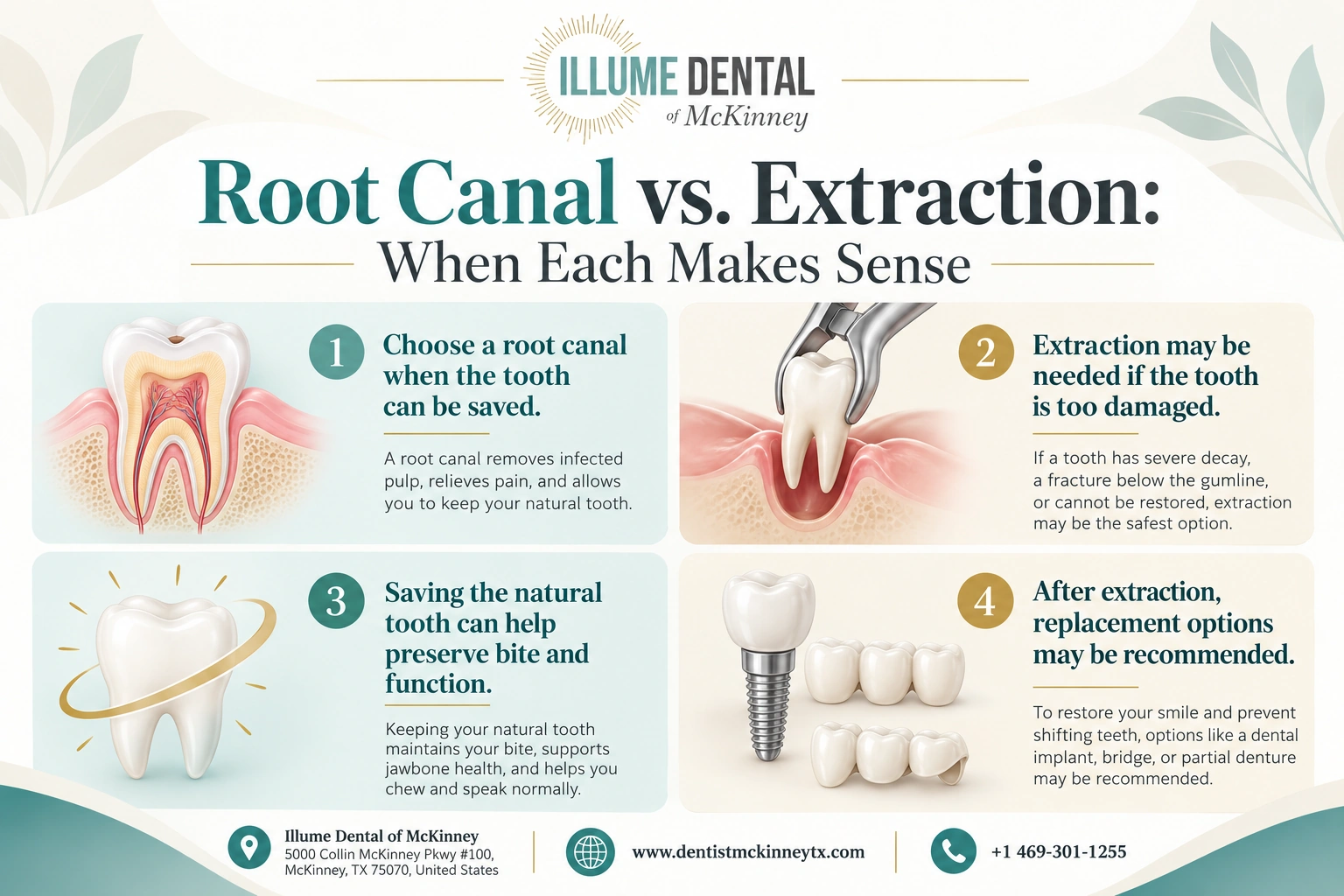
A root canal aims to keep a natural tooth by removing infected or inflamed pulp, disinfecting the inside, and sealing the tooth before it is restored. Extraction removes the tooth entirely. When a tooth is restorable and has adequate support, preserving it may avoid the need to replace a missing tooth; severely fractured or non-restorable teeth may need extraction.
Root Canal or Extraction? Get Answers!
Don't make the decision alone. Our dental team can help you choose the right treatment to protect your smile. Call now!
What does this mean for patients?
The practical question is not simply whether a treatment or symptom fits a label. It is how the finding affects comfort, function, long-term oral health, and the next decision. A dentist can combine your history with an examination and, when appropriate, dental imaging to identify what is actually happening.
How do the options differ?
| Question | Option 1 | Option 2 |
| Main goal | Preserve or restore function using the first approach | Use the alternative approach when its indications fit better |
| Treatment planning | Depends on anatomy, health, bite, and goals | Depends on the same clinical factors, but with different tradeoffs |
| Best choice | Not determined by a single keyword or symptom | Requires an exam and individualized recommendation |
A comparison is useful for understanding tradeoffs, but it cannot replace diagnosis. The condition of the teeth and supporting tissues often determines which options are realistically available.
When should you see a dentist?
Schedule an evaluation when the issue is persistent, recurring, worsening, or affecting chewing, speaking, sleep, or confidence. More urgent assessment is appropriate for significant facial swelling, fever with dental symptoms, trauma, uncontrolled bleeding, difficulty swallowing or breathing, or rapidly increasing pain.
Questions to ask at your visit
- What is the most likely cause in my case?
- Are there alternatives, and what are the tradeoffs?
- What should I expect during treatment and recovery?
- How will this affect my existing dental work or bite?
- What maintenance will help protect the result long term?
How Illume Dental Can Help You Make the Right Decision
If you are deciding between a root canal and tooth extraction, a dental evaluation can help you understand which treatment is appropriate for your situation. Your dentist can assess the affected tooth, surrounding gums, infection, and remaining tooth structure before discussing possible solutions.
Your treatment plan should prioritize your oral health, comfort, and long-term dental needs.
Frequently Asked Questions
Can this be diagnosed from symptoms alone?
Usually not. Symptoms can overlap across several dental conditions, so an examination is often needed to identify the cause and appropriate treatment.
Should I wait if the problem is not painful?
Pain is not the only sign that care may be needed. Bleeding, looseness, swelling, changes in fit, persistent odor, or functional problems can justify an evaluation even without significant pain.
Will everyone need the same treatment?
No. Dental treatment is individualized based on diagnosis, anatomy, health history, existing restorations, bite, and personal goals.
Save Your Tooth Before It's Too Late!
Experiencing severe tooth pain? Get a professional evaluation to find out if a root canal can save your natural tooth. Call today!