
How to Clean and Maintain Full-Arch Dental Implants
Full-arch dental implants need daily brushing, cleaning around their supporting components, and regular professional maintenance. For a fixed arch, this includes cleaning beneath the bridge, where a regular toothbrush may not reach. Although implants and artificial teeth cannot develop cavities, plaque can cause inflammation around the implants and damage their supporting tissues. Your cleaning routine should match your restoration’s design, with tools and techniques demonstrated by your dentist or hygienist. Instructions during surgical healing may differ from your eventual daily routine.
Key Takeaways
- Clean the replacement teeth and the accessible areas beneath and around the restoration.
- Fixed arches and removable implant dentures require different cleaning routines.
- Ask your dental team to select suitable cleaning tools and demonstrate their use.
- Bleeding, swelling, or looseness should be assessed rather than ignored.
- Professional maintenance remains necessary even when the restoration feels comfortable.
Why Does Cleaning Matter?
Plaque can accumulate around implant components and inflame the surrounding tissues.
Peri-implant mucositis is inflammation of the soft tissues around an implant without associated supporting bone loss. It can often be reversed with appropriate treatment and improved plaque control.
Peri-implantitis involves inflammation together with loss of supporting bone. It requires professional assessment and treatment. Daily cleaning and regular monitoring help protect implant health, but they do not guarantee that complications will never occur.
How Should You Clean a Fixed Full-Arch Restoration?
Once your treating team has cleared you for routine home care, follow a consistent cleaning plan.
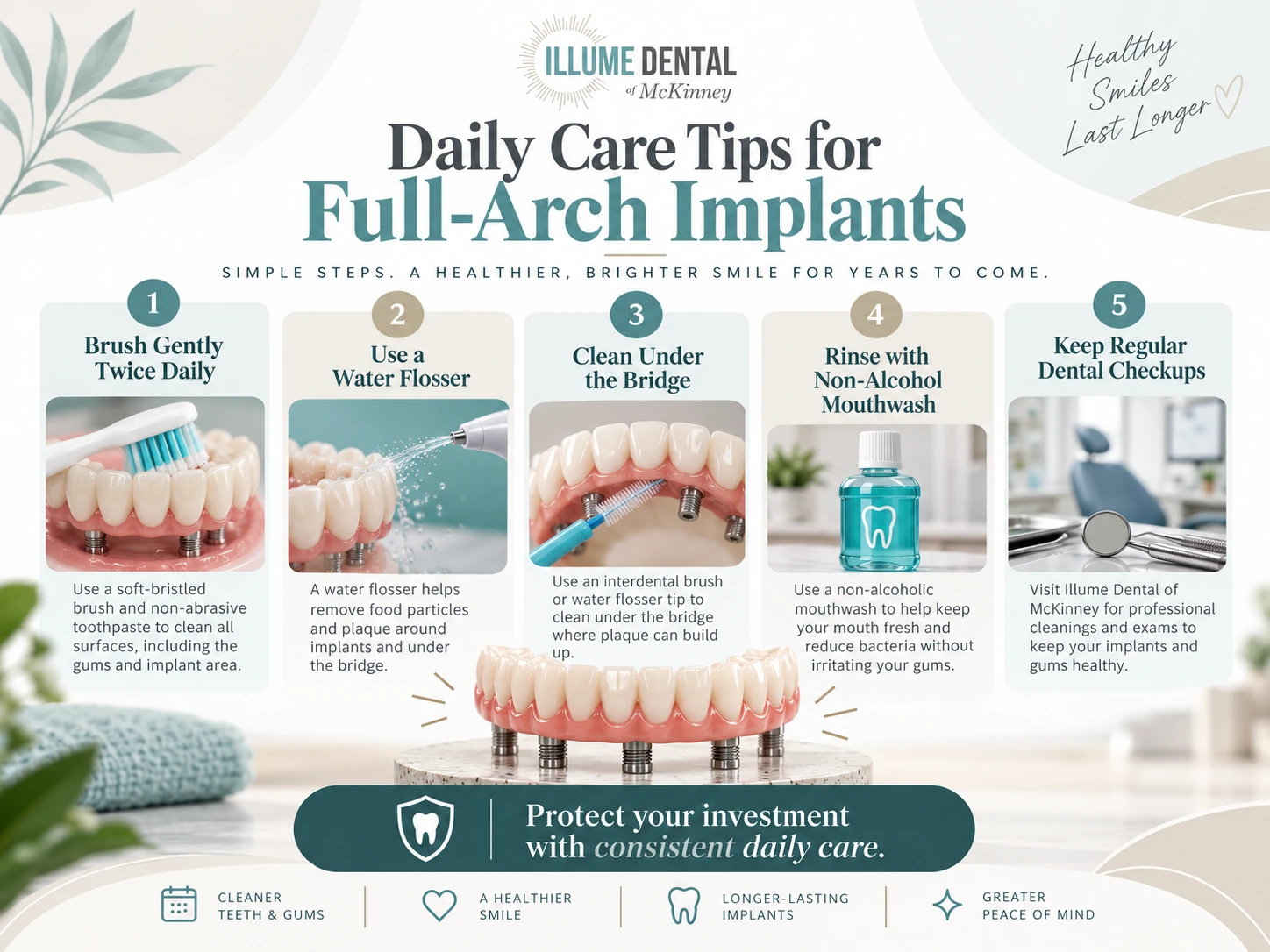
Brush Twice Daily
Use a soft-bristled manual or electric toothbrush. Clean the outer, inner, and chewing surfaces of the replacement teeth, paying attention to the accessible areas where the restoration meets the gums. Your dentist can recommend a suitable low-abrasive toothpaste for the restoration material.
Clean Beneath the Bridge Daily
Brushing the visible teeth alone may leave plaque beneath the arch. Depending on the available space, your team may recommend:
- Interdental brushes sized to reach beneath the bridge and around accessible implant components.
- An end-tufted brush for difficult-to-reach areas.
- Suitable floss or a floss threader to guide floss beneath the restoration.
The correct size and technique matter. Do not force a brush into a space where it does not fit comfortably. Ask your hygienist to demonstrate cleaning on your own restoration.
Use Additional Tools When Recommended
A water flosser may be included in your home-care plan. Ask your team which tip, pressure setting, and technique are appropriate, particularly if you have recently had surgery. Continue the other cleaning methods they prescribe.
How Does Cleaning Differ for Removable Implant Dentures?
A fixed full-arch bridge stays in place during home cleaning. A removable implant overdenture is designed to detach from its supporting attachments.
For a removable restoration, clean the denture separately and clean the accessible implant attachments and surrounding tissues. Follow your team’s instructions about cleaning products, removal, overnight wear, and storage. Do not attempt to unscrew or remove a fixed bridge yourself.
What Changes Immediately After Surgery?
Long-term cleaning advice should not be applied automatically to fresh surgical sites.
Your dentist or surgeon should specify when and where to brush, whether to use a prescribed rinse, and when to introduce cleaning beneath the restoration. Illume Dental’s full-arch postoperative guidance advises gentle cleaning and following individualized rinse instructions.
Confirm when floss, interdental brushes, and water flossers can be used near healing tissues. Follow your written instructions rather than a general online timetable.
What Happens During Professional Maintenance?
Maintenance appointments allow your dental team to assess the tissues around the implants, remove deposits, review your cleaning technique, and check the restoration for mechanical problems. Imaging may be used when clinically indicated. Visit intervals should reflect your oral health, cleaning access, and individual risk.
A fixed arch does not automatically need removal at every cleaning appointment. The American College of Prosthodontists discourages routine removal unless adequate professional cleaning is not possible with it in place or mechanical complications require access.
When Should You Contact Your Dentist?
Arrange an assessment for persistent bleeding during cleaning, red or swollen gums, tenderness, or difficulty keeping an area clean. Contact your dentist promptly if the restoration or an implant feels loose or painful.
Significant inflammation does not always produce severe pain. Keep scheduled maintenance visits even when everything feels comfortable.
Questions to Ask at Your Visit
- Can you show me how to clean every accessible area beneath my arch?
- Which brush sizes and floss products fit my restoration?
- Would a water flosser be useful?
- Which toothpaste and cleaning products should I use?
- How often should I attend maintenance appointments?
- What symptoms should prompt an earlier visit?
How Illume Dental Can Help
Illume Dental of McKinney provides full-arch implant aftercare guidance covering hygiene, follow-up appointments, and ongoing maintenance.
If you have difficulty cleaning your restoration, contact Illume Dental for an assessment and a demonstration of the tools suited to your arch.
Frequently Asked Questions
Can full-arch implants get cavities?
Implants and artificial teeth cannot develop cavities. However, the surrounding tissues can develop inflammatory disease, and any remaining natural teeth can still decay.
Is brushing enough?
For a fixed arch, brushing alone may not reach beneath the bridge. Your routine should include an appropriate method for cleaning those areas.
Does mouthwash replace brushing and cleaning beneath the arch?
No. A recommended rinse may supplement your routine, but mechanical plaque removal and professional maintenance remain important.
Does the dentist need to remove my fixed arch at every visit?
No. Removal is based on cleaning access and clinical or mechanical needs, rather than being required at every maintenance appointment.