
BPA-Free Dental Composites in McKinney, TX
Some dental composites are made without BPA-derived resin ingredients, but “BPA-free” is a claim that needs to be checked against the specific product. If you are considering a filling or sealant at Illume Dental in McKinney, you can ask what material is planned before treatment begins. We can discuss your concerns, the options appropriate for your tooth, and what we can confirm about a product’s ingredients.
Questions about BPA are understandable. It appears in conversations about food packaging and plastics, so patients and parents may wonder whether it also relates to tooth-colored fillings or sealants. The answer calls for some care: a BPA-derived ingredient is not the same thing as BPA itself, and dental products do not all use the same formula.
Looking for BPA-Free Dental Fillings?
Choose tooth-colored BPA-free composite options designed for a natural-looking smile. Contact Illume Dental in McKinney today.
What Is BPA, and Why Does It Come Up in Dentistry?
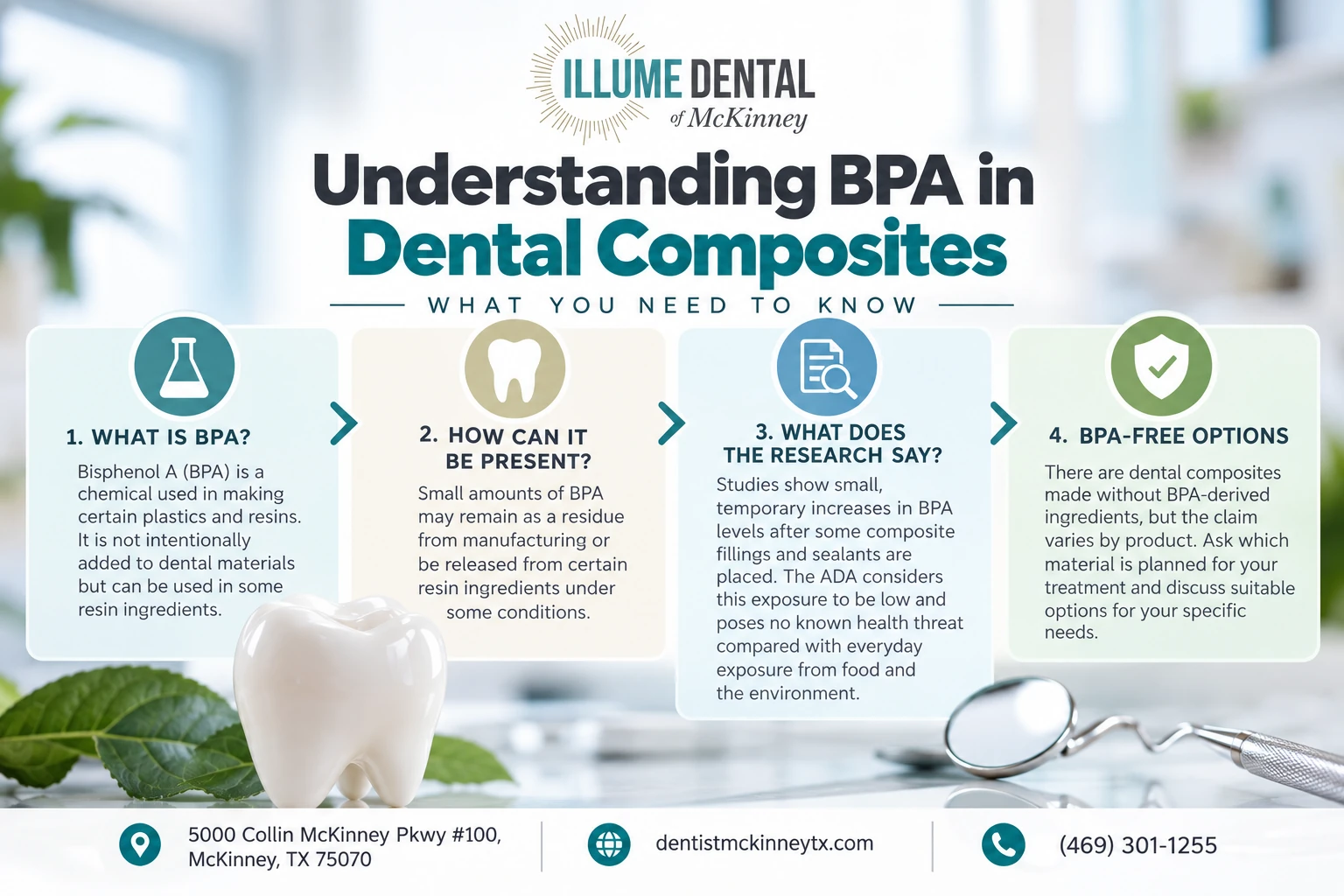
Bisphenol A, or BPA, is a chemical used in making certain plastics and resins. According to the American Dental Association (ADA), BPA is not added as an ingredient to dental materials. It can, however, be used to make some of the resin ingredients found in dental composites and sealants.
Small amounts of BPA may remain as a residue from manufacturing. BPA can also be released from certain resin ingredients under some conditions. That is why a filling or sealant can raise a BPA question even when “BPA” does not appear on its ingredient list.
Dental composites are not all formulated alike. Their resin ingredients, bonding materials, and intended uses can differ. If avoiding BPA-derived ingredients matters to you, the useful next step is to ask about the specific materials proposed for your treatment, rather than relying on a general description such as “tooth-colored” or “holistic.”
What Does the Research Say About Exposure?
Studies have detected small, temporary increases in BPA levels after some resin-based fillings and sealants are placed. The ADA reports that much of the measurable release in saliva occurs soon after placement, particularly from the outer resin layer that has not fully hardened. The amount can depend on the product and how it is placed.
The ADA considers potential BPA exposure from dental restorations to be small compared with typical background exposure from food and the environment. It states that the low-level exposure that may result from composites and sealants poses no known health threat. Researchers continue to study dental materials and ways to reduce exposure. That is a more accurate picture than either a guarantee of zero exposure or a claim that conventional fillings are unsafe.
Placement technique matters, too. The ADA describes steps dental professionals can take to limit exposure, including following curing instructions and cleaning or rinsing the restoration’s surface after placement where appropriate.
What Does “BPA-Free” Mean for a Filling?
“BPA-free” can be a useful starting point for a question, but the label alone does not tell you everything about a composite. A product may be described that way because it does not contain particular BPA-derived resin ingredients. Confirming exactly what the claim covers requires information about the named product, and other materials used during treatment may have separate formulations.
There are composites made without BPA-derived ingredients, but that does not establish which ones a particular office stocks or whether one is suitable for every filling. Illume Dental’s website confirms that the practice offers composite fillings; it does not identify a specific BPA-free composite or sealant. We would therefore discuss any request for one in relation to the materials available and your clinical needs.
The tooth being treated still matters. A dentist needs to consider the size and location of a cavity, the condition of the remaining tooth, and the demands of biting and chewing. A material preference belongs in that discussion, alongside how well the restoration will serve its purpose.
What About Sealants for Children?
Sealants are thin protective coatings placed over the grooves of back teeth to help prevent decay. Illume Dental offers sealants, and parents can ask about the planned product before deciding on treatment.
The ADA reports that resin-based sealants may contribute very low levels of BPA for a short time after placement. It also provides practical steps clinicians can take to reduce potential exposure. If you have concerns about a sealant for your child, ask which material is planned, why it is recommended, and whether another appropriate option is available.
Should Existing Fillings Be Replaced?
A concern about BPA does not, by itself, tell you that a functioning filling needs to be removed. Replacing a restoration involves working on the tooth again, so the decision should begin with an examination and a discussion of its condition. If a filling is damaged, has decay around it, or needs replacement for another clinical reason, that is an opportunity to discuss the material for the new restoration.
Discuss Your Material Preferences With Illume Dental
At Illume Dental, we want you to understand what is being recommended for your tooth and feel comfortable asking about its materials. Bring up a BPA concern before a filling or sealant appointment so we can discuss the proposed product and any suitable alternatives as part of your treatment plan.
You can learn more about our approach on our holistic dentistry service page. To discuss a filling or sealant for yourself or your child, call our McKinney office or request an appointment online.
Need a Natural-Looking Dental Filling?
Ask about BPA-free dental composites for restoring damaged or decayed teeth. Call Illume Dental to schedule your visit.