

Mercury-Free Fillings in McKinney, TX
Mercury-free fillings repair a tooth without using dental amalgam, the silver-colored material that contains mercury. At Illume Dental in McKinney, patients can discuss tooth-colored filling options, including composite resin, when a cavity needs treatment. If you already have an amalgam filling, the decision is different: its condition matters more than its color or age alone.
Some patients prefer a mercury-free material for a new filling. Others ask whether an older filling should be replaced. We welcome both questions, and we want the answer to reflect what your tooth needs and what the evidence says about existing restorations.
Want a Mercury-Free Filling?
Restore your tooth with a natural-looking, mercury-free filling in McKinney. Call Illume Dental today to schedule your visit.
What Does “Mercury-Free” Mean for a Filling?
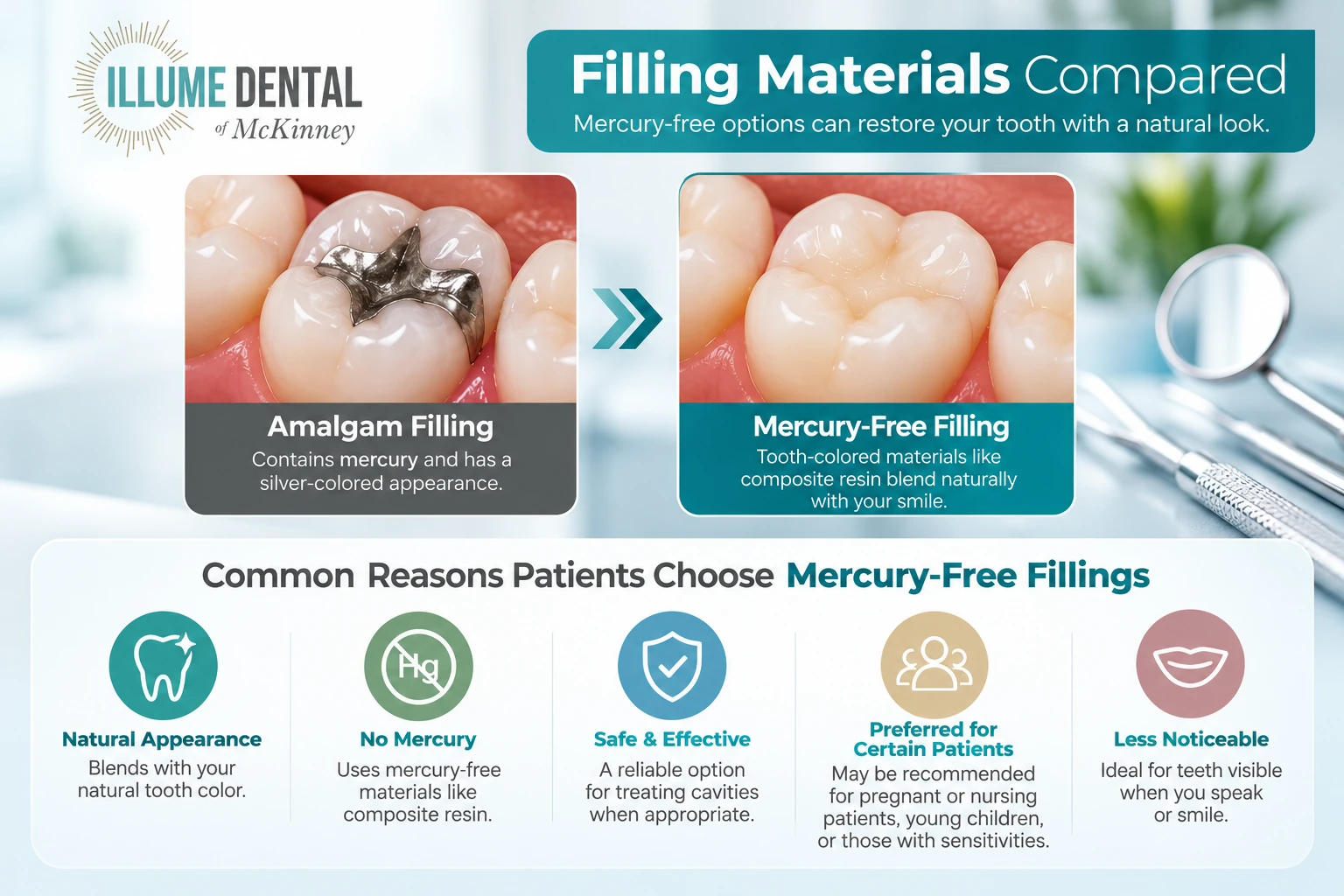
Dental amalgam is made by combining mercury with metals including silver, tin, and copper. Mercury accounts for approximately half of the material by weight and helps form a solid filling. A mercury-free filling uses a different material, such as composite resin or glass ionomer cement.
Composite resin is a common tooth-colored choice. It can be matched to the surrounding tooth and is placed using a bonding process. Illume Dental’s fillings page lists composite resin, ceramic, and glass ionomer among its filling materials. Each has different uses, so “mercury-free” does not point to one material that suits every cavity.
Your dentist will consider where the tooth is, how much structure remains, the size of the repair, and the forces placed on it when you bite. Those details help determine whether a direct filling is appropriate or whether another restoration would better serve the tooth.
Why Do Patients Choose Mercury-Free Materials?
Appearance is one reason. A tooth-colored composite can be less noticeable than a silver-colored filling, particularly on a tooth visible when you speak or smile.
Other patients prefer to avoid mercury in new dental work. That may be a personal material preference, or it may relate to a health history they want to discuss with their dentist. The FDA encourages the use of non-amalgam fillings, when suitable, for certain groups who may be more vulnerable to the potential effects of mercury exposure. These include people who are pregnant or nursing, young children, and people with certain neurological conditions, impaired kidney function, or known sensitivity to amalgam components.
Choosing a mercury-free material for a new filling does not mean that an existing amalgam filling must be removed. These are separate treatment decisions.
Are Existing Amalgam Fillings Safe to Keep?
For the general population, the FDA says the majority of evidence does not show negative health effects from mercury exposure due to dental amalgam. The American Dental Association continues to regard amalgam as a safe and effective filling option when it is clinically appropriate.
If an amalgam filling is in good condition and there is no decay beneath it, the FDA does not recommend removing it simply because it contains mercury. Removing an intact filling can take away healthy tooth structure and temporarily increase exposure to mercury vapor during the procedure. That advice also applies to people in the groups for whom the FDA recommends considering non-amalgam materials for new fillings.
A concern about a particular filling still deserves attention. If it feels loose, has broken, causes discomfort, or you suspect decay, arrange an examination. Your dentist can assess the tooth rather than assuming the filling should stay or go based only on its material.
When Might an Older Filling Need Replacement?
Fillings can wear or fail over time, regardless of what they are made from. A filling may need repair or replacement if it breaks, no longer seals the tooth adequately, or has decay around or beneath it. A dentist may also consider a documented sensitivity to an amalgam component when evaluating treatment.
If replacement is needed, the first step is to assess the tooth and plan the new restoration. Removing the old material is only one part of the procedure. Depending on the tooth’s condition, a composite filling may be suitable, or your dentist may recommend another type of restoration. The goal is to treat the problem while preserving as much healthy tooth structure as practical.
Tell your dentist if you are pregnant, nursing, have a relevant medical condition, or have previously reacted to a dental material. Those details can inform both the timing of treatment and the discussion about replacement materials.
Discuss Your Options at Illume Dental
If you want a mercury-free filling for a new cavity, bring up that preference when treatment is being planned. We can explain the material recommended for your tooth and discuss other suitable options. If your question is about an older amalgam filling, we can examine it first and explain whether it needs treatment.
Our holistic dentistry service page describes our broader approach to patient preferences and dental materials. To discuss a new filling or have an existing one checked, call our McKinney office or request an appointment online.
Replace Your Old Filling Today
Choose a tooth-colored, mercury-free restoration designed to protect your smile. Contact Illume Dental in McKinney now.