
Why Your McKinney Water Tastes Like “Pool Water” in March and What It Means for Your Oral Health
If your tap water in McKinney tastes or smells like pool water every March, you are probably not imagining it.
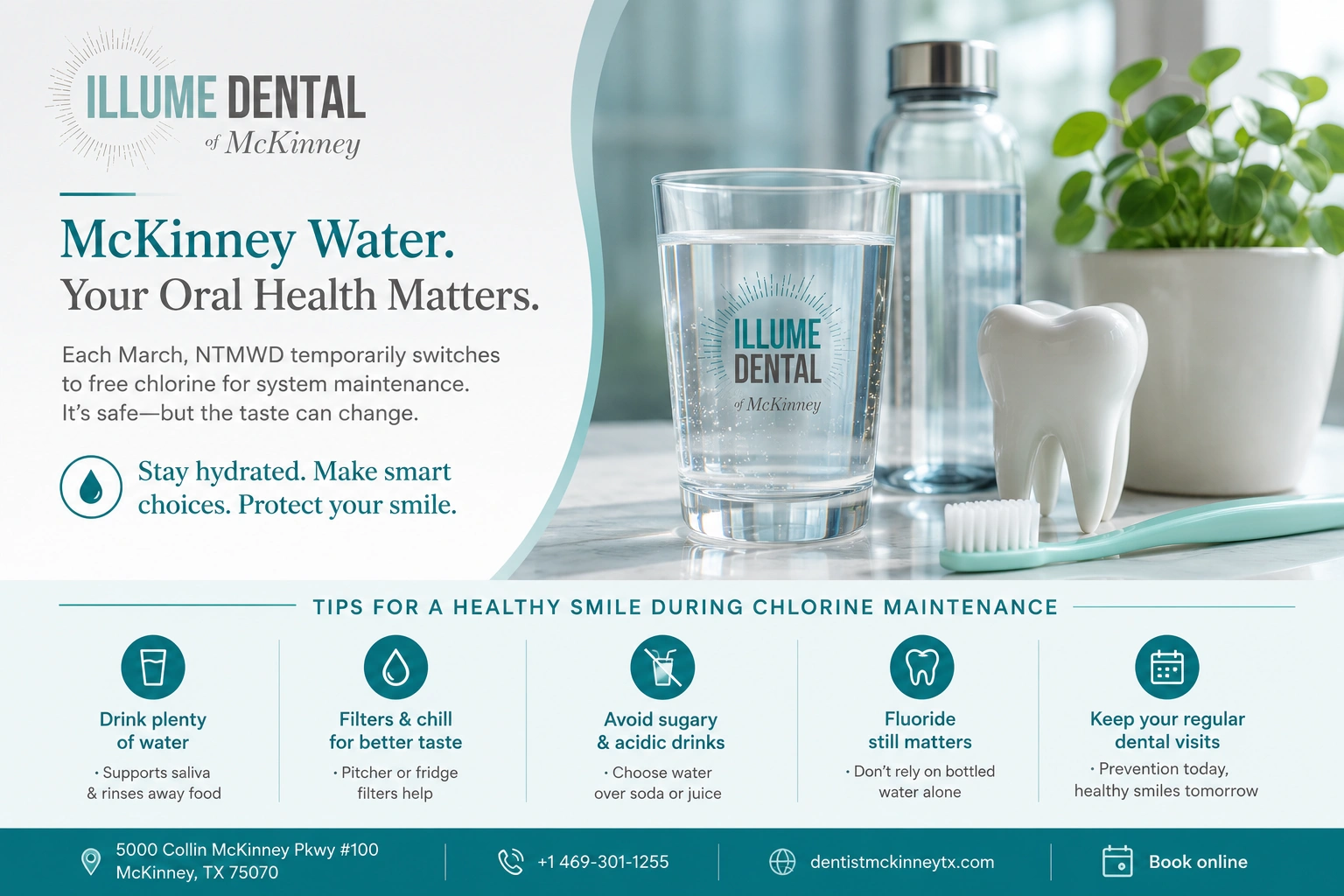
The short answer: North Texas Municipal Water District temporarily changes the disinfectant used in the regional water system each spring. In 2026, NTMWD says the change will run from March 2–30. During that period, some McKinney residents may notice a stronger chlorine taste or smell in their tap water.
For most healthy adults and children, this temporary taste change is not considered a dental emergency or a sign that the water is unsafe. But it can affect how water tastes, whether kids want to drink it, and how people think about bottled water, filters, dry mouth, and fluoride.
That is where your oral health comes in. Staying on top of preventive care also means understanding the importance of oral cancer screening, since routine dental visits give your dentist an opportunity to check for changes in the mouth that may otherwise go unnoticed.
Why McKinney Water Tastes More Like Chlorine in March
McKinney receives water from the North Texas Municipal Water District, which serves about 2.3 million North Texans across a large regional system. NTMWD normally uses a two-step process: ozone and free chlorine at the treatment plant, then ammonia is added to form chloramines, which help maintain disinfection as water travels through the system.
Each spring, NTMWD temporarily suspends the ammonia step and uses chlorine alone for system maintenance. This is commonly called a temporary free-chlorine conversion or chlorine maintenance. NTMWD says the process helps maintain the system before hotter weather, when bacterial growth potential in pipes can increase. (
McKinney’s 2025 Water Quality Report also notes that the annual chlorine maintenance program involves “temporarily suspending the addition of ammonia and using only chlorine to disinfect the water.”
In plain English: the water is still being disinfected, but the chemistry changes enough that your nose and taste buds may notice it.
Does Chlorinated Tap Water Hurt Your Teeth?
For normal household drinking water levels, chlorinated municipal water is not known to damage tooth enamel.
This is different from swimming pool exposure. Competitive swimmers who spend hours in improperly balanced pool water may have a higher risk of enamel erosion because pool water can become too acidic. That is not the same situation as drinking regulated tap water.
For McKinney residents, the bigger oral-health issue is usually not chlorine itself. It is what people do when the water tastes bad.
If the water tastes like a pool, some people drink less water, switch to acidic drinks, sip more soda or sports drinks, or rely entirely on bottled water. Those choices can matter more for your teeth than the chlorine smell.
The Real Dental Concern: Drinking Less Water
Water helps your mouth in several important ways.
It rinses away food particles. It helps dilute acids after meals. It supports saliva, which is one of your body’s main defenses against cavities. When you drink less water, your mouth can feel drier, and a dry mouth is more cavity-prone.
This matters for:
- Kids who already do not drink enough water
- Adults who sip coffee all day
- Patients taking medications that cause dry mouth
- People with braces, Invisalign, crowns, veneers, bridges, or implants
- Anyone prone to cavities or gum inflammation
If March water tastes unpleasant and you replace it with sweet tea, soda, juice, energy drinks, or sparkling citrus drinks, your teeth are getting more frequent acid and sugar exposure.
That is the part to avoid.
What About Fluoride?
This is an important point for families.
Many bottled waters do not contain the same fluoride level as fluoridated community water. If your family switches completely to bottled water for a month, especially for young kids, you may reduce one source of daily fluoride exposure.
That does not mean bottled water is “bad.” It just means parents should be aware of the tradeoff.
If your child is cavity-prone, has deep grooves in the molars, wears orthodontic appliances, or avoids tap water for weeks, ask your dentist whether fluoride toothpaste, fluoride varnish, or other preventive steps make sense.
Should You Use a Water Filter?
A filter can make March water more tolerable.
NTMWD notes that some people are more sensitive to chlorine taste, smell, or skin contact, and points residents to simple steps to reduce those effects.
Practical options include:
- Refrigerating tap water in an open pitcher
- Using a refrigerator filter or pitcher filter certified for chlorine taste and odor
- Adding lemon, cucumber, mint, or berries if that helps you drink more water
- Using a reusable bottle so water is easier to sip throughout the day
One dental note: if you add lemon or other acidic flavoring, try not to sip it constantly all day. Acidic water is still acidic. It is better to drink it with meals or finish it within a reasonable window.
Is McKinney Water Safe During Chlorine Maintenance?
According to NTMWD, the annual temporary disinfectant change is a routine maintenance process used to protect public health and maintain water quality. NTMWD also states that ongoing testing required by the Texas Commission on Environmental Quality is performed during the process and made available to the public.
McKinney’s water quality report lists chlorine residual as a disinfectant used to control microbes, with the 2024 highest single sample result below the maximum residual disinfectant level shown in the report. The report also notes that the lowest chlorine residual was taken during the annual chlorine maintenance period.
That said, certain groups need special awareness. NTMWD specifically notes that hospitals, dialysis centers, manufacturing companies, and fish or amphibian owners may need to account for the disinfectant change because it can affect their operations.
For dental patients, this is usually not a reason to panic. It is a reason to stay hydrated and make smart drink choices.
What McKinney Parents Should Watch For
Kids are honest. If water tastes weird, they may simply stop drinking it. Helping families understand these local factors is one example of how general dentists support community health.
During March, parents may notice:
- More requests for juice or sports drinks
- Less water coming back empty from school bottles
- More dry lips or dry mouth complaints
- Bad breath from dehydration
- More snacking and sipping after school
A practical solution is to make water taste better without turning it into a sugar habit. Chilled filtered water is usually enough. If flavor helps, use light fruit infusion rather than sweet drink mixes.
For younger children, keep brushing with a fluoride toothpaste appropriate for their age and risk level. Your dentist can help you decide how much toothpaste is right for your child.
What If You Have Veneers, Crowns, Implants, or Invisalign?
Temporary chlorine taste in tap water should not harm porcelain veneers, crowns, dental implants, or Invisalign trays under normal use.
The more relevant issue is maintenance.
If bad-tasting water makes you drink less, dry mouth can increase plaque buildup and bad breath. If you wear Invisalign, dry mouth plus trays can make your mouth feel less fresh. If you have veneers or crowns, acidic drink substitutes can increase risk around the natural tooth structure at the edges.
The safest routine is simple:
Drink water consistently. Brush twice daily. Floss or clean between teeth daily. Do not use soda, energy drinks, or sports drinks as your “water replacement.”
When the Taste Is Not Normal
A chlorine smell in March is common in the NTMWD service area. But not every water issue should be brushed off.
Contact the City of McKinney or your water provider if you notice:
- A sudden sewage or rotten-egg smell
- Brown, black, or cloudy water that does not clear
- A chemical taste outside the expected maintenance window
- Illness symptoms you believe may be connected to water
- A boil-water notice or local utility alert
And call your dentist if you notice:
- New tooth sensitivity that does not go away
- Dry mouth that is causing sores or bad breath
- A sudden increase in cavities
- Gum bleeding that persists
- Pain around crowns, veneers, implants, or fillings
The water taste may be temporary. Dental symptoms should not be ignored.
Bottom Line
McKinney water may taste like “pool water” in March because NTMWD temporarily switches its disinfectant process from chloramines to chlorine-only maintenance. In 2026, that annual change is scheduled for March 2–30.
For your teeth, the chlorine taste itself is usually not the main problem. The bigger issue is whether you stop drinking water and replace it with sugary or acidic drinks. Making informed choices about hydration and preventive care is part of how general dentists support long-term oral health.
If the taste bothers you, filter it, chill it, or lightly flavor it in a tooth-friendly way. Just keep drinking water.
If dry mouth, sensitivity, bad breath, or cavity risk is already a concern, Illume Dental of McKinney can help you figure out whether your symptoms are related to hydration, diet, medication, enamel wear, or something else.
FAQ: McKinney Water, Chlorine Taste, and Dental Health
Why does McKinney water taste like chlorine in March?
Because NTMWD temporarily changes its disinfectant process for annual system maintenance. During this period, chlorine taste and smell can become more noticeable.
Is McKinney tap water safe to drink during chlorine maintenance?
NTMWD describes the process as routine annual maintenance designed to protect public health and maintain water quality. Ongoing testing is performed during the process.
Does chlorine in tap water damage teeth?
At regulated drinking-water levels, chlorine is not considered a typical cause of enamel damage. The bigger concern is switching from water to acidic or sugary drinks because the water tastes unpleasant.
Should I switch to bottled water in March?
You can, but you do not necessarily need to. If you switch completely, remember that bottled water may not provide the same fluoride exposure as community tap water. This can matter for cavity-prone children.
Will a filter remove the chlorine taste?
Many refrigerator and pitcher filters can reduce chlorine taste and odor. Check the filter label to confirm what it is certified to reduce.
Can I add lemon to make the water taste better?
Yes, but do not sip lemon water all day. Lemon is acidic, and frequent acid exposure can contribute to enamel wear over time.
Does this affect Invisalign trays?
The water itself should not damage Invisalign trays during normal drinking. The concern is dry mouth or replacing water with sugary drinks while wearing trays.
Does chlorinated water affect veneers or crowns?
Normal tap water should not harm porcelain veneers or crowns. Acidic drinks used as substitutes for water are more concerning for the natural tooth structure around restorations.
Why does the taste seem stronger in some neighborhoods?
Water age, pipe distance, flushing, and individual sensitivity can all affect how strongly people notice taste or smell. NTMWD notes that some people are more sensitive to chlorine taste and odor even at low concentrations.
What should I do if my mouth feels dry during March?
Drink more water, use sugar-free gum or lozenges if appropriate, avoid frequent acidic drinks, and mention persistent dry mouth to your dentist. Dry mouth can raise cavity risk.