
Electric vs. Manual Toothbrushes: What Illume’s Hygienists Actually Recommend
Most patients want the honest answer, not the sales pitch:
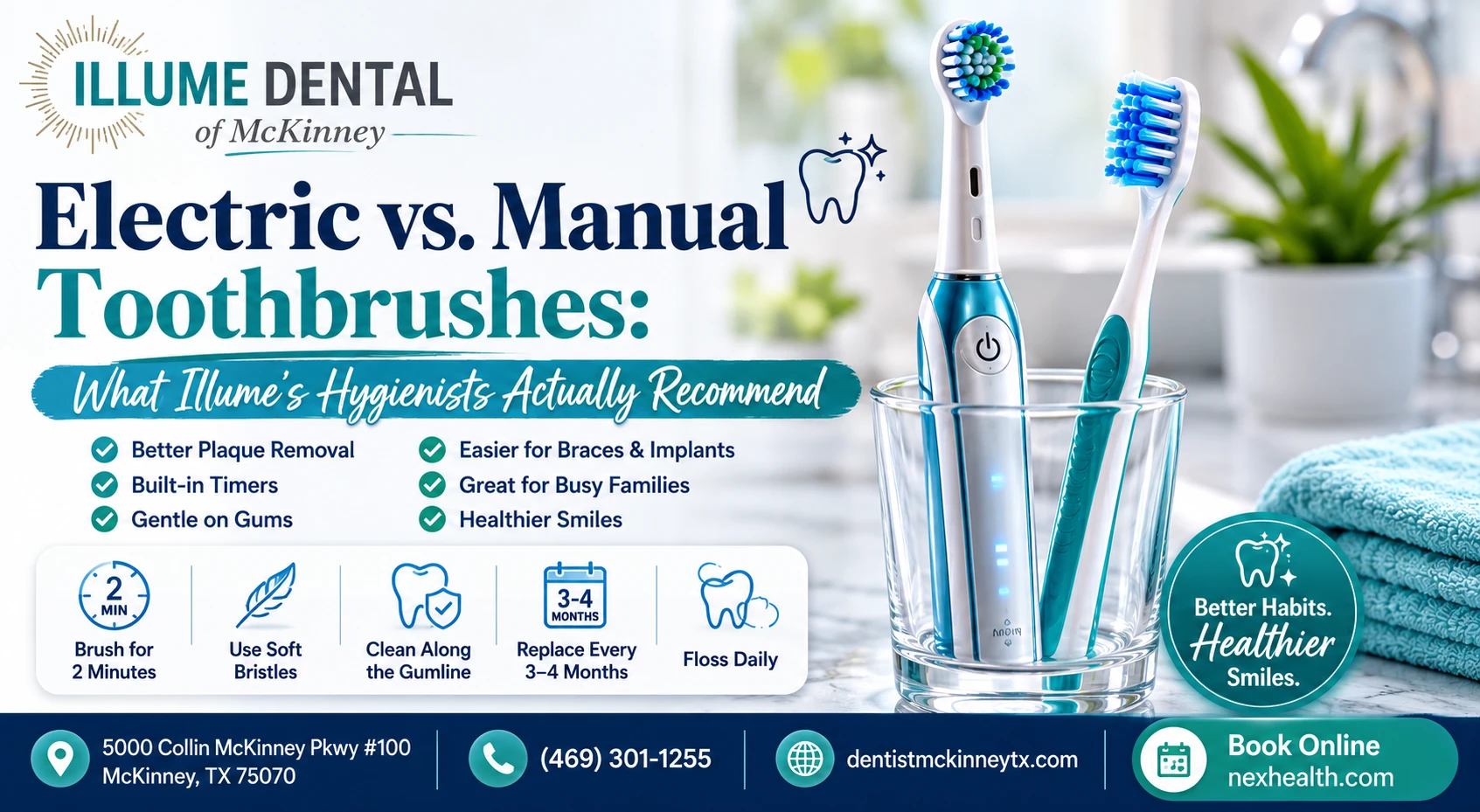
An electric toothbrush is usually better for most people, but a manual toothbrush can still work if you use it correctly.
That is the key phrase: if you use it correctly.
The ADA recommends brushing twice daily for two minutes with fluoride toothpaste and a soft-bristled brush, whether manual or powered. It also recommends replacing toothbrushes or brush heads every three to four months, or sooner if the bristles fray.
Not Sure Which Toothbrush to Use?
Ask Illume’s hygienists during your next visit and get guidance you can trust.
Why Hygienists Often Prefer Electric Toothbrushes
The main reason is simple: electric brushes make good technique easier.
Many patients brush too fast, too hard, or miss the gumline. A good electric toothbrush can help because it often includes:
- a two-minute timer
- pressure sensors
- smaller brush heads
- consistent motion
- easier use for patients with braces, implants, arthritis, or limited dexterity
A Cochrane review found powered toothbrushes reduce plaque and gingivitis more than manual brushing over time. That does not mean manual brushes are useless. It means electric brushes give many patients a built-in advantage.
When a Manual Toothbrush Is Still Fine
A manual brush can be a good choice if you:
- brush for the full two minutes
- use soft bristles
- clean along the gumline
- do not scrub aggressively
- replace it regularly
- floss or clean between teeth daily
The problem is that many people think they brush well, but their gums and plaque levels tell a different story.
What Illume’s Hygienists Usually Look For
At Illume Dental of McKinney, the better question is not “electric or manual?”
It is:
Are your gums healthy, are you removing plaque well, and are you damaging your teeth by brushing too hard?
For many McKinney patients, especially busy parents, professionals, teens in orthodontics, and adults with gum inflammation, an electric toothbrush is often the more reliable option.
What to Buy
You do not need the most expensive brush.
Look for:
- soft bristles
- timer
- pressure sensor
- easy-to-find replacement heads
- comfortable handle
- ADA Seal of Acceptance when possible
Skip hard bristles. They do not clean “better.” They can wear down enamel and irritate gums.
Bottom Line
Best overall: electric toothbrush
Best budget option: soft manual toothbrush used correctly
Worst option: brushing hard, fast, and inconsistently with either one
If your hygienist keeps finding plaque along the gumline, bleeding, or recession, switching to an electric toothbrush may be one of the simplest upgrades you can make.
Electric or Manual? Let’s Find Your Best Fit
Our hygienists can help you choose the right toothbrush for healthier, easier daily care.