
Why the “Iced Tea Culture” in Texas Is Staining Your Teeth
Texans do not just drink iced tea.
We practically treat it like water.
Sweet tea at lunch.
Unsweet tea during commutes.
Tea refills at restaurants.
Tea instead of soda because it “feels healthier.”
And for many adults in McKinney, it is quietly one of the biggest causes of tooth staining.
The Short Answer
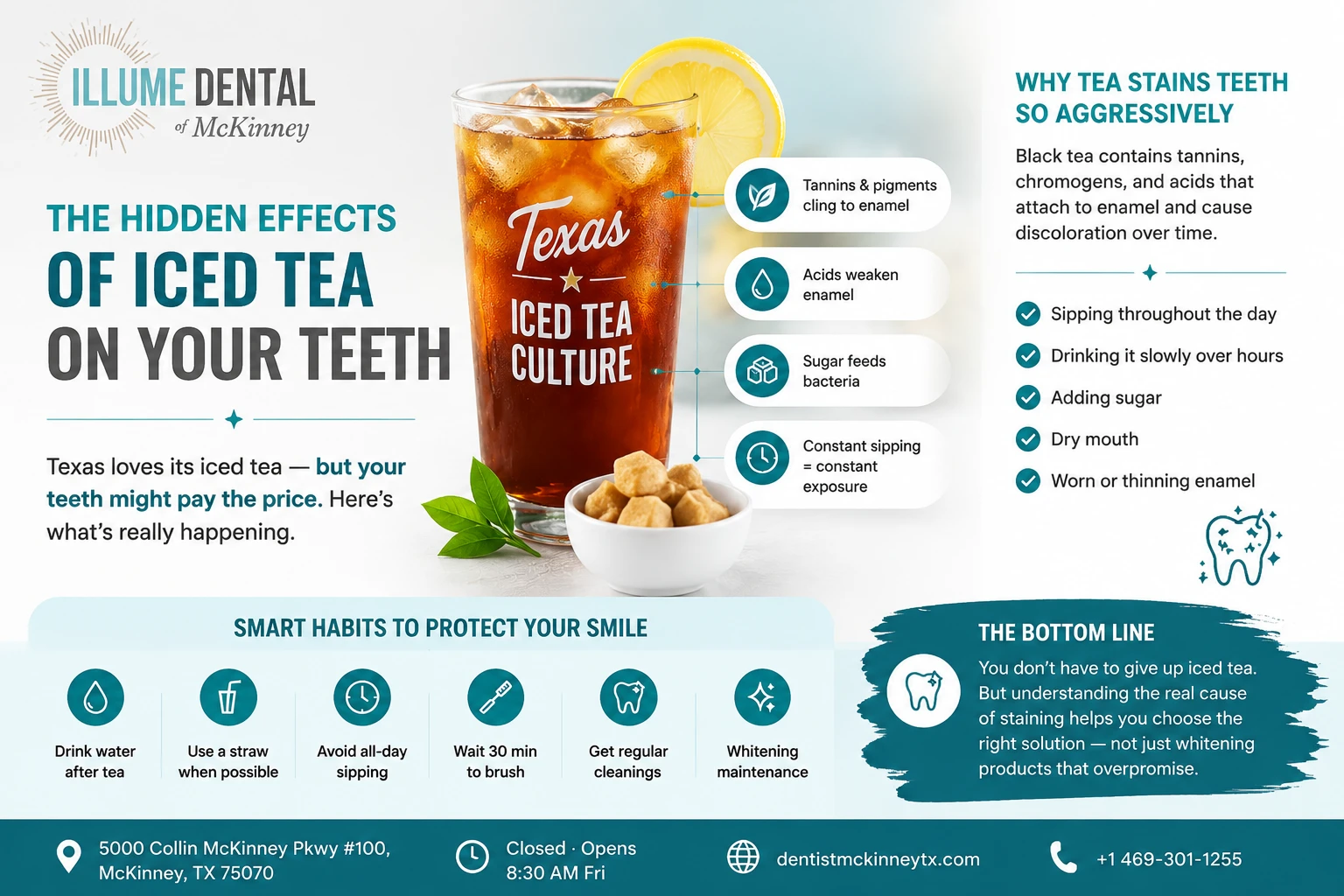
Tea, especially black tea, contains compounds called tannins that stick to enamel and contribute to yellow, brown, or dull-looking teeth over time.
In many cases, tea actually stains teeth more than coffee.
That surprises people.
Remove years of tea stains with confidence.
Let our experienced dental team help you achieve a cleaner, brighter smile. Call now before stains become harder to remove.
Why Tea Stains Teeth So Aggressively
Black tea contains:
- tannins
- chromogens (pigment compounds)
- acids
These compounds cling to microscopic irregularities in enamel.
Over time, staining builds gradually — especially if:
- you sip tea throughout the day
- drink it slowly over hours
- add sugar
- have dry mouth
- or already have worn enamel
The “constant sipping” pattern is often worse than drinking one glass quickly.
Sweet Tea Creates a Double Problem
Texas sweet tea is not just staining.
It is often:
- acidic
- high in sugar
- and consumed frequently
That combination increases risk for:
- enamel weakening
- cavities
- plaque buildup
- and discoloration
The darker the stain becomes, the more people tend to over-whiten later — sometimes aggressively.
Why Some Teeth Stain Faster Than Others
Not all enamel behaves the same.
Teeth stain more easily if you have:
- thinning enamel
- dry mouth
- older fillings
- gum recession
- smoking history
- heavy coffee or wine intake
- aggressive brushing wear
- or naturally porous enamel
Age matters too.
As enamel thins over time, the darker dentin underneath becomes more visible.
That means some “staining” is actually enamel aging, not just surface discoloration.
 If your jaw clicks every time you yawn, chew, or open your mouth wide, you're probably wondering one thing: Should…
The Irony: Unsweet Tea Can Still Stain Badly
A lot of patients switch from soda to unsweet tea thinking:
“At least it’s better for my teeth.”
Sometimes yes. Sometimes only partially.
Unsweet tea may reduce sugar exposure, but it can still:
- stain enamel heavily
- contribute to acidity exposure
- and dry the mouth slightly because of caffeine
Healthier does not always mean stain-free.
How to Reduce Tea Staining Without Giving Up Tea
Most Texans are not quitting iced tea entirely.
Realistically, the better strategy is reducing damage while keeping the habit manageable.
Helpful habits include:
- drinking water after tea
- avoiding all-day sipping
- using a straw when practical
- waiting 30 minutes before brushing after acidic drinks
- regular cleanings
- electric toothbrush use
- limiting added sugar
- occasional whitening maintenance
The goal is stain control, not perfection.
Whitening Works — But Only to a Point
Tea stains usually respond fairly well to whitening.
But some patients overdo it trying to chase extremely white shades that do not look natural. For those considering a whitening treatment for a bright summer smile, professional guidance can help keep expectations realistic.
Whitening also becomes trickier if you have:
- crowns
- veneers
- bonding
- gum recession
- or sensitive teeth
Dental work does not whiten like natural enamel.
That is why some people end up with uneven color after aggressive whitening attempts.
When Staining May Be More Than Tea
Not all discoloration is beverage-related.
Darkening teeth may also involve:
- enamel erosion
- internal discoloration
- old fillings
- medication staining
- tooth trauma
- aging restorations
- or decay
That matters because whitening will not fix every type of discoloration.
The Bottom Line
Texas iced tea culture is absolutely contributing to stained teeth — especially for adults who sip black tea daily for years.
That does not mean you need to give it up entirely.
But if your teeth are becoming darker, more yellow, or uneven in color, the safest next step is figuring out whether the issue is surface staining, enamel wear, aging, or something deeper before jumping into whitening products. Illume Dental of McKinney helps patients understand what is actually causing discoloration — and which whitening approaches are worth it versus marketing hype.
Is iced tea leaving stains on your smile?
Professional teeth whitening can remove years of stubborn stains. Call today to schedule your smile consultation.