
Why Gum Recession Is the #1 Threat to McKinney Adults Over 45
Most adults over 45 worry about cavities.
Many worry about needing a crown.
Some worry about losing a tooth.
But the dental problem that quietly causes more long-term issues than almost anything else is often gum recession.
The challenge is that gum recession usually happens slowly.
There’s no dramatic pain.
No emergency room visit.
No sudden warning sign.
One day you simply notice:
- Your teeth look longer.
- Cold drinks feel more sensitive.
- Food gets stuck more easily.
- Your smile doesn’t look quite the same.
And by then, some of the damage may already be permanent.
Gums Pulling Back? Don’t Wait.
Protect your teeth and gum health with a professional evaluation. Call today to schedule your dental visit.
The Short Answer
Gum recession occurs when the gum tissue gradually pulls away from the tooth, exposing the root surface underneath.
Unlike enamel, tooth roots have less natural protection.
As recession progresses, patients become more vulnerable to:
- Tooth sensitivity
- Root cavities
- Tooth wear
- Gum disease
- Tooth mobility
- Tooth loss in severe cases
For many adults over 45, recession poses a greater long-term threat than cavities because it affects the foundation supporting the teeth.
Why Gum Recession Becomes More Common After 45
Age itself doesn’t cause recession.
But several factors become more common with age.
Decades of Wear and Tear
Every day, your teeth experience:
- Chewing forces
- Brushing forces
- Clenching
- Grinding
Over decades, these stresses can affect both teeth and supporting tissues.
Gum Disease
One of the leading causes of recession is periodontal disease.
Even mild chronic inflammation can gradually damage the bone and gum support surrounding teeth.
Teeth Grinding and Clenching
Many busy professionals unknowingly grind their teeth during sleep.
Others clench throughout the day while:
- Working
- Driving
- Exercising
- Managing stress
Over time, excessive forces can contribute to gum recession and tooth wear.
Aggressive Brushing
This surprises many patients.
Brushing harder does not clean better.
In fact, years of overly aggressive brushing can wear away gum tissue and expose roots.
Why Recession Is More Serious Than Most People Realize
Many patients view gum recession as a cosmetic issue.
It isn’t.
Exposed Roots Get Cavities More Easily
Enamel is the hardest substance in the human body.
Roots do not have that same level of protection.
Once exposed, root surfaces become significantly more vulnerable to decay.
And root cavities can spread surprisingly quickly.
Sensitivity Increases
When roots become exposed, patients often experience:
- Cold sensitivity
- Sweet sensitivity
- Air sensitivity
Some patients begin avoiding certain foods entirely.
Teeth Can Become Less Stable
Gum recession is often accompanied by bone loss.
As support decreases, teeth may become:
- Loose
- More difficult to clean
- More vulnerable to future problems
The McKinney Lifestyle Factor
Many adults in McKinney are balancing:
- Careers
- Businesses
- Family responsibilities
- Travel
- Community involvement
Stress frequently shows up in the mouth.
We often see patients who have no idea they’re clenching or grinding until they begin experiencing:
- Gum recession
- Tooth wear
- Cracked teeth
- Jaw discomfort
The connection between stress and oral health is stronger than most people realize.
Early Warning Signs of Gum Recession
Watch for:
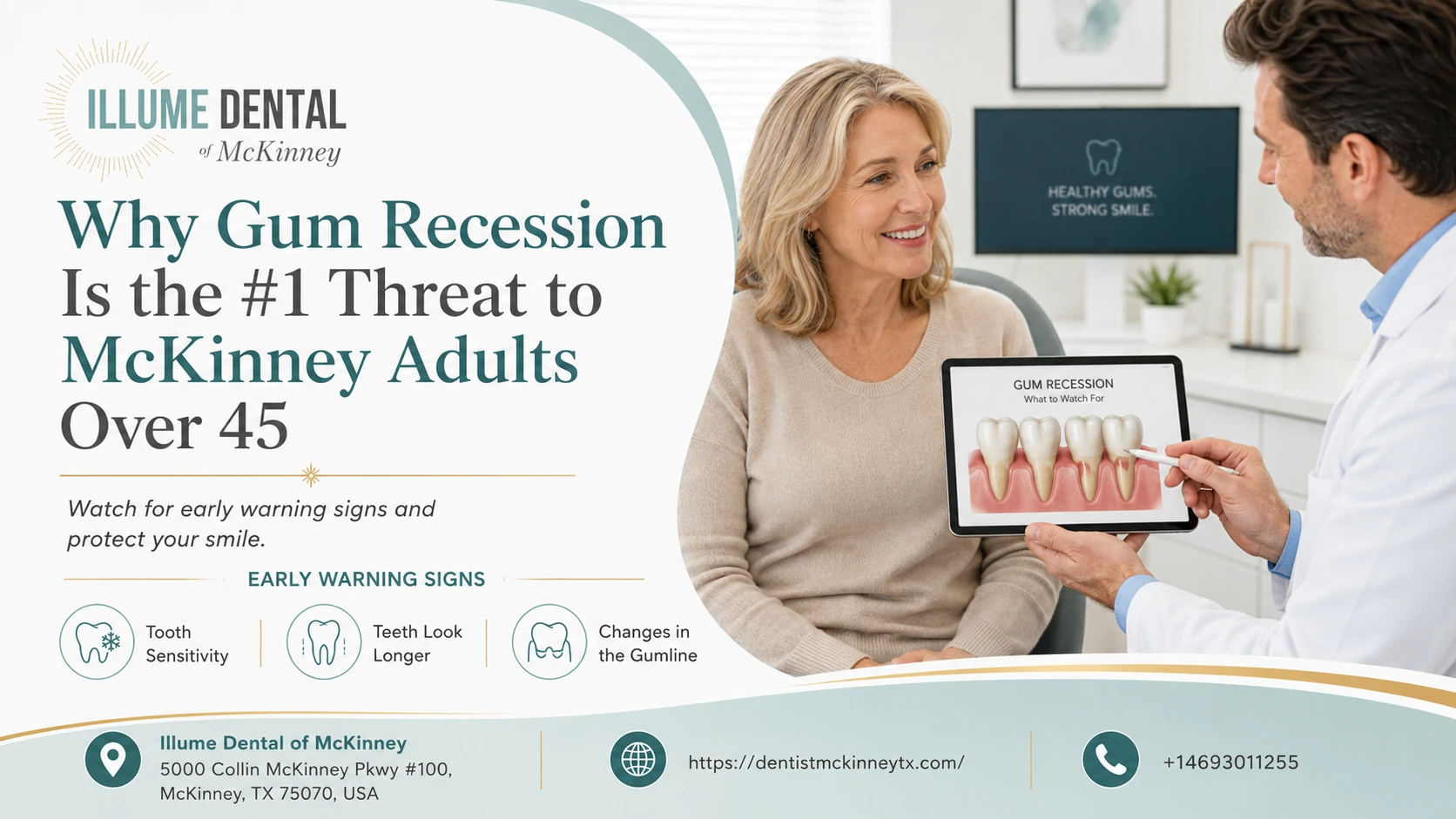
Teeth Looking Longer
This is often the first visible sign.
Increased Sensitivity
Particularly to cold drinks and cold air.
Notches Near the Gumline
Small grooves or indentations near the base of teeth can indicate excessive forces or recession.
Food Trapping
As gum tissue recedes, spaces between teeth can become larger.
Bleeding Gums
Inflammation often accompanies recession and should never be ignored.
Can Gum Recession Grow Back?
This is one of the most common questions patients ask.
Unfortunately:
Gum tissue generally does not regenerate on its own.
Once recession occurs, treatment focuses on:
- Preventing further recession
- Protecting exposed roots
- Managing sensitivity
- Addressing underlying causes
In some cases, gum grafting procedures may help restore lost tissue.
The Good News: Early Action Works
The earlier the recession is identified, the more options patients usually have.
Treatment may include:
Night Guards
For patients who grind or clench.
Periodontal Therapy
If gum disease is contributing.
Brushing Technique Improvements
Sometimes a small change in brushing habits can make a significant difference.
Desensitizing Treatments
To help manage exposed root sensitivity.
Gum Grafting
In selected cases where recession is advanced.
What Adults Over 45 Should Do Now
If you’re over 45, don’t just ask:
“Do I have cavities?”
Also ask:
“Are my gums stable?”
Because the health of your gums often determines how long you’ll keep your natural teeth.
A tooth can survive a cavity.
A tooth cannot survive indefinitely without adequate support.
The Bottom Line
Gum recession is one of the most significant long-term threats facing adults over 45 because it affects the foundation that holds teeth in place.
The earlier it’s identified, the easier it is to slow progression, protect exposed roots, and preserve your smile.
At Illume Dental of McKinney, Dr. Eileen Chen-Mizuuchi and the team carefully monitor gum health, recession patterns, bite forces, and periodontal stability so patients can address small issues before they become major restorative problems.
If you’ve noticed longer-looking teeth, sensitivity, or changes in your gums, now is the right time to have them evaluated not after the damage progresses.
Frequently Asked Questions
Is gum recession a normal part of aging?
Not exactly. While it becomes more common with age, recession is usually linked to factors such as gum disease, grinding, clenching, or brushing habits.
Can gum recession be reversed naturally?
Generally, no. Lost gum tissue does not typically grow back on its own.
What causes gum recession the most?
Common causes include gum disease, aggressive brushing, teeth grinding, clenching, and long-term wear.
Are exposed roots dangerous?
They are more vulnerable to cavities, sensitivity, and wear than enamel-covered portions of the tooth.
When is gum grafting necessary?
Grafting may be recommended when recession is severe, progressing, causing significant sensitivity, or threatening long-term tooth stability.
Stop Gum Recession Early
Early treatment can help protect exposed roots and prevent further gum damage. Schedule your appointment today.