
The Retiree Guide to Dental Implants in Stonebridge Ranch
Retirement changes a lot of things.
Your work schedule changes. Your insurance may change. Your priorities certainly change.
And for many adults in Stonebridge Ranch, retirement is also when long-standing dental issues finally move to the top of the list.
Maybe you’ve been managing a bridge for years.
Maybe you’re tired of a loose denture.
Maybe a tooth that’s been “watching and waiting” finally needs to be replaced.
If you’re considering dental implants in retirement, you’re probably asking three questions:
- Am I too old for implants?
- How much will they cost?
- Are they actually worth it at my age?
Let’s address those questions honestly.
Wondering If You're a Candidate?
Age alone doesn't determine implant eligibility. Speak with our team today and get honest answers about your options.
The Short Answer
Age alone is rarely the reason someone cannot get dental implants.
In fact, many of the happiest implant patients are retirees.
What’s more important than age is:
- Overall health
- Bone quality
- Gum health
- Smoking status
- Certain medical conditions
- Commitment to maintenance
It’s not unusual for healthy patients in their 60s, 70s, and even 80s to be excellent implant candidates.
You’re Probably Not Too Old
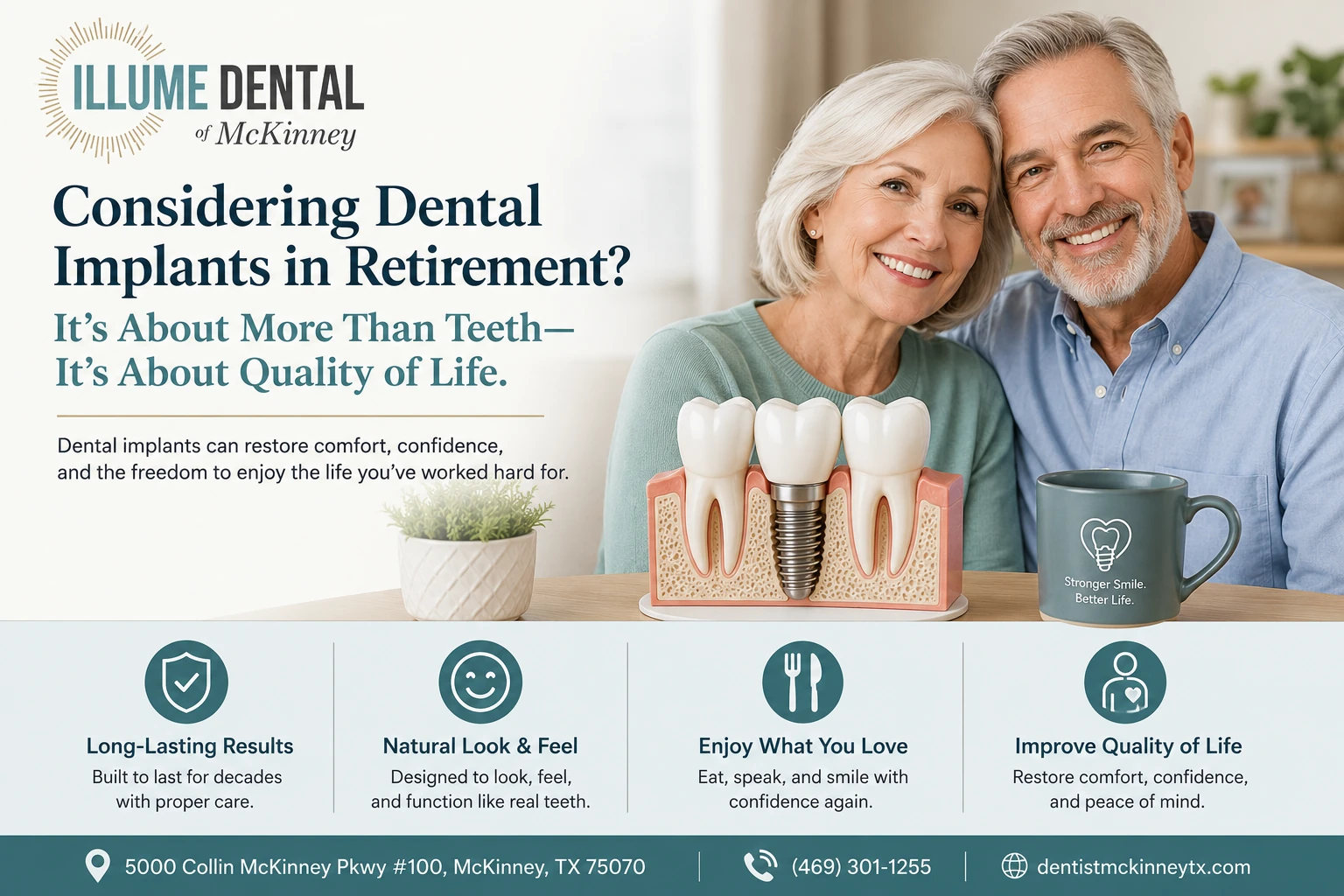
One of the biggest misconceptions about implants is that they’re only for younger adults.
The reality?
Dentists place implants successfully in older adults every day.
A healthy 72-year-old may be a better implant candidate than a 45-year-old smoker with uncontrolled gum disease.
The question isn’t:
“How old are you?”
The question is:
“How healthy is the mouth and supporting bone?”
Why Many Retirees Choose Implants
Most retirees considering implants have already experienced one of these frustrations:
A Missing Tooth
A missing tooth can affect:
- Chewing
- Appearance
- Confidence
- Bite stability
Many patients become increasingly aware of the gap after retirement because they’re spending more time socializing, traveling, and enjoying activities.
Loose Dentures
This is perhaps the biggest reason retirees pursue implants.
Traditional dentures can:
- Shift while eating
- Slip during conversation
- Create sore spots
- Reduce chewing efficiency
Implant-supported dentures can dramatically improve stability.
Failing Bridges
Many bridges work well for years.
Eventually, supporting teeth can develop:
- Decay
- Cracks
- Gum issues
At that point, implants often become part of the replacement conversation.
How Much Do Dental Implants Cost in 2026?
Let’s talk about the question everyone asks.
A single dental implant typically involves multiple components:
- Implant placement
- Abutment
- Final crown
- Imaging and planning
In North Texas, a single completed implant restoration often ranges from approximately:
$3,500 to $7,000+ per tooth
depending on complexity, materials, and whether additional procedures are needed.
Patients should always request a complete treatment estimate rather than focusing only on the surgical implant fee.
The Hidden Cost Comparison
Many retirees compare implants to doing nothing.
That’s usually the wrong comparison.
The better comparison is:
Option 1: Replace the Tooth
Or
Option 2: Live With the Consequences
Those consequences may include:
- Shifting teeth
- Bone loss
- Bite changes
- Reduced chewing function
- Future restorative needs
Not every missing tooth must be replaced.
But every missing tooth deserves an informed discussion.
What About Bone Loss?
Many patients worry they’ve waited too long.
Sometimes they have.
Sometimes they haven’t.
After a tooth is lost, the jawbone gradually shrinks because it no longer receives stimulation from the tooth root.
This process can continue for years.
The good news:
Many patients with bone loss can still receive implants through procedures such as:
- Bone grafting
- Ridge preservation
- Advanced implant planning
A consultation and 3D imaging provide the real answer.
Are Implants Better Than Dentures?
That depends on your goals.
Traditional Dentures
Pros:
- Lower upfront cost
- Non-surgical
- Faster treatment
Cons:
- Can move during eating
- Reduced chewing strength
- Ongoing adjustments
- Bone loss continues underneath
Dental Implants
Pros:
- Fixed and stable
- Improved chewing ability
- Bone preservation
- Natural feel
- Long-term durability
Cons:
- Higher upfront investment
- Surgical procedure required
- Longer treatment timeline
Neither solution is automatically better.
The right solution depends on your health, lifestyle, and budget.
What Retirees Often Overlook
Many people focus exclusively on the implant itself.
But successful implant treatment also depends on:
Gum Health
Healthy gums create the foundation for long-term success.
Home Care
Implants don’t get cavities.
But they can develop problems if not maintained properly.
Medical Conditions
Conditions such as diabetes can affect healing and long-term outcomes.
Medications
Certain medications may influence treatment planning.
This is why comprehensive evaluation matters.
How Long Do Dental Implants Last?
With proper care, many implants last decades.
Some patients keep their implants for the rest of their lives.
However, longevity depends on:
- Oral hygiene
- Smoking status
- Gum health
- Bite forces
- Regular maintenance visits
Implants are highly successful, but they are not maintenance-free.
Why Stonebridge Ranch Retirees Are Choosing Implants
Many retirees today are healthier, more active, and more socially engaged than previous generations.
They travel.
They dine out.
They stay active in the community.
They don’t necessarily want to plan meals around what a denture can handle.
For many of these patients, implants are less about appearance and more about quality of life.
The Bottom Line
If you’re retired and considering dental implants, don’t assume age disqualifies you.
Many adults in their 60s, 70s, and beyond are excellent candidates.
The most important questions involve your overall health, bone support, goals, and budget, not your birth year.
At Illume Dental of McKinney, Dr. Eileen Chen-Mizuuchi and the team help Stonebridge Ranch retirees understand all of their options, including implants, bridges, and dentures, so they can make a decision based on long-term comfort and function, not sales pressure.
If you’re wondering whether implants make sense for your situation, a consultation and 3D evaluation can often provide answers much faster than months of online research.
Frequently Asked Questions
Am I too old for dental implants?
Usually not. Overall health and bone quality are generally more important than age.
How long does implant treatment take?
Many cases take several months from implant placement to final restoration, though timelines vary.
Are dental implants painful?
Most patients report less discomfort than they expected. Treatment is typically performed with local anesthesia, and sedation options may be available.
Does Medicare cover dental implants?
Traditional Medicare generally does not cover routine dental implants, though specific plans and Medicare Advantage options vary.
Are implants worth it in retirement?
For many retirees, the improved comfort, chewing ability, and long-term stability make implants one of the most valuable dental investments they make.
Ready to Smile With Confidence Again?
Discover whether dental implants are the right choice for your retirement lifestyle. Call today to schedule your personalized consultation.