
My Tooth Doesn’t Hurt, So Why Did My Dentist Find a Cavity?
The Reality Behind AI Dental Diagnostics
One of the most common reactions patients have after a dental exam is:
“If there’s really a cavity, why doesn’t it hurt?”
Fair question.
Most cavities do not hurt in the early stages. In fact, by the time a cavity becomes painful, the tooth is often significantly more damaged sometimes enough to require a crown or root canal instead of a simple filling.
Now add artificial intelligence (AI) into modern dentistry, and patients are hearing something new:
“The AI found decay.”
That can sound either reassuring or deeply suspicious depending on how it is explained.
Here is the reality: AI in dentistry is neither magic nor a scam. It is a diagnostic support tool. Used properly, it can help dentists identify subtle changes on X-rays earlier and more consistently. Used poorly, it can create confusion, overdiagnosis concerns, or unnecessary anxiety.
Patients deserve to understand the difference.
Cavity Found Without Pain? Don’t Wait
Get gentle, professional cavity treatment before it turns into a bigger dental problem. Call now to schedule your visit.
Why Cavities Often Don’t Hurt at First
Teeth do not feel pain the way skin does.
Early decay usually starts in the enamel — the hard outer layer of the tooth. Enamel has no nerve endings. That means a cavity can grow quietly for months or even years before you feel anything.
Pain tends to happen later, when decay reaches:
- the dentin (the softer layer under enamel)
- the nerve
- or the surrounding tooth structure
That is why many patients are surprised when a dentist recommends treatment for a tooth that “feels perfectly fine.”
The absence of pain is not proof that a tooth is healthy.
So What Is AI Actually Seeing?
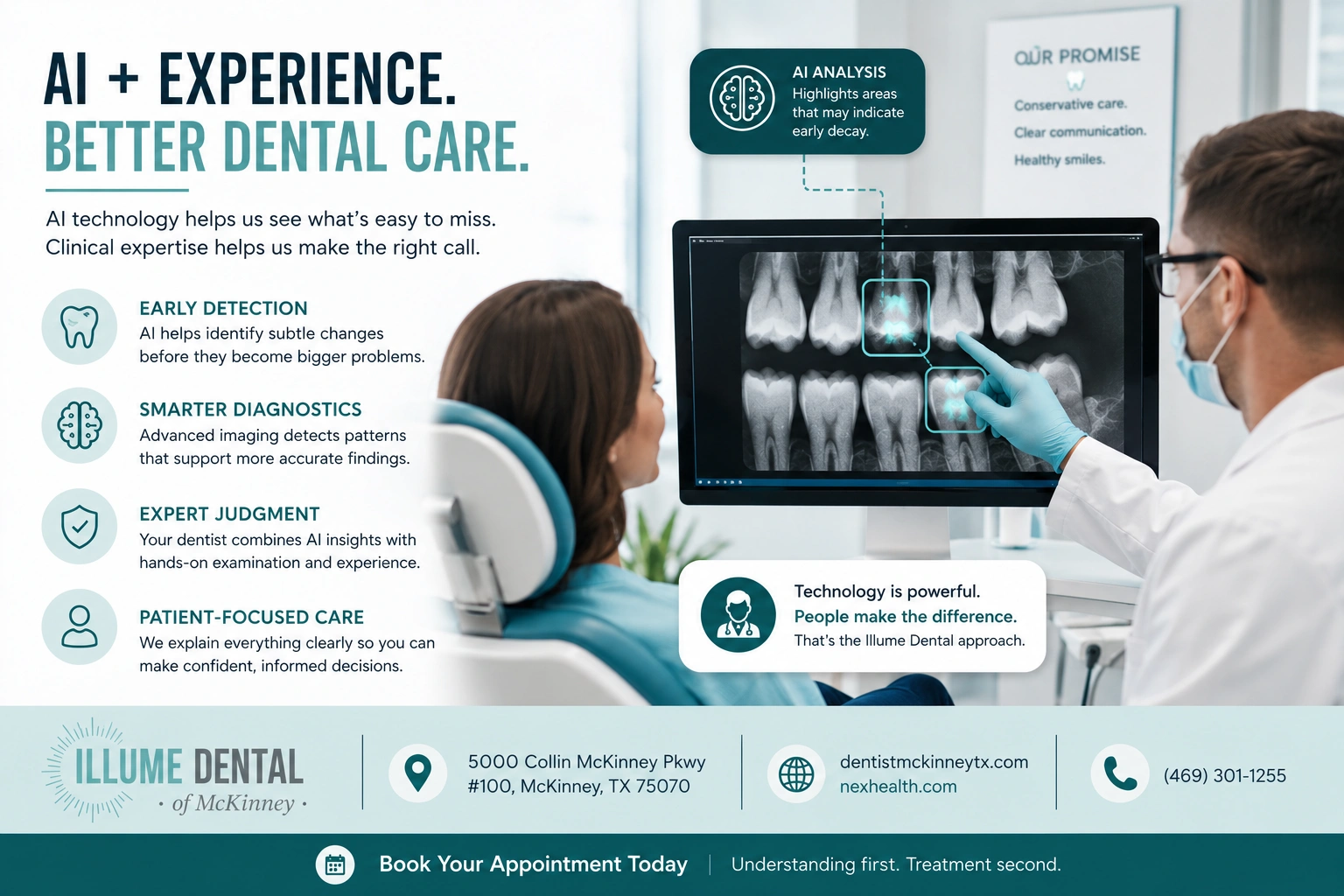
AI dental imaging software analyzes digital X-rays and highlights areas that may represent:
- early decay
- bone loss
- failing dental work
- cracks
- tartar buildup
- infection patterns
Think of it like spellcheck for radiographs.
The software does not “diagnose” cavities independently. A licensed dentist still has to interpret the image, examine the tooth clinically, and decide whether treatment is actually necessary.
That distinction matters.
Good AI systems can help dentists:
- catch smaller cavities earlier
- reduce human oversight errors
- improve consistency
- visually explain findings to patients
But AI also has limitations.
AI Can Highlight Areas That Are Not True Cavities
This is the part many marketing ads skip.
AI systems identify suspicious patterns. They do not fully understand:
- your symptoms
- your bite
- stain versus decay
- previous dental work
- whether a shadow is active disease or harmless anatomy
In other words:
AI can flag areas that may not need treatment.
That does not mean the technology is bad. It means dentistry still requires human judgment.
A trustworthy dentist should be able to explain:
- what the AI is showing
- why they agree or disagree with it
- whether the area should be treated, monitored, or simply documented
If the explanation sounds vague or pressure-heavy, it is reasonable to ask questions.
Early Treatment vs “Watch and Wait”
Not every small cavity needs immediate drilling.
Some very early enamel lesions can sometimes be monitored or managed conservatively with:
- fluoride
- improved home care
- diet changes
- remineralization strategies
- shorter recall intervals
Other cavities are already structurally compromised and likely to worsen if ignored.
This is where experience matters more than software. It also highlights the importance of making sure your cavity treatment fully restores your tooth.
The best dentists are not the ones who treat everything aggressively. They are the ones who can distinguish:
- what is urgent
- what is stable
- what can safely wait
- and what may never become a major issue
Questions Patients Should Ask
If a cavity diagnosis surprises you, especially one found partly through AI imaging, ask:
- Can you show me the area on the X-ray?
- Is the decay in enamel or deeper?
- Does this definitely need treatment now?
- What happens if we monitor it?
- Is this visible clinically or only on the scan?
- Has the area changed since previous X-rays?
A good dentist will not be annoyed by these questions.
Patients making informed decisions is a good thing.
The Bigger Reality: AI Is Probably Becoming Standard in Dentistry
AI-assisted radiograph analysis is becoming increasingly common in modern dental offices, especially practices using advanced digital imaging systems.
That does not mean every diagnosis is suddenly more aggressive. It also does not mean every older dentist without AI is missing disease.
The real benefit is often transparency.
Many patients find it easier to understand treatment recommendations when they can visually see what the software is identifying on the image itself.
Used ethically, AI can improve communication far more than it replaces clinical expertise.
When You Should Be More Concerned
You should seek clarification or a second opinion if:
- multiple large treatments appear suddenly without explanation
- the dentist cannot clearly show the problem
- every “watch area” is treated aggressively
- recommendations feel sales-driven instead of evidence-based
- proposed treatment seems disconnected from symptoms or X-ray findings
Conservative dentistry still matters.
The goal is preserving healthy tooth structure whenever possible not drilling every shadow on an image.
The Bottom Line
A tooth does not need to hurt to have a cavity.
And AI does not “invent” cavities out of nowhere.
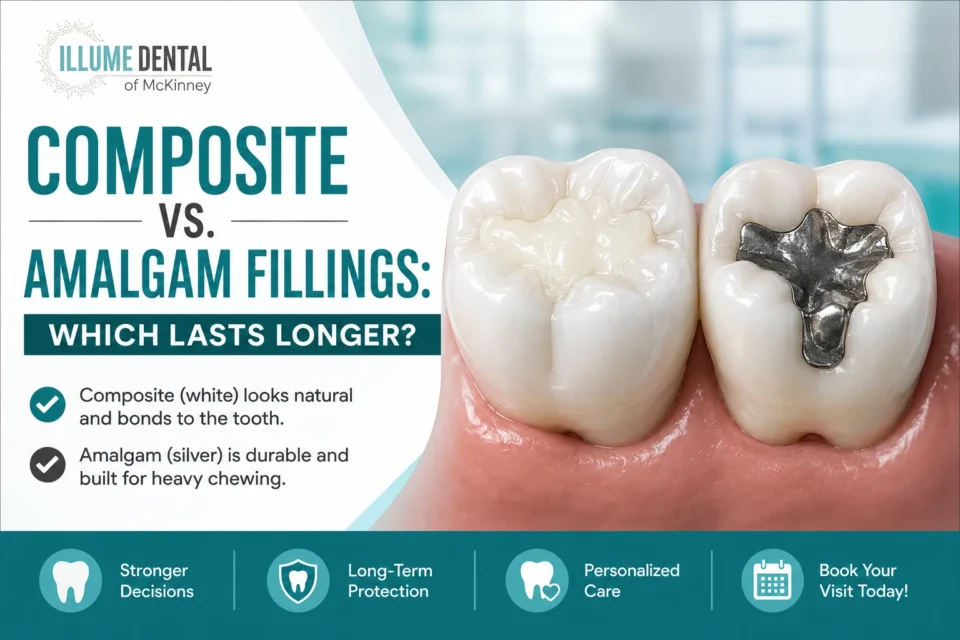
But AI is also not a replacement for thoughtful clinical judgment. The best dental care combines technology, experience, conservative decision-making, and clear patient communication. When a filling is needed, this can include matching your filling’s color to your tooth color.
If you are unsure whether a cavity truly needs treatment, the safest next step is a thorough exam, a clear explanation, and enough time to make an informed decision. Illume Dental of McKinney helps patients understand what is happening on their X-rays before committing to treatment.
Stop Cavities Before They Start Hurting
Pain often comes later. Schedule treatment now and keep your teeth healthy longer.