
Fluoride vs. Hydroxyapatite: The 2026 Debate for McKinney Parents
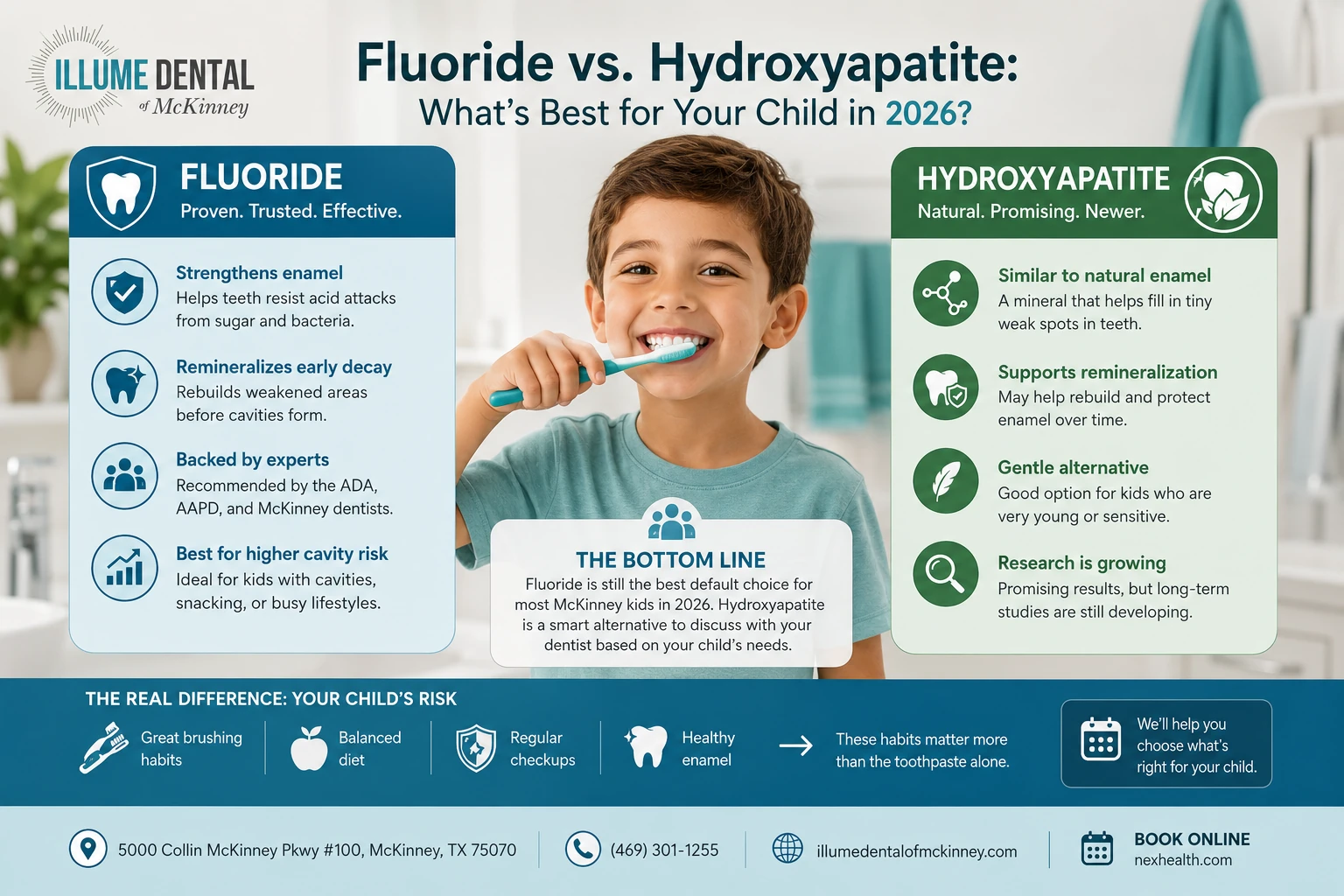
For most McKinney kids, fluoride toothpaste is still the safest default recommendation for cavity prevention.
Hydroxyapatite toothpaste is promising, and some studies suggest it may help remineralize early enamel damage. But in 2026, fluoride still has the stronger track record, broader pediatric guidance, and official backing from groups like the ADA and AAPD. The AAPD says brushing twice daily with the right amount of fluoride toothpaste is one of the most effective ways to reduce cavities in children.
Make the Right Choice for Your Family
Every child is different. Schedule a consultation today and get clear answers from experienced pediatric dental professionals.
The simple parent answer
Use fluoride toothpaste if your child:
- Has had cavities before
- Snacks frequently
- Drinks juice, sports drinks, or sweet coffee drinks
- Has braces, Invisalign, or poor brushing habits
- Has dry mouth
- Is still learning to brush well
Consider hydroxyapatite only after talking with your dentist, especially if your child is very young, swallows toothpaste often, or you strongly prefer a fluoride-free option.
What fluoride does well
Fluoride helps enamel resist acid attacks and supports remineralization. That matters because cavities are not caused by “weak teeth” alone. They come from repeated acid exposure from bacteria, sugar, snacks, and drinks.
For kids in McKinney ISD routines school snacks, sports drinks, late practices, busy mornings fluoride gives an extra layer of protection. For children who already have early decay, dentists may also discuss ways to protect young smiles with silver diamine fluoride as part of a broader cavity-management approach.
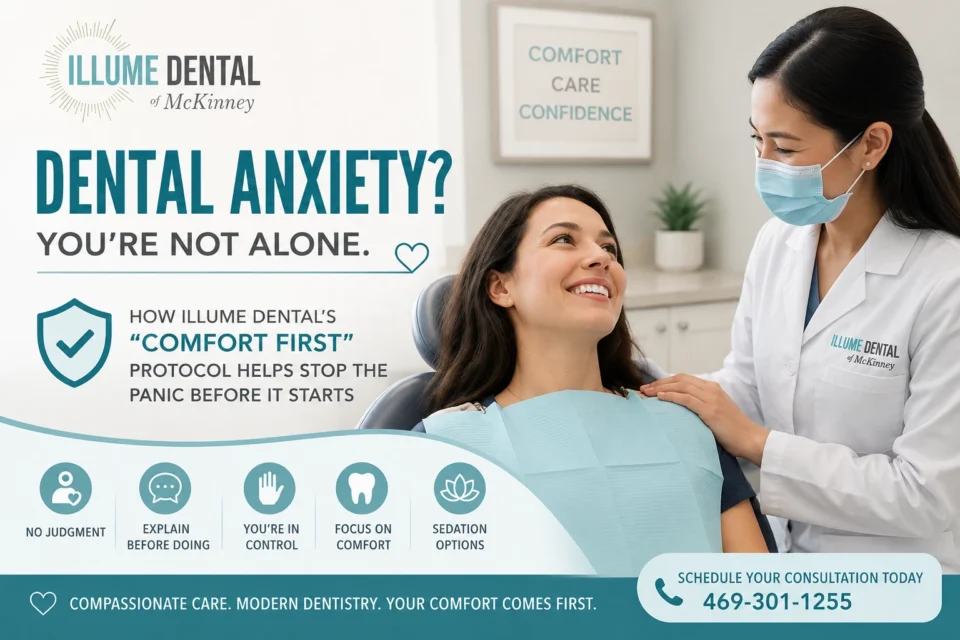
 For many people, dental anxiety isn't just feeling nervous. It's the racing heart in the parking lot. It's canceling appointments…
What hydroxyapatite does well
Hydroxyapatite is a mineral similar to what teeth are made of. It may help fill microscopic weak spots in enamel and reduce sensitivity. A 2024 review found supportive evidence for hydroxyapatite products in cavity prevention, but the research base is still newer compared with fluoride.
That does not mean hydroxyapatite is useless. It means parents should be careful about replacing a proven cavity-prevention tool with a newer one just because it sounds more “natural.”
The real issue: your child’s cavity risk
This debate should not be ideological. It should be practical.
A low-risk child with excellent brushing, limited sugar, regular cleanings, and no cavity history may do fine with either option under dental guidance.
A high-risk child should usually stay with fluoride unless their dentist has a specific reason to change.
How much fluoride toothpaste should kids use?
The key is dose, not fear.
Too much swallowed toothpaste can increase fluorosis risk in developing teeth, which is why kids should spit, not eat toothpaste.
For young children, parents should supervise brushing and use the recommended small amount. The ADA and pediatric dental guidance emphasize appropriate fluoride use rather than avoiding it entirely.
Bottom line
For most McKinney parents in 2026, fluoride remains the best default choice for cavity prevention.
Hydroxyapatite is a reasonable conversation, not a reason to panic-switch every child in the house.
At Illume Dental of McKinney, the smarter approach is simple: look at your child’s cavity history, diet, brushing habits, age, and enamel health before choosing toothpaste. The “best” toothpaste is the one that matches your child’s actual risk.
Confused About Fluoride or Hydroxyapatite?
Get trusted guidance from a McKinney family dentist. Call today and choose the best option for your child's healthy smile.