
Dental Anxiety: How Illume Dental’s “Comfort First” Protocol Helps Stop the Panic Before It Starts
For many people, dental anxiety isn’t just feeling nervous.
It’s the racing heart in the parking lot.
It’s canceling appointments at the last minute.
It’s lying awake the night before a cleaning.
It’s avoiding the dentist for years even when you know you need treatment.
If that sounds familiar, you’re not alone.
Studies consistently show that millions of Americans experience some degree of dental anxiety, and for many patients, the fear is strong enough to keep them from getting care altogether.
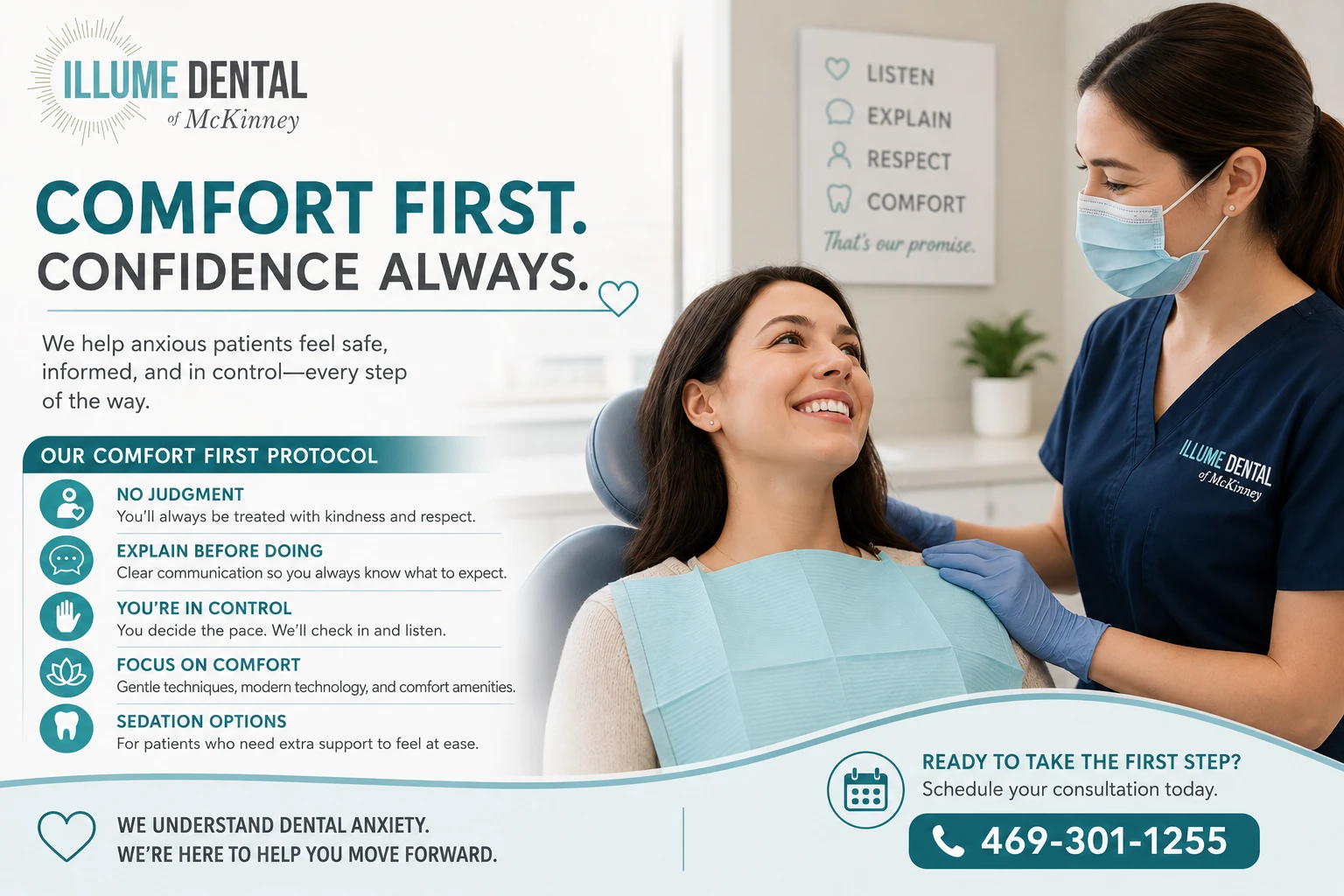
The good news is that modern dentistry has changed dramatically. At Illume Dental of McKinney, our goal isn’t simply to treat teeth, it’s to create an experience where patients feel safe, informed, and in control.
That’s the foundation of our Comfort First approach.
Comfort comes first at Illume Dental.
Our gentle approach is designed for anxious patients who want a more relaxed dental experience. Call now and take the first step.
The Real Problem Isn’t Usually the Dental Procedure
When patients say they’re afraid of the dentist, the fear is often about something deeper
Common concerns include:
- Fear of pain
- Fear of needles
- Fear of bad news
- Feeling trapped in the chair
- Embarrassment about the condition of their teeth
- Past traumatic dental experiences
- Loss of control during treatment
Many anxious patients assume they’re the only ones who feel this way.
They’re not.
In fact, some of our most appreciative patients are people who avoided dentistry for years because of fear.
What Is a Comfort First Protocol?
A Comfort First approach means reducing anxiety before treatment ever begins.
Instead of assuming patients are comfortable, the dental team actively works to identify and address the things that make patients anxious.
The goal is simple:
Make dentistry feel predictable, manageable, and less overwhelming.
Step 1: No Judgment
One of the biggest fears patients have is being lectured.
Many people arrive feeling embarrassed because:
- It’s been years since their last visit
- They have broken teeth
- They know they need treatment
- They feel they’ve “fallen behind”
The reality?
Dentists see this every day.
The focus should be on helping you move forward, not making you feel guilty about the past.
Step 2: Explain Before Doing
Fear thrives in uncertainty.
Many patients become anxious when they don’t know what’s happening or what’s coming next.
A Comfort First experience includes:
- Explaining findings clearly
- Reviewing treatment options
- Discussing costs upfront
- Describing what you can expect during treatment
- Answering questions before beginning
When patients understand what’s happening, anxiety often decreases significantly.
Step 3: Give Patients More Control
One of the fastest ways to reduce panic is helping patients feel in control.
This can include:
- Agreeing on a hand signal to pause treatment
- Taking breaks when needed
- Moving at a comfortable pace
- Checking in throughout the appointment
Knowing you can stop and ask questions often reduces anxiety before treatment even starts.
Step 4: Focus on Comfort During Treatment
Many patients are surprised by how comfortable modern dentistry can be.
Today’s techniques, technology, and anesthetics are dramatically different from what many people remember from childhood.
For anxious patients, comfort measures may include:
- Gentle numbing techniques
- Extra time during appointments
- Noise reduction options
- Comfort amenities
- Sedation options when appropriate
The goal is not to “tough it out.”
The goal is to make treatment manageable. These measures are designed to create a more comfortable experience for our patients, especially those who need additional reassurance during dental care.
Step 5: Sedation When Needed
For some patients, reassurance alone isn’t enough.
That’s okay.
Dental sedation can be a valuable option for:
- Severe dental anxiety
- Extensive treatment
- Strong gag reflexes
- Previous traumatic experiences
Sedation isn’t necessary for everyone, but for the right patient, it can completely change how they experience dental care.
 If your tap water in McKinney tastes or smells like pool water every March, you are probably not imagining it.…
The Hidden Cost of Dental Anxiety
Many patients believe avoiding treatment protects them from stress.
Unfortunately, the opposite is often true.
Dental anxiety frequently leads to:
- Delayed cleanings
- Untreated cavities
- More extensive procedures
- Emergency visits
- Higher long-term costs
The longer fear keeps someone away, the more complicated the underlying problem can become. Learning 3 tips for anxious patients who need dental work can help make the prospect of returning to the dentist feel more manageable.
What McKinney Patients Often Discover
Many anxious patients tell us the same thing after their first visit:
“I wish I had done this sooner.”
Not because they suddenly love going to the dentist.
But because the experience was much easier than they expected.
Often, the anticipation was worse than the appointment itself.
How to Know If You’re a Good Candidate for a Comfort First Approach
You may benefit if:
- You feel nervous before appointments
- You avoid scheduling treatment
- You have had negative dental experiences in the past
- You worry about pain
- You feel overwhelmed by dental procedures
- You haven’t seen a dentist in several years
If any of those sound familiar, you’re exactly the kind of patient who deserves extra attention to comfort and communication.
The Bottom Line
Dental anxiety is real, and it can have a major impact on your health if it keeps you from getting care.
A Comfort First approach helps reduce fear by focusing on communication, control, comfort, and compassion not pressure.
At Illume Dental of McKinney, Dr. Eileen Chen-Mizuuchi and the team understand that many patients need more than dental treatment. They need an environment where they feel heard, respected, and safe enough to take the first step.
If fear has been keeping you from the dentist, start with a conversation. You don’t have to commit to treatment. Sometimes the hardest part is simply walking through the door.
Frequently Asked Questions
Is dental anxiety common?
Very. Millions of people experience dental anxiety, ranging from mild nervousness to severe dental phobia.
Can I tell the dentist I’m anxious?
Absolutely. In fact, telling the team early often allows them to adjust the experience to better support your comfort.
Will I be judged if I haven’t been to the dentist in years?
No. The goal is to help you move forward, not criticize past decisions.
Does sedation dentistry help with anxiety?
For many patients, yes. Sedation can make treatment significantly more comfortable and less stressful.
What if I only want an exam and consultation?
That’s completely reasonable. Many anxious patients begin with an exam, conversation, and treatment plan before deciding on any procedures.
Feeling nervous about the dentist?
Discover how Illume Dental's Comfort First Protocol helps reduce anxiety before treatment even begins. Call today to schedule a stress-free visit.