
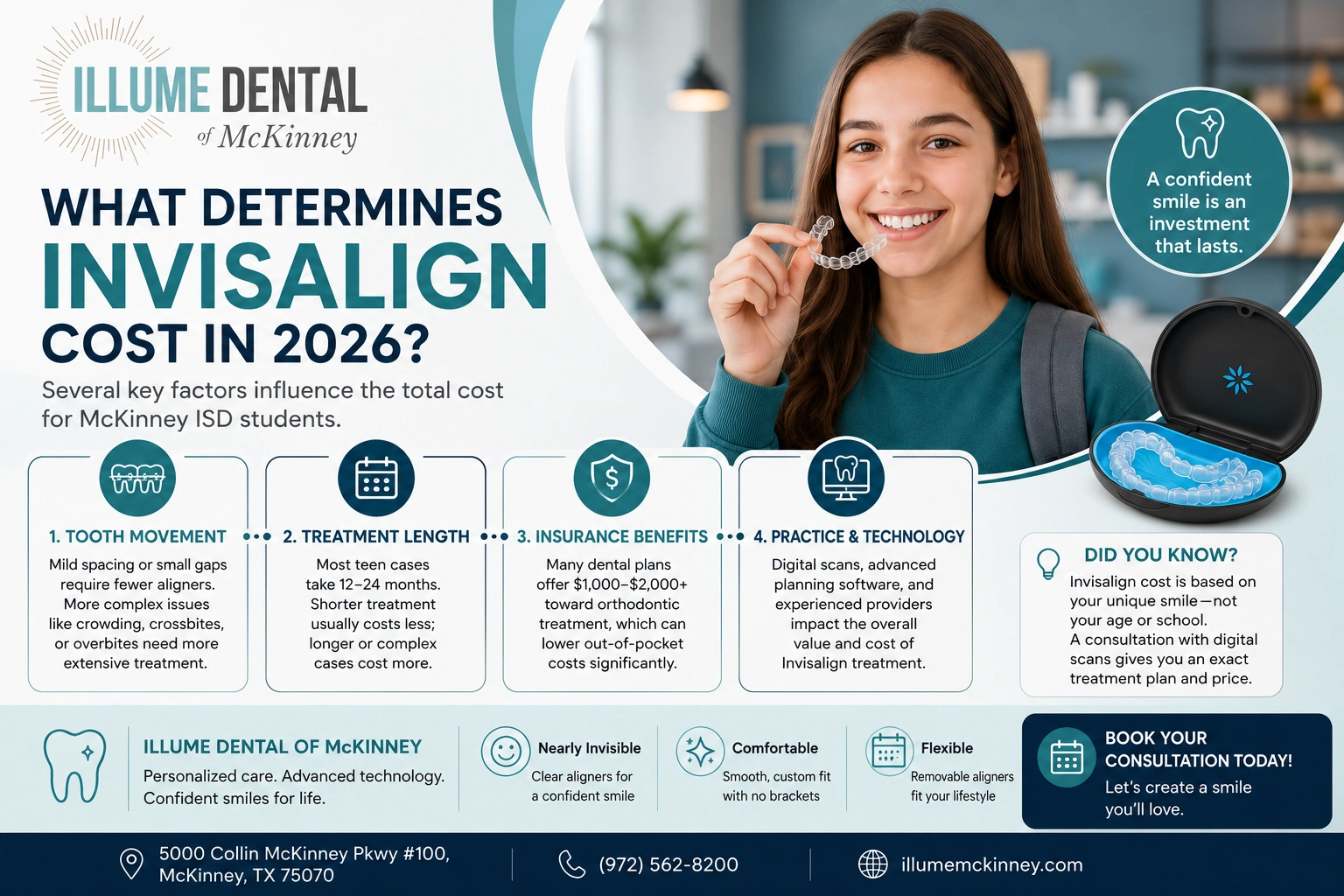
How much does Invisalign cost in 2026 for McKinney ISD students?
If you’re a McKinney ISD student or parent researching Invisalign in 2026, the short answer is:
Most Invisalign treatment in McKinney ranges from approximately $3,500 to $7,500+, depending on the complexity of the case, treatment length, and insurance coverage.
However, that’s a wide range because not every Invisalign case is the same. Families comparing aligners with other smile improvements may also want to explore affordable cosmetic dentistry options for your smile when deciding which treatments fit their goals and budget.
Wondering what Invisalign really costs?
Schedule a consultation today and receive a customized treatment plan with transparent pricing.
What Determines Invisalign Cost?
For McKinney-area teens and students, the biggest factors are:
1. How Much Tooth Movement Is Needed
A student with mild crowding or a small gap may need only a limited Invisalign plan.
A student with:
- Significant crowding
- Bite problems
- Crossbites
- Overbites or underbites
will typically require a more comprehensive treatment plan and more aligners.
2. Treatment Length
Most teen Invisalign cases last between 12 and 24 months.
Generally:
- Shorter treatment = lower cost
- Longer, more complex treatment = higher cost
3. Insurance Benefits
Many dental insurance plans offered through employers in North Texas include orthodontic benefits.
A plan may contribute:
- $1,000
- $1,500
- $2,000+
toward Invisalign treatment.
It’s important to verify whether the orthodontic benefit applies to clear aligners, since not all plans are identical.
Invisalign vs. Braces for McKinney ISD Students
Parents often ask whether Invisalign costs more than braces.
In 2026, the pricing is often similar.
| Treatment | Typical Cost Range |
| Invisalign | $3,500–$7,500+ |
| Traditional Braces | $3,000–$7,000+ |
The better question isn’t which is cheaper.
The better question is:
Which option is most likely to produce a successful result for your child’s specific teeth and habits?
For responsible teens who will wear aligners 20–22 hours per day, Invisalign can be an excellent option.
For students who may forget trays, lose aligners, or struggle with compliance, braces sometimes produce more predictable results.
 Tooth sensitivity is usually caused by exposed dentin, worn enamel, gum recession, cavities, cracked teeth, worn fillings, whitening products, or…

Are There Student Discounts?
There is no universal “McKinney ISD student price” for Invisalign.
Individual dental practices may occasionally offer:
- Seasonal promotions
- Back-to-school specials
- Family discounts
- Interest-free financing plans
These vary by practice and year.
Hidden Costs Parents Should Ask About
Before starting treatment, ask whether the quoted fee includes:
- Initial consultation
- Digital scans
- All aligners
- Refinement trays
- Emergency visits
- Retainers after treatment
A lower advertised price can sometimes exclude services that are necessary later. Understanding cosmetic dentistry financing for a perfect smile can also help families account for these expenses and determine whether payment plans or other financing options make treatment more manageable.
Is Invisalign Worth It for Teens?
For many North Texas families, Invisalign is worth considering because:
Pros
- Nearly invisible
- No food restrictions
- Easier brushing and flossing
- Often more comfortable than brackets and wires
Cons
- Must be worn consistently
- Can be lost or damaged
- Requires responsibility and self-discipline
- Not ideal for every orthodontic problem
The Bottom Line
For McKinney ISD students in 2026, most Invisalign treatment falls between $3,500 and $7,500+, with insurance often reducing out-of-pocket costs. The exact fee depends far more on the complexity of the case than the student’s age or school.
If you’re comparing Invisalign for your child, the most useful next step is a consultation with digital scans. That allows you to see whether Invisalign is appropriate, how long treatment will take, and what the actual cost would be before making a decision.
At Illume Dental of McKinney, Dr. Eileen Chen-Mizuuchi and the team can evaluate whether Invisalign is a good fit for your student’s smile and help you understand all costs, timelines, and alternatives before treatment begins.
FAQ
Does Invisalign cost more for teenagers than adults?
Usually no. Cost is based primarily on case complexity, not age.
Does dental insurance cover Invisalign?
Many plans with orthodontic benefits provide partial coverage, but coverage amounts vary.
How long does Invisalign take for teens?
Most cases take between 12 and 24 months, though some are shorter and some are longer.
Can McKinney ISD students play sports with Invisalign?
Yes. Invisalign trays are removable, and many student athletes appreciate that there are no brackets or wires during practices and games.
What happens if a student loses an aligner?
Replacement aligners may involve additional fees and can delay treatment, which is why responsible wear is important.
Not sure if Invisalign fits your budget?
Get a personalized Invisalign cost estimate for your McKinney ISD student. Call today to discuss treatment and payment options.