
Dental Implants After Years of Missing Teeth: Is It Still Possible?
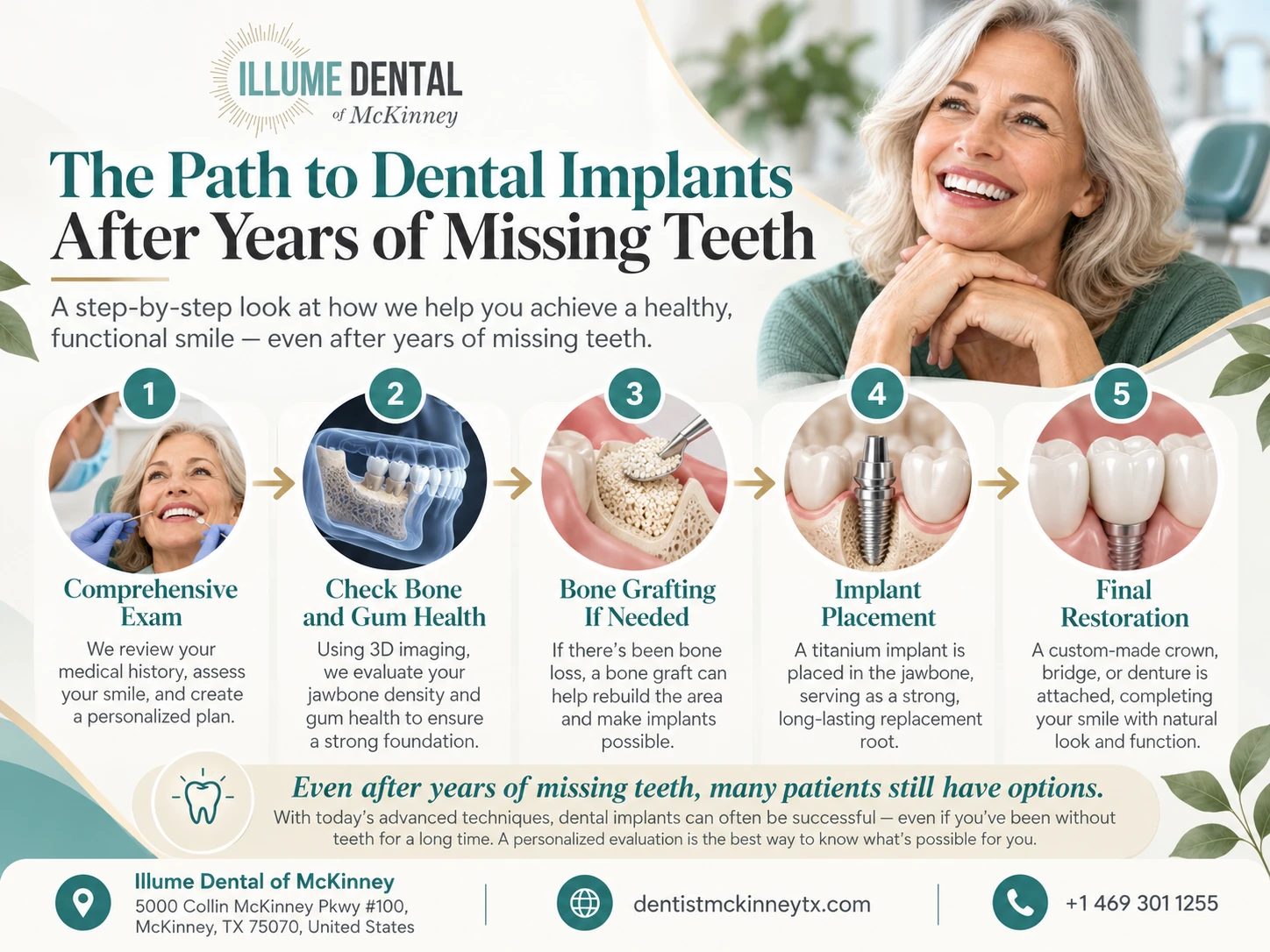
Dental implants may still be possible years after losing teeth, provided the treatment sites have suitable supporting bone or can be prepared appropriately. A long-standing gap does not automatically mean you have missed your chance. However, bone loss and changes in the position of remaining teeth can affect treatment planning. Your dentist will assess your mouth, medical history, and dental imaging to determine whether implants are suitable, whether additional procedures are needed, and which restoration fits your situation.
Key Takeaways
- Implant eligibility depends on current clinical conditions, not simply how long teeth have been missing.
- Bone loss can occur after tooth loss and may complicate implant placement.
- Some patients need bone grafting or sinus augmentation before implants.
- Several missing teeth do not necessarily require an implant for every tooth.
- An examination and appropriate imaging are needed to establish a realistic plan.
What Does This Mean for Patients?
If you have lived with missing teeth for years, an implant consultation can establish what options are available now.
The dentist must assess the proposed implant sites and how replacement teeth would fit your bite. Remaining teeth may have shifted into the gaps, and available bone may have changed. These findings can influence the space, position, and support available for a restoration.
Some patients can proceed with implant placement using existing bone. Others need preparatory treatment. Bone loss does not automatically rule out implants, but grafting cannot guarantee eligibility or success in every case.
Why Can Long-Standing Tooth Loss Affect Treatment?
Bone around a missing tooth can shrink over time. Gum disease, injury, and other existing problems may also contribute to an inadequate bone ridge. The amount and location of the remaining bone determine whether an implant can be placed safely in a position that supports the planned replacement teeth.
Missing teeth can also affect chewing, and neighboring teeth may shift. These changes make it important to assess the whole bite rather than looking only at the empty space.
What Treatment Options May Be Available?
Implant Placement Without Grafting
If suitable bone and healthy tissues are present, implants may be placed without a separate grafting procedure. Time since tooth loss alone does not establish whether grafting is necessary.
Bone Grafting or Ridge Augmentation
Ridge augmentation uses bone or a bone substitute to build up an area with insufficient bone. Depending on the defect and treatment plan, grafting may occur before implant placement or at the same appointment. A separate grafting stage adds healing time.
Sinus Augmentation
For missing upper back teeth, limited bone beneath the sinus may affect placement. Sinus augmentation raises the sinus floor and creates space for additional bone. It is recommended only when the anatomy and proposed implant plan require it.
A Restoration for Multiple Missing Teeth
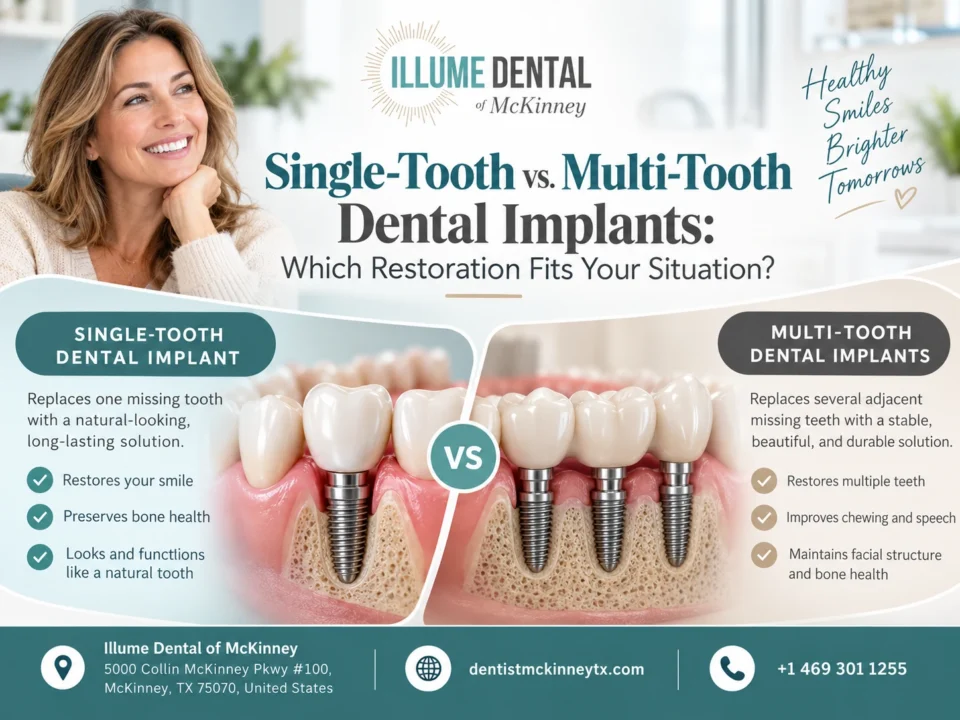
Depending on the pattern of tooth loss, implants can support individual crowns, bridges, or dentures. An implant-supported bridge can replace several teeth without placing an implant beneath every replacement tooth.
If implants are unsuitable or you prefer another approach, conventional bridges or removable dentures may be alternatives.
What Else Affects Implant Eligibility?
Bone is only one part of the assessment. Gum health, medical conditions, medications, smoking, and the ability to maintain the restoration also matter. Smoking can impair healing, while uncontrolled diabetes can increase the risk of complications.
If you have active periodontal disease, it generally needs treatment and stabilization before proceeding with implant care. A history of periodontitis also remains relevant to long-term implant risk.
When Should You See a Dentist?
Schedule an evaluation if you want to replace long-standing missing teeth, have difficulty chewing, or find that a denture no longer fits comfortably. You do not need to wait for pain before discussing replacement options.
Bleeding gums, swelling, persistent bad breath, or loose remaining teeth also warrant assessment because they may indicate gum disease that affects treatment planning.
Questions to Ask at Your Visit
- Is there enough bone at the proposed implant sites?
- Have nearby teeth shifted or reduced the available space?
- Would I need grafting or sinus augmentation?
- Which restoration best fits the number and location of my missing teeth?
- What additional treatment and healing time would be involved?
- What alternatives are available if implants are unsuitable?
How Illume Dental Can Help
Illume Dental of McKinney lists single-tooth and multi-tooth dental implant services. Its treatment information describes an evaluation, necessary X-rays or scans, and a personalized restoration plan.
If you have been missing teeth for years, contact Illume Dental to discuss your current options and any preparation that may be necessary.
Frequently Asked Questions
Is it automatically too late after many years?
No. The condition of your mouth and proposed implant sites determines suitability. An assessment is needed rather than assuming that elapsed time rules out treatment.
Does everyone with long-standing tooth loss need a bone graft?
No. Grafting is considered when existing bone is insufficient for the planned implant placement.
Can implants replace teeth after years of wearing dentures?
Potentially. Implants can support fixed or removable replacement teeth, but bone availability and overall suitability must be assessed first.
Will treatment take longer if grafting is needed?
It may. A separate grafting procedure usually requires healing before implants can be placed. In selected cases, grafting and placement can occur together.