
Can You Whiten Crowns, Veneers, or Dental Bonding?
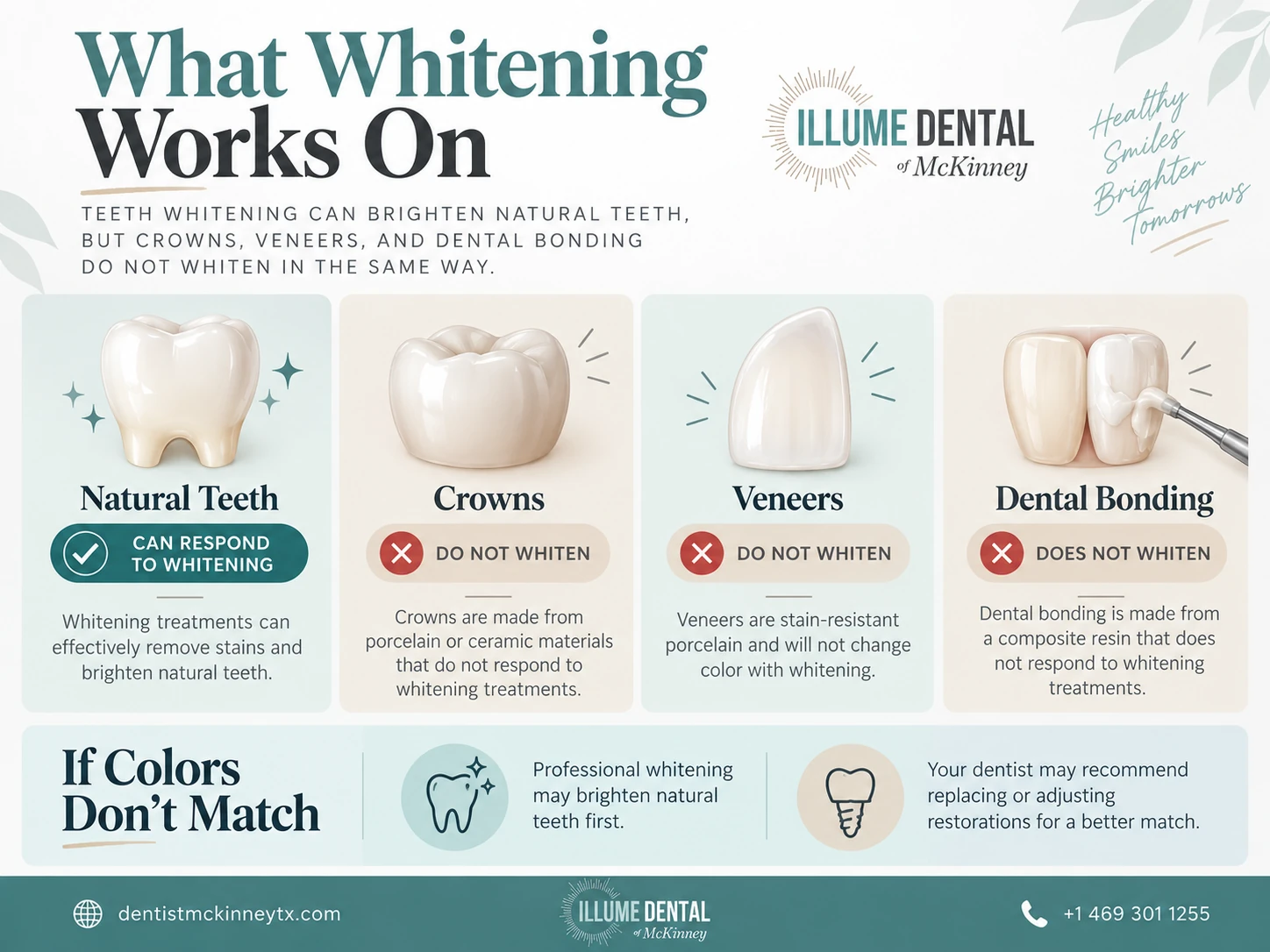
Teeth whitening does not lighten crowns, veneers, or dental bonding in the same way it lightens natural teeth. Whitening surrounding teeth can therefore make existing dental work appear darker by comparison. Professional cleaning or polishing may improve some surface discoloration, but it does not change the restoration’s original shade. If you want a brighter, evenly matched smile, your dentist should assess the materials, their condition, and your natural teeth before recommending whitening, polishing, repair, or replacement.
Key Takeaways
- Bleaching treatments lighten natural teeth, not the underlying shade of tooth-colored restorations.
- Whitening can create a mismatch between natural teeth and existing dental work.
- Some surface stains may respond to professional cleaning or polishing.
- Replacement may be considered when a restoration’s shade cannot meet your goals.
- Necessary dental treatment should take priority over cosmetic whitening.
What Does This Mean for Patients?
If you have visible crowns, veneers, or bonding, whitening may produce an uneven result. The natural teeth can become lighter while the restoration retains its existing shade.
That does not mean whitening is always unsuitable. Your dentist can assess whether a noticeable mismatch is likely and discuss what, if anything, would be needed afterward. Replacing healthy dental work solely for color is a decision that should consider the benefits, costs, and treatment involved.
How Does Whitening Affect Different Dental Materials?
| Tooth or Restoration | Response to Whitening | What May Help With Discoloration? |
| Natural teeth | Peroxide bleaching can lighten many types of discoloration, although results vary | Appropriate whitening treatment after assessment |
| Porcelain or ceramic crowns | Bleaching does not lighten their original shade | Assessment of surface staining, condition, and whether replacement is appropriate |
| Porcelain veneers | Bleaching does not lighten their original shade | Professional assessment and cleaning; replacement may be considered for a shade change |
| Composite bonding or veneers | Whitening does not provide a predictable way to change their underlying shade | Polishing, repair, or replacement, depending on the cause and extent of discoloration |
Composite bonding is less stain-resistant than porcelain restorations. However, staining does not automatically mean that bonding needs to be replaced.
Why Can Restorations Look Darker Over Time?
Sometimes the restoration has developed surface stains. In other cases, its color has remained similar while the surrounding natural teeth have changed.
Coffee, tea, tobacco, and other staining exposures can contribute to discoloration. Composite bonding may also lose its original appearance as it ages. A dentist can distinguish removable surface staining from deeper discoloration or a problem with the restoration.
Cleaning or polishing may improve surface stains, particularly on bonding. If the material itself is discolored or its original shade is too dark, whitening gel is not a reliable solution.
Should You Whiten Before Getting New Dental Work?
If whitening is part of your plan and the dental work can safely wait, whitening natural teeth first may help your dentist match new restorations to the finished shade.
Your dentist may recommend a waiting period before shade selection or bonding. Timing depends on the whitening method, restoration, and clinical situation. There is no single schedule suitable for every patient.
Do not delay treatment for decay, a damaged tooth, or another urgent problem simply to whiten first.
When Should You See a Dentist?
Arrange an assessment before whitening if you have visible restorations, existing sensitivity, or concerns about uneven color. Whitening can cause temporary tooth sensitivity and gum irritation, so product selection and correct use matter.
Have chipped bonding, sharp edges, or a bite that feels different checked. These problems need assessment rather than additional whitening.
Questions to Ask at Your Visit
- Which visible areas are natural teeth, and which are restorations?
- Is the discoloration on the surface or within the material?
- Could cleaning or polishing improve the appearance?
- Would whitening create a noticeable mismatch?
- Should whitening happen before planned restorative work?
- What are the benefits and drawbacks of replacing an otherwise healthy restoration?
How Illume Dental Can Help
Illume Dental of McKinney lists whitening, veneers, bonding, and crowns among its services. An evaluation can help you discuss how these treatments may fit together and what result is realistic with existing dental work.
Contact Illume Dental to discuss your current restorations and preferred tooth shade before starting whitening.
Frequently Asked Questions
Can professional whitening lighten crowns or veneers?
No. Professional bleaching lightens natural teeth, but it does not change the original shade of crowns or veneers.
Can stained dental bonding be polished?
Sometimes. Professional polishing may improve surface staining, while deeper discoloration may require repair or replacement.
Will stronger whitening products fix a mismatch?
No. Stronger products do not make restorations respond like natural teeth. Overusing whitening products can harm teeth or gums.
Do I have to replace my dental work after whitening?
Not necessarily. Replacement depends on the resulting color difference, the restoration’s condition, and whether the mismatch concerns you.