
Biocompatible Dental Materials in McKinney, TX
Biocompatible dental materials are materials selected with the way they interact with the body in mind. If you are planning a crown or another restoration, it is reasonable to ask what will be used, especially if you have a known material sensitivity or prefer a metal-free option. At Illume Dental in McKinney, we can discuss those preferences alongside what your tooth needs for comfortable, lasting function.
“Biocompatible” can sound like a promise that one material is safe for everyone. That is not what it means. Understanding the term, and the difference between a ceramic crown and a dental implant post, can help you ask more useful questions when planning treatment.
Looking for Biocompatible Dental Options?
Choose dental materials with your comfort, health, and long-term smile in mind. Call today to discuss your options.
What “Biocompatible” Means in Dentistry
Biocompatibility describes how a material performs when it comes into contact with living tissue. Dental materials are assessed for concerns such as irritation and unwanted reactions. It does not mean that a material is guaranteed to cause no reaction in every person.
Biocompatible also does not automatically mean metal-free. Materials used in dentistry include ceramics and metals, and the right choice depends on the patient and the treatment. An all-ceramic crown may suit someone who wants to avoid metal in that restoration, but that preference does not make metal-based restorations broadly unsafe.
If you have had a reaction to a dental material or have a diagnosed metal allergy, tell your dentist before treatment begins. Knowing which material caused the concern is more helpful than assuming you need to avoid every metal or every type of restoration.
Ceramic and Zirconia Crowns
Patients often hear “ceramic” and “zirconia” discussed together. Zirconia is a type of dental ceramic. Other ceramic crown materials include porcelain-based options. Illume Dental’s crown information discusses porcelain, ceramic, and zirconia as possible crown materials.
These materials have different properties:
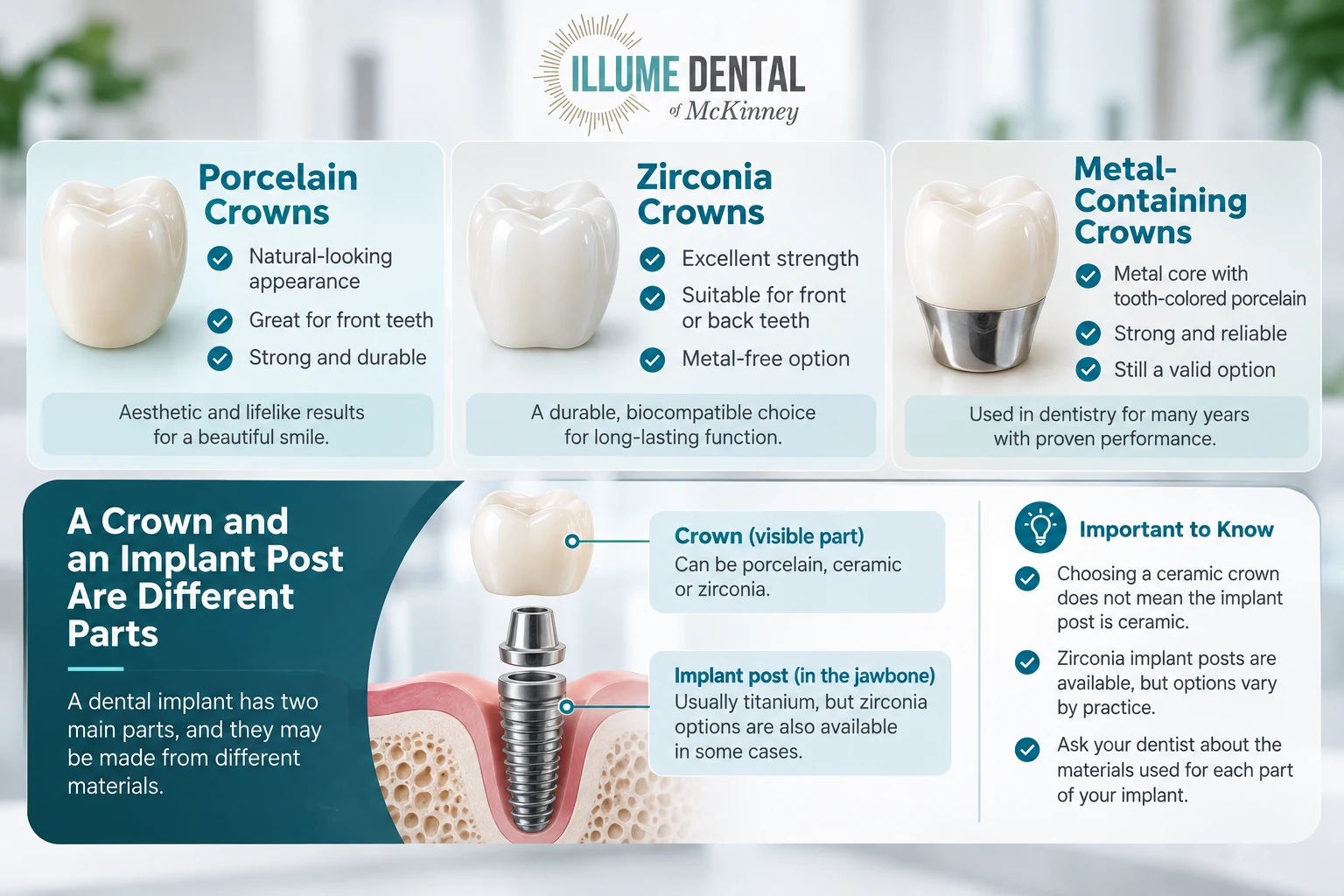
- Porcelain-based ceramic crowns can provide a natural-looking result, which may be especially useful for a visible front tooth. The specific material and crown design affect its appearance and strength.
- Zirconia crowns are valued for their strength and can be considered for front or back teeth. Their shade and appearance still need to be planned for the tooth being restored.
- Metal-containing crowns remain an option in dentistry. Some have a metal core covered with tooth-colored porcelain, while others are made from a metal alloy.
No crown material is the best choice for every tooth. The location of the tooth, your bite, how much natural tooth remains, appearance goals, and the restoration’s design all matter. Your dentist can explain the advantages and limitations of the options appropriate for your case.
A Crown and an Implant Post Are Different Parts
Material questions can become confusing when a missing tooth is being replaced. A dental implant post is placed in the jawbone and supports a replacement tooth. The crown is the visible restoration attached above it. Choosing a ceramic crown does not mean the implant post is ceramic or that the entire restoration is metal-free.
Zirconia implant posts are available in dentistry, but availability varies by practice and treatment plan. Illume Dental’s implant information describes titanium posts and mentions porcelain or ceramic crowns. If the material of an implant post matters to you, ask us which options are available for your proposed treatment before making a decision.
Who Might Want to Discuss Material Choice?
Some patients ask because they have a documented allergy or a previous reaction they want their dentist to know about. Others prefer the appearance of an all-ceramic crown or want to understand whether a metal-free restoration is suitable. You do not need a medical concern to ask what a proposed restoration contains.
The conversation should cover more than the material’s name. For example, a crown’s fit, the condition of the tooth beneath it, and the forces placed on it when you chew all affect treatment planning. If you are considering an implant, the post, connector, and visible replacement tooth may involve different materials. Asking about each part gives you a clearer picture of what is being recommended.
How We Approach the Decision
At Illume Dental, material choice is part of a broader conversation about your oral health and treatment goals. Our holistic dentistry approach includes considering patient preferences and selecting materials with the individual treatment in mind.
After examining your tooth and discussing your concerns, we can explain which restoration options may be appropriate, what each option involves, and whether your material preference changes the treatment plan. We will not assume that an all-ceramic or metal-containing option is right for you based on its label alone.
If you are concerned about an existing restoration, bring that up too. A concern about its material is a reason to have a conversation, but it does not by itself establish that the restoration needs replacing. We can first discuss what is in place, how it is functioning, and whether there is a dental reason to recommend treatment.
You can read more about our approach on our holistic dentistry service page. If you have questions about materials for an upcoming crown or implant treatment, call our McKinney office or request an appointment online. We can talk through the options that apply to your care.
Concerned About Dental Materials?
Talk with our dental team about material sensitivities, metal-free choices, and the right restoration for your smile.