
Why Are My Gums Bleeding? Common Causes and When It Needs Treatment
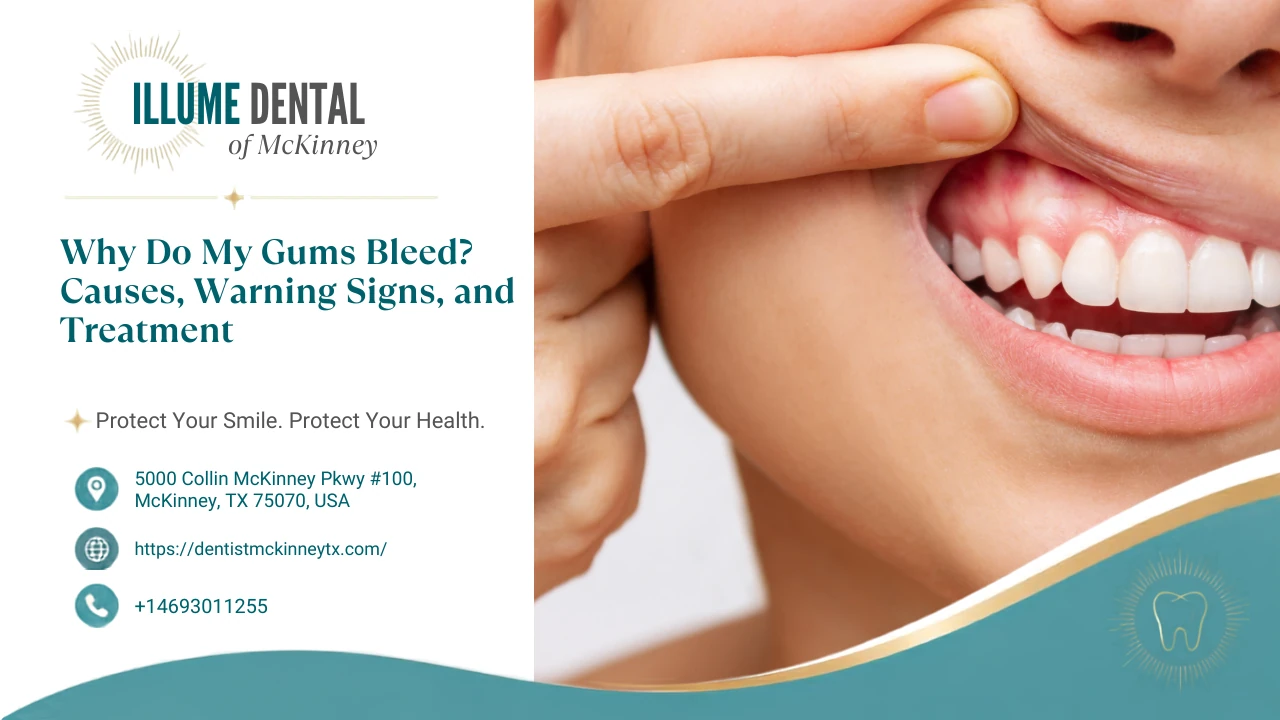
Bleeding gums commonly occur when the gum tissue is inflamed, often because plaque has accumulated around the gumline. Gingivitis, the earliest stage of gum disease, can cause gums to become red, swollen, tender, and prone to bleeding during brushing or flossing. However, gum bleeding can also occur from brushing too aggressively, starting a new flossing routine, pregnancy-related gum changes, certain medications, and less commonly, medical conditions that affect bleeding.
Occasional minor bleeding from obvious irritation may resolve, but repeated, unexplained, or persistent gum bleeding deserves attention. Bleeding accompanied by gum recession, persistent bad breath, swelling, pus, changes in the bite, or loose teeth can be associated with periodontal disease and should be evaluated professionally.
Key Takeaways
- Bleeding gums are a common warning sign of gingivitis, but bleeding alone does not prove that someone has periodontitis.
- Plaque accumulation along the gumline is the most common cause of gingivitis.
- Gums can temporarily bleed after starting a new flossing routine. The ADA notes that this often improves within about a week.
- Brushing too hard can injure gum tissue and cause bleeding. A soft or extra-soft toothbrush is generally recommended.
- Pregnancy-related hormonal changes can make gums more susceptible to inflammation and bleeding.
- Anticoagulant and antiplatelet medications can increase bleeding. These medications should not be stopped or changed without guidance from the prescribing healthcare professional.
- Periodontitis can damage the bone and other tissues supporting the teeth, so signs such as recession, deep gum pockets, or loose teeth warrant evaluation.
What does this mean for patients?
Seeing a small amount of blood once does not necessarily mean you have serious gum disease. The pattern matters.
If bleeding begins shortly after starting to floss consistently, for example, mild bleeding can occur temporarily as inflamed tissues adjust to regular cleaning. The ADA says this type of bleeding usually resolves within about a week.
Bleeding that happens repeatedly, however, should not simply be accepted as normal.
Healthy gums generally should not bleed easily during routine brushing and interdental cleaning. Frequent bleeding may indicate that plaque-related inflammation is present or that another factor needs to be identified.
Importantly, gum disease is not always painful. Someone can have gingivitis or even more advanced periodontal disease without significant discomfort. That is why the absence of pain does not necessarily mean the gums are healthy.
What are common reasons gums bleed?
Gingivitis
Gingivitis is one of the most common explanations for bleeding gums.
Plaque is a sticky bacterial film that continually develops on the teeth. When plaque remains around the gumline, it can trigger inflammation. The gums may become red, swollen, tender, and more likely to bleed during brushing or flossing.
Gingivitis does not involve the bone loss seen in periodontitis. At this early stage, gum disease is generally reversible with effective home oral hygiene and appropriate professional dental care.
Periodontitis
If plaque-related inflammation progresses beyond gingivitis, periodontitis can affect the tissues and bone that support the teeth.
As periodontitis develops, pockets can form between the gums and teeth. Bone and connective tissues supporting the teeth can be damaged. Possible signs include:
- Bleeding gums
- Receding gums
- Persistent bad breath
- Pus between the gum and tooth
- Loose or separating teeth
- Changes in the way the teeth fit together when biting
Periodontitis cannot be diagnosed from bleeding alone. A periodontal examination is needed to assess factors such as gum inflammation, pocket depth, attachment loss, tooth mobility, and bone support.
Starting a new flossing routine
If someone has not regularly cleaned between the teeth and then begins flossing consistently, mild bleeding may occur initially.
According to the ADA, this bleeding often improves within about a week as the gums become healthier. Persistent bleeding despite consistent, gentle cleaning should be discussed with a dentist.
Bleeding is not usually a reason to permanently stop cleaning between the teeth unless a dentist specifically advises otherwise.
Brushing too aggressively
Brushing harder does not clean teeth better.
Excessive pressure can irritate or injure gum tissue and contribute to bleeding. The ADA recommends using a soft or extra-soft toothbrush rather than scrubbing aggressively.
If one specific area continually bleeds despite gentle brushing, the problem may be more than brushing pressure and should be evaluated.
Pregnancy-related gum inflammation
Hormonal changes during pregnancy can affect the way gum tissue responds to plaque.
Some pregnant patients develop what is commonly called pregnancy gingivitis, which can cause swollen, tender gums that bleed during brushing or flossing. Good oral hygiene and regular dental care remain important during pregnancy.
Pregnancy does not mean gum bleeding should automatically be ignored. Persistent or significant symptoms still deserve dental evaluation.
Medications that affect bleeding
Anticoagulant and antiplatelet medications can make bleeding easier or cause bleeding to last longer.
Examples include warfarin and medications such as aspirin, clopidogrel, apixaban, rivaroxaban, dabigatran, and edoxaban.
Patients should not stop or change these medications on their own because their gums are bleeding. The ADA notes that interrupting anticoagulant or antiplatelet treatment can carry serious risks, including blood clots, stroke, or heart attack. Any medication adjustment should be made in consultation with the prescribing physician or appropriate healthcare professional.
Less common medical causes
Not every case of bleeding gums originates solely from gum disease.
Cleveland Clinic lists less common possibilities including deficiencies involving vitamins C or K, platelet or blood-clotting disorders, and certain systemic illnesses.
These causes should not be assumed simply because gums bleed. Dental causes are common, and a clinical evaluation can help determine whether further medical assessment is appropriate.
How can you tell if bleeding may be related to gum disease?
Bleeding becomes more concerning when it occurs along with other periodontal warning signs.
The American Academy of Periodontology lists signs such as:
- Red, swollen, or tender gums
- Bleeding while brushing, flossing, or eating harder foods
- Gums pulling away from the teeth
- Loose or separating teeth
- Pus between the gums and teeth
- Persistent bad breath
- Changes in the bite
- Changes in how a partial denture fits
Having one of these symptoms does not automatically establish a diagnosis.
Periodontal disease can also sometimes progress with few obvious symptoms, which is one reason routine periodontal assessments remain important.
What should you expect during a gum evaluation?
A dentist or dental hygienist does more than simply look for blood.
According to the National Institute of Dental and Craniofacial Research, periodontal evaluation can involve examining the gums for inflammation, bleeding, and recession and using a periodontal probe to measure the spaces between the gums and teeth.
The dentist may also evaluate:
- Plaque and tartar accumulation
- Gum recession
- Periodontal pocket depths
- Tooth mobility
- The way the teeth come together
- Medical history
- Tobacco use
- Diabetes or other relevant health conditions
- Medications that may influence bleeding or gum health
Dental X-rays may be taken when appropriate to evaluate the bone supporting the teeth. They are particularly useful when the dentist needs to determine whether periodontal bone loss is present.
Not every person with minor gum bleeding automatically needs X-rays. The type of examination and imaging should depend on the clinical findings and individual circumstances.
How are bleeding gums treated?
Treatment depends on why the gums are bleeding.
For plaque-related gingivitis, improving daily plaque removal and receiving appropriate professional dental cleaning can often allow the inflammation to resolve. Gingivitis is considered reversible because the supporting bone has not yet been destroyed.
Home care commonly includes:
- Brushing thoroughly twice each day
- Cleaning between the teeth daily
- Using a soft-bristled toothbrush
- Following individualized oral-hygiene instructions from the dental team
- Maintaining regular professional dental visits
Periodontitis requires professional periodontal treatment. Depending on the extent of disease, treatment may include scaling and root planing and, in more advanced cases, additional periodontal procedures.
If medication, a medical condition, or another non-dental issue appears to be contributing, coordination with the appropriate healthcare provider may be necessary.
When should you see a dentist?
Make a dental appointment if your gums:
- Bleed regularly when brushing or flossing
- Bleed without an obvious reason
- Continue bleeding despite consistent, gentle oral hygiene
- Are swollen, red, or tender
- Have started receding
- Produce pus or drainage
- Are associated with persistent bad breath
- Occur alongside loose or shifting teeth
The ADA recommends professional evaluation if gums bleed regularly or enough to cause concern. Cleveland Clinic advises seeking evaluation when bleeding persists rather than resolving.
More immediate attention is appropriate for bleeding that is heavy or cannot be controlled, particularly following trauma or a dental procedure.
Significant facial swelling, fever associated with a suspected dental infection, or difficulty breathing or swallowing also warrants prompt medical or dental assessment.
Questions to ask at your visit
- Does this look like gingivitis, periodontitis, or another source of irritation?
- How much plaque or tartar is present around my gumline?
- Do I have periodontal pockets or gum recession?
- Is there any evidence that bone supporting my teeth has been affected?
- Am I brushing or cleaning between my teeth too aggressively?
- Could one of my medications be making the bleeding more noticeable?
- Do you recommend a regular cleaning or periodontal treatment?
- How should I brush and clean between my teeth at home?
- How often should my periodontal health be monitored?
- Is there anything about my medical history that should be discussed with my physician?
How Illume Dental can help
Illume Dental of McKinney provides evaluation and treatment for bleeding gums and periodontal disease. Its published gum-disease services include assessment of gum inflammation, recession, bad breath, loose or shifting teeth, and other periodontal warning signs. The practice also lists non-surgical periodontal care such as scaling and root planing among the treatment approaches it may use when clinically appropriate.
For someone experiencing repeated gum bleeding, an examination can help determine whether the issue is related to plaque-induced gingivitis, periodontitis, brushing technique, medication, another local dental problem, or a factor that may require medical follow-up.
Treatment should be based on what the examination shows rather than assuming every case of bleeding gums requires the same type of periodontal care.
Frequently Asked Questions
Is it normal for gums to bleed when flossing?
Bleeding is not considered a sign of completely healthy gum tissue, but it can happen temporarily when someone begins flossing after not cleaning between the teeth regularly. The ADA states that this type of bleeding usually improves in about a week. Continued bleeding should be evaluated.
Does bleeding mean I have gum disease?
Not necessarily.
Gingivitis and periodontitis can both cause bleeding, but brushing too hard, starting a new flossing routine, pregnancy-related gum changes, anticoagulant medications, and other factors can also contribute. An examination is needed to determine the cause.
Can you have gum disease without pain?
Yes. Gum disease can cause little or no discomfort, particularly in its earlier stages. The ADA and American Academy of Periodontology both note that periodontal disease can progress without obvious symptoms.
Can gingivitis be reversed?
Yes, in many cases. Gingivitis is the early stage of gum disease and does not involve periodontal bone loss. Professional cleaning combined with effective daily brushing and interdental cleaning can often reverse the inflammation.
Can blood-thinning medication cause bleeding gums?
It can make gum bleeding easier or more prolonged. However, patients should not stop anticoagulant or antiplatelet medications without consulting the prescribing healthcare professional because stopping them can pose serious health risks.
Do bleeding gums mean I need a deep cleaning?
Not automatically. Scaling and root planing is used to treat certain cases of periodontal disease, but bleeding gums can have several causes. A periodontal examination helps determine whether a routine professional cleaning, improved home care, scaling and root planing, or another approach is appropriate.