
Waterpik vs. String Floss: Why Most McKinney Patients Actually Need Both
If you’re trying to decide between a Waterpik and traditional string floss, you’re asking the wrong question.
The better question is:
Which one cleans what the other misses?
Because for many patients, the answer isn’t Waterpik or floss.
It’s Waterpik and floss.
The Short Answer
String floss is still the gold standard for physically scraping plaque off the sides of your teeth.
A Waterpik is excellent for flushing bacteria, food debris, and plaque from areas that are difficult to reach with floss alone.
Used together, they can be significantly more effective than either tool by itself.
Protect Your Gums Every Day
Using both Waterpik and string floss may give your smile better protection. Schedule your McKinney dental visit today.
Why Brushing Isn’t Enough
Many patients brush diligently twice a day and are surprised when their dentist still finds inflammation between their teeth.
Here’s why:
A toothbrush only cleans about 60% of the tooth surface.
The remaining areas include:
- Between teeth
- Under the gumline
- Around crowns
- Around bridges
- Around implants
- Around orthodontic attachments
That’s where flossing and water flossing come in.
What String Floss Does Better
Think of floss as a tiny squeegee.
When used correctly, it physically scrapes sticky plaque biofilm from the sides of the teeth.
That’s important because plaque sticks to tooth surfaces.
A stream of water may loosen some plaque, but floss physically removes it.
String floss is particularly effective for:
- Tight contacts between teeth
- Removing plaque on tooth surfaces
- Preventing cavities between teeth
- Healthy patients with normal spacing
If your goal is removing plaque from the tooth itself, floss remains difficult to beat.
What a Waterpik Does Better
A Waterpik excels at cleaning areas that traditional floss struggles to reach.
The pulsating water stream helps flush out:
- Food particles
- Bacteria
- Inflammatory debris
- Plaque around appliances
- Material beneath the gumline
Many patients find it easier and more comfortable than traditional flossing.
A Waterpik is especially helpful for:
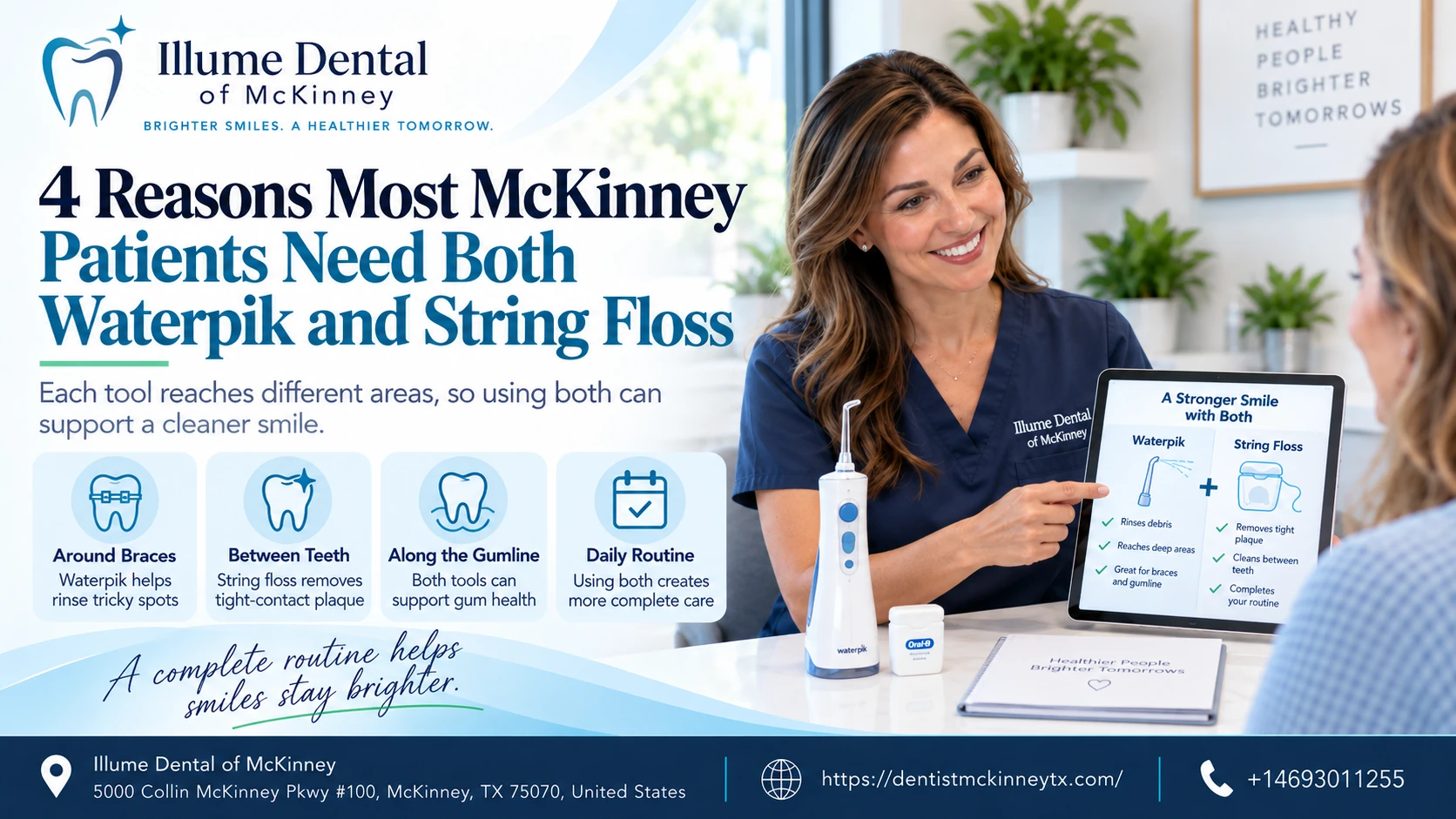
Patients with Braces
Trying to thread floss around brackets and wires can be frustrating.
Water flossers help clean around orthodontic hardware more efficiently.
Patients with Implants
Dental implants require excellent hygiene.
A Waterpik can help clean around implant restorations and under implant-supported bridges.
Patients with Gum Disease
Deep gum pockets often trap bacteria where traditional floss cannot easily reach.
Water flossers can help disrupt bacteria below the gumline.
Patients Who Hate Flossing
Let’s be honest.
The best cleaning tool is the one you’ll actually use consistently.
For many patients, a Waterpik turns an occasional flosser into a daily cleaner.
Why Dentists Love Waterpiks for Gum Health
One reason water flossers have gained popularity is their impact on gum inflammation.
Patients often notice:
- Less bleeding
- Less swelling
- Fresher breath
- Healthier-looking gums
That’s because they’re reducing bacterial buildup around the gumline, where inflammation often begins.
The Most Common Mistake
Many patients buy a Waterpik and stop flossing entirely.
That’s usually not ideal.
Remember:
Water removes debris.
Floss scrapes plaque.
Those are different jobs.
It’s similar to washing a dirty pan with water but never scrubbing it.
The water helps, but some material remains attached to the surface.
A Practical Routine That Works
For most adults, a strong home-care routine looks like:
- Water floss
- String floss
- Brush thoroughly
- Clean the tongue
Some patients prefer floss first and Waterpik second.
The exact order matters less than consistency.
What About Patients With Crowns and Bridges?
This is where a Waterpik often shines.
Food and bacteria frequently collect around:
- Crown margins
- Bridge pontics
- Implant restorations
Water flossers can access many of these difficult areas more easily than traditional floss alone.
What McKinney Patients Often Tell Us
Many patients who start using a Waterpik say:
“My gums don’t bleed as much anymore.”
Others say:
“I finally floss every day because this is easier.”
Those are both wins.
Because the biggest threat isn’t choosing the wrong cleaning method.
It’s not cleaning between your teeth at all.
The Bottom Line
If you’re deciding between a Waterpik and string floss, understand that they serve different purposes.
String floss remains the best tool for scraping plaque from tooth surfaces.
A Waterpik is excellent for flushing bacteria and debris from hard-to-reach areas and improving gum health.
For many McKinney patients especially those with braces, implants, crowns, bridges, or early gum disease the most effective approach is using both.
At Illume Dental of McKinney, Dr. Eileen Chen-Mizuuchi and the team can help you determine whether your current home-care routine is truly keeping plaque and inflammation under control or if a few small changes could make a significant difference.
Frequently Asked Questions
Is a Waterpik better than floss?
Not necessarily. They do different jobs. Floss is better at scraping plaque from tooth surfaces, while a Waterpik is better at flushing debris and bacteria.
Can I replace floss with a Waterpik?
Some patients may see improvement using a Waterpik alone, but most dentists still recommend traditional flossing whenever possible.
Is a Waterpik worth the money?
For patients with braces, implants, bridges, gum disease, or difficulty flossing, many find the investment worthwhile.
Does a Waterpik help with bad breath?
Yes. Removing trapped food particles and bacteria can help reduce one common cause of bad breath.
What if my gums bleed when I floss?
Bleeding is often a sign of inflammation caused by plaque buildup. Consistent cleaning and a professional dental evaluation can help determine the cause.
Water Flosser or String Floss?
Get personalized guidance on the best flossing routine for a healthier smile. Call today to schedule your dental visit.