
How Long Does Full-Arch Dental Implant Recovery Take?
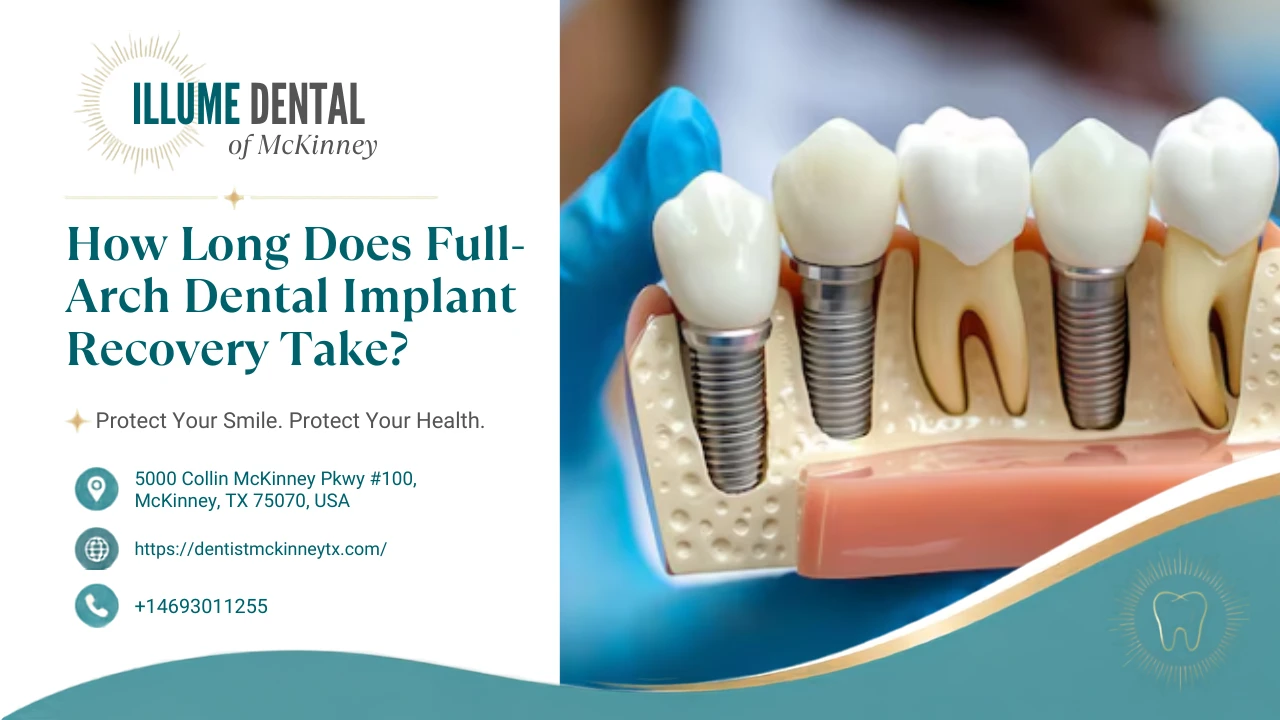
Initial recovery after full-arch dental implant surgery is usually measured in days to a couple of weeks, but complete healing takes much longer. The implants need time to integrate with the jawbone, a process called osseointegration, which commonly takes several months and may take around three to nine months depending on the patient and treatment plan.
Full-arch treatment involves multiple implants supporting an entire upper or lower arch of replacement teeth. Cleveland Clinic notes that a full arch commonly uses four to six implants, although the exact number and treatment approach vary. Some patients can receive a temporary restoration while the implants heal, but having teeth in place does not mean osseointegration is complete.
Take the Next Step Today
A restored, confident smile starts with the right treatment plan. Call now to discuss full-arch dental implants and your expected recovery timeline.
Key Takeaways
- The initial surgical recovery is much shorter than the full implant-healing period.
- Soreness, swelling, tenderness, and temporary changes in eating are common during early healing after implant surgery.
- Osseointegration usually takes several months. Cleveland Clinic gives a general range of about three to nine months for dental implants.
- Some patients may receive temporary replacement teeth before osseointegration is complete.
- Bone grafting, extractions, medical history, smoking or vaping, bone quality, and the complexity of treatment can affect the overall timeline.
- Follow-up visits are important because feeling comfortable again does not confirm that the implants have fully integrated with the jawbone.
What does this mean for patients?
It helps to think about full-arch implant recovery as several overlapping stages rather than one finish date.
During the first several days, the main focus is recovering from surgery. Swelling, tenderness, minor bleeding, and soreness can occur. Diet and activity may also need to be modified according to the treating dentist or surgeon’s instructions.
Over the following weeks, the soft tissues continue to heal even though the patient may already feel significantly better. General oral-surgery guidance from Cleveland Clinic notes that soft tissues can continue healing for about a month after surgery.
The longest stage is usually healing within the jawbone. During osseointegration, new bone forms around and bonds with the implant surface, helping provide the stability needed for long-term function. This biological process continues after the early swelling and discomfort are gone.
If bone grafting was required, the overall treatment schedule can be longer. Dental bone grafts may need at least several months to heal before or alongside subsequent implant treatment, depending on the procedure and amount of bone being rebuilt.
What should you expect during the recovery process?
Full-arch implant recovery varies because not every patient receives the same procedure. Some people have teeth extracted and implants placed during the same treatment. Others may need bone grafting or additional stages before their final restoration is completed.
Early recovery commonly involves:
- Following the diet recommended by the treating dental team.
- Keeping the surgical areas clean according to postoperative instructions.
- Taking prescribed or recommended medications exactly as directed.
- Avoiding unnecessary pressure or trauma to the surgical sites.
- Temporarily limiting strenuous physical activity.
- Attending scheduled follow-up appointments.
- Reporting unexpected or worsening symptoms instead of waiting for the next routine appointment.
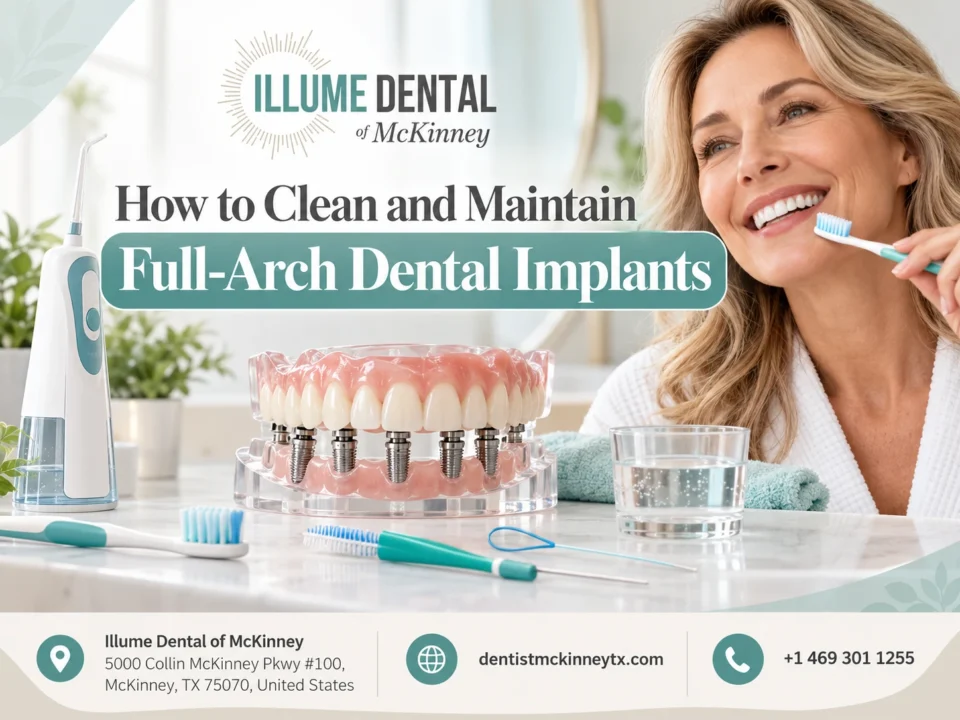
Illume Dental’s published instructions for full-arch implant patients also advise a soft diet during the first few days, careful oral hygiene, avoiding chewing directly on surgical areas until cleared, and attending follow-up appointments.
The most important distinction is that being able to eat, speak, work, or go about normal activities does not necessarily mean the implants have finished healing. Bone integration continues for months after the initial surgical symptoms improve.
When should you see a dentist?
Some swelling, tenderness, and discomfort are expected after dental implant surgery. Symptoms should generally improve as healing progresses rather than become increasingly severe.
Contact the treating dental team if you notice concerning changes such as:
- Increasing or significant swelling
- Severe or worsening pain
- Fever
- Pus or drainage around an implant
- Persistent or excessive bleeding
- A restoration or implant that feels loose or unstable
Cleveland Clinic specifically advises contacting a dental provider for symptoms including a loose or wobbly implant, fever, pus, bleeding gums, or significant swelling around an implant.
Difficulty breathing or swallowing, rapidly increasing facial swelling, or other potentially serious symptoms require urgent medical assessment.
Questions to ask at your visit
- What recovery timeline should I expect based on my specific procedure?
- Will I receive a temporary full-arch restoration while the implants heal?
- How long should I stay on a soft-food diet?
- When can I return to exercise and other strenuous activities?
- Did I need bone grafting, and will that affect the healing timeline?
- How will you determine whether my implants have integrated successfully?
- When will my final restoration be placed?
- How should I clean around my implants and temporary restoration during healing?
- What symptoms should prompt me to contact the office?
 After a tooth extraction, you should protect the blood clot, rest, eat soft foods, avoid straws and smoking, and follow…
How Illume Dental can help
Illume Dental of McKinney provides dental implant treatment that includes single implants, multiple-tooth implants, full-mouth implant treatment, and All-on-4 dental implants. Its published implant process includes evaluation, implant placement, a period of osseointegration, and placement of the appropriate restoration.
For patients considering or recovering from full-arch implants, an examination and appropriate dental imaging can help determine bone condition, implant position, healing progress, restoration needs, and the next stage of treatment.
Because full-arch implant recovery varies from person to person, the timeline provided by the treating dentist should take priority over a general online schedule.
Frequently Asked Questions
How long does it take to feel normal after full-arch dental implants?
Many people feel substantially better after the early surgical recovery period, which may take roughly a week or two depending on the extent of surgery. More complex procedures can require longer recovery. However, feeling normal again does not mean the implants have finished integrating with the jawbone.
How long does it take for full-arch dental implants to heal completely?
The deeper healing process takes considerably longer than the initial recovery. Osseointegration commonly requires several months, with Cleveland Clinic giving a general dental implant healing range of approximately three to nine months. Individual timing varies according to the treatment performed and how the patient heals.
Can you have temporary teeth while full-arch implants heal?
In some cases, yes. Some implant protocols allow replacement teeth or a temporary restoration to be placed at or shortly after implant surgery. Whether immediate or early loading is appropriate depends on factors such as implant stability, bone conditions, the surgical plan, and patient selection.
Does bone grafting make full-arch implant recovery longer?
It can. Bone grafting is sometimes necessary when there is not enough healthy jawbone to support dental implants. Initial recovery from a dental bone graft may occur within about a week, but the graft itself generally needs at least several months to heal and mature. Larger grafts may take longer.
Can a full-arch temporary bridge mean the implants are already healed?
No. A temporary restoration can sometimes be placed before osseointegration is complete. The presence of functioning temporary teeth does not mean the bone has finished integrating with the implants. Patients should continue following dietary, hygiene, and activity restrictions provided by their dental team.
Start Your Implant Consultation
Ready to learn if full-arch dental implants are right for you? Call today for professional guidance and a recovery plan tailored to your needs.