
How to “Test” Your Own Breath at Home: The 2-Minute Trick Most People Never Learn
Most people worry about bad breath.
Very few know how to check it accurately.
The problem is that you’re constantly exposed to your own breath, which makes your nose surprisingly bad at detecting it. It’s similar to how you stop noticing your own perfume, cologne, or house smell after a while.
That’s why many people either:
- Think their breath is terrible when it’s actually normal
- Assume their breath is fine when other people notice an odor
If you’re curious whether bad breath is actually a problem, here’s a simple 2-minute test you can do at home.
Not Sure If Your Breath Is Fresh?
A quick home check can help, but persistent bad breath may need professional attention. Call today to schedule a dental visit.
The 2-Minute Tongue Test
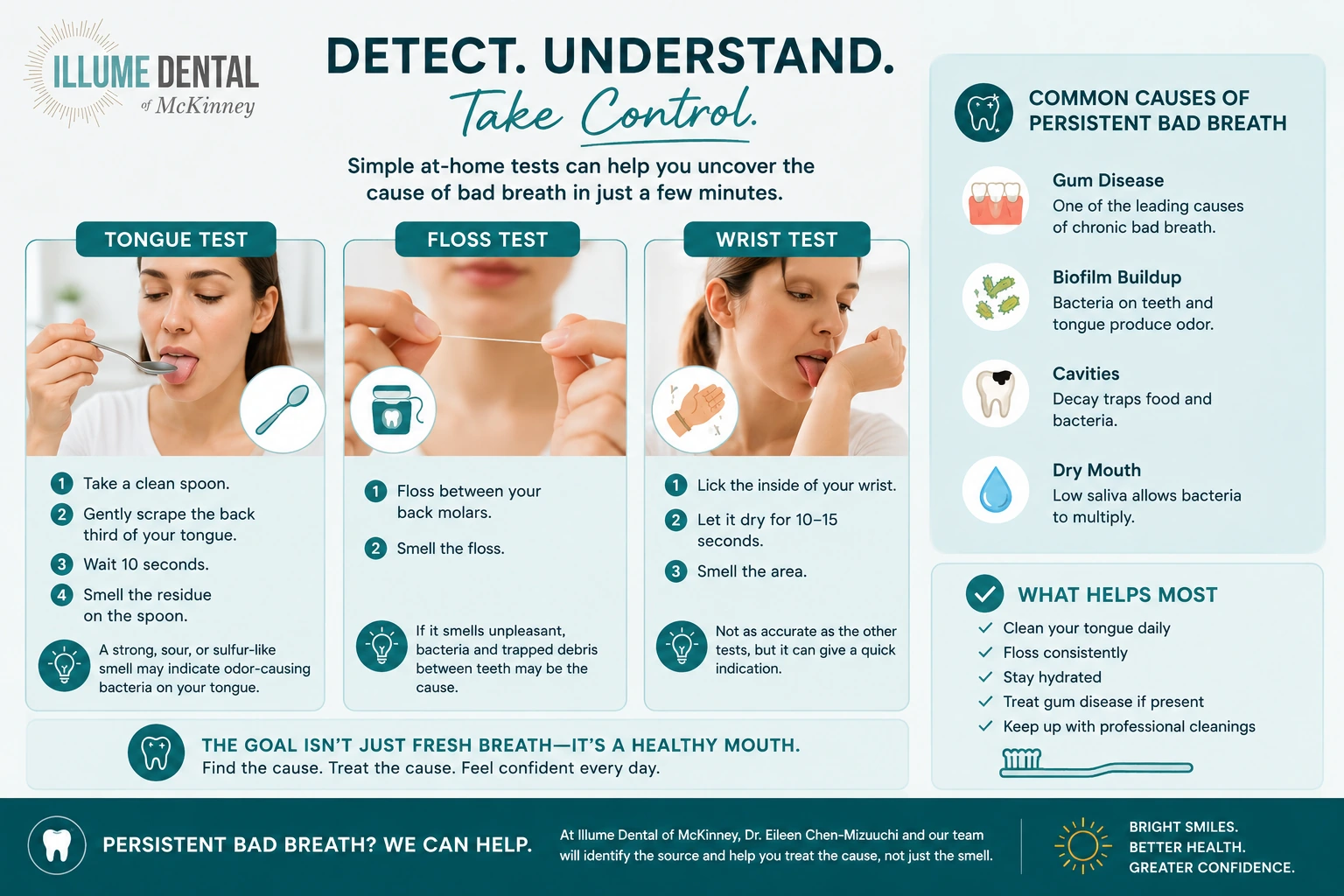
This is one of the easiest ways to detect odor-causing bacteria.
Step 1
Take a clean spoon.
Step 2
Gently scrape the back third of your tongue.
That’s where most odor-producing bacteria tend to live.
Step 3
Wait about 10 seconds.
Step 4
Smell the residue on the spoon.
Not glamorous.
But surprisingly effective.
If the smell is strong, sour, sulfur-like, or unpleasant, there is a good chance bacteria on your tongue are contributing to bad breath.
Why This Works
Many cases of chronic bad breath don’t come from the teeth.
They come from the tongue.
The back of the tongue contains tiny crevices that trap:
- Bacteria
- Food particles
- Dead cells
As bacteria break these materials down, they release sulfur compounds that create the classic “bad breath” smell.
The Wrist Test
Another quick option:
Step 1
Lick the inside of your wrist.
Step 2
Let it dry for 10-15 seconds.
Step 3
Smell the area.
This isn’t as accurate as the tongue scrape method, but it can provide a rough indication of the bacteria present in your saliva.
The Floss Test
This may be the most revealing test of all.
Step 1
Floss between your back molars.
Step 2
Smell the floss.
If the floss smells significantly worse than expected, bacteria and trapped debris between teeth may be contributing to the problem.
This is especially common in areas where:
- Food gets trapped
- Fillings have rough edges
- Gum disease is developing
- Flossing has been inconsistent
When Bad Breath Is Probably Normal
Everyone experiences temporary bad breath from time to time.
Common causes include:
- Morning breath
- Coffee
- Garlic
- Onions
- Certain medications
- Dehydration
If the odor improves after brushing, flossing, eating, or drinking water, it’s usually not a major concern.
When Bad Breath May Signal a Problem
Persistent bad breath deserves attention if it continues despite:
- Brushing twice daily
- Daily flossing
- Tongue cleaning
- Good hydration
Common dental causes include:
Gum Disease
One of the most common causes of chronic bad breath.
Biofilm Buildup
Bacteria living on teeth and the tongue can continuously produce odor.
Cavities
Food and bacteria can collect in decayed areas.
Dry Mouth
Reduced saliva allows bacteria to multiply more easily.
The Question Most People Forget to Ask
Instead of asking:
“Do I have bad breath?”
Ask:
“Why do I have bad breath?”
The answer matters.
Breath mints and mouthwash may hide the odor temporarily, but they rarely solve the underlying cause.
What Usually Helps the Most
For many patients, the biggest improvements come from:
- Cleaning the tongue daily
- Flossing consistently
- Staying hydrated
- Treating gum disease if present
- Keeping up with professional cleanings
Simple habits often outperform expensive mouthwashes.
The Bottom Line
If you’re concerned about your breath, the spoon test, floss test, and wrist test can provide a surprisingly good reality check in just a couple of minutes.
But if bad breath persists despite good oral hygiene, it may be a sign of gum disease, biofilm buildup, dry mouth, cavities, or another underlying issue.
At Illume Dental of McKinney, Dr. Eileen Chen-Mizuuchi and the team can help determine whether the source of the problem is your teeth, gums, tongue, or something else entirely so you’re treating the cause, not just covering up the smell.
Frequently Asked Questions
Is morning breath normal?
Yes. Saliva production decreases during sleep, allowing bacteria to multiply overnight.
What’s the most accurate at-home breath test?
The tongue scrape test and floss test tend to be the most useful because they directly sample areas where odor-causing bacteria commonly accumulate.
Why can’t I smell my own bad breath?
Your brain becomes accustomed to familiar smells and often filters them out.
Does mouthwash fix bad breath?
Usually only temporarily. The underlying cause still needs to be addressed.
Can bad breath be a sign of gum disease?
Absolutely. Persistent bad breath is one of the most common warning signs of gum disease and should not be ignored.
Bad Breath That Keeps Coming Back?
Don’t just cover it with mints. A dental exam can uncover what’s really causing the odor. Call now to book an appointment.