
The “Grey Tooth” Mystery: How a Sports Injury at Craig Ranch Can Surface Years Later
A patient walks into the office and says:
“I don’t know what’s happening. This tooth never hurts. I just noticed it’s turning gray.”
Then, after a few questions, a forgotten detail emerges:
“I got hit in the mouth playing soccer at Craig Ranch a few years ago.”
Or:
“I took an elbow during basketball in high school.”
Or:
“I chipped that tooth during a baseball game, but it seemed fine afterward.”
This scenario is more common than most people realize.
A tooth can experience trauma, appear perfectly normal for years, and then suddenly begin changing color long after the original injury has been forgotten.
Don’t Ignore a Tooth Turning Grey
Discoloration after an old injury may signal changes inside the tooth. Schedule an exam and get answers now.
The Short Answer
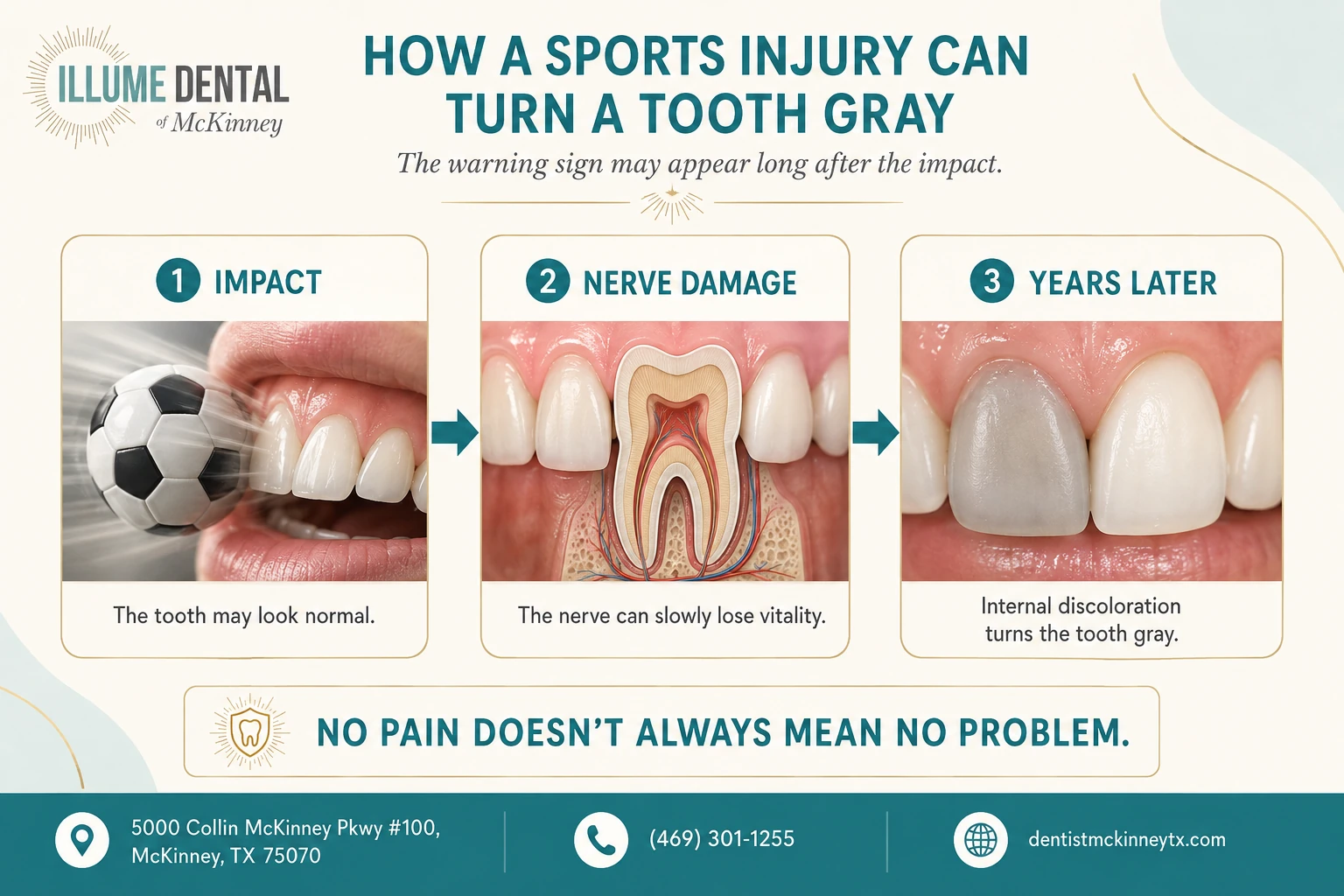
A gray tooth is often a sign that the nerve inside the tooth has been damaged or died.
The surprising part?
That damage may have occurred months or even years earlier during a sports injury, fall, accident, or impact to the mouth.
The tooth may not hurt at all.
But the color change is often the tooth’s way of telling you something inside has changed.
Why Teeth Turn Gray After Trauma
Inside every tooth is a living nerve and blood supply.
When a tooth experiences a significant impact even if it doesn’t break the nerve can be injured.
Several things can happen:
The Nerve Recovers
In some cases, the tooth heals normally.
No treatment is needed.
The Nerve Becomes Inflamed
The tooth may become sensitive for a period of time before recovering.
The Nerve Dies
This is where discoloration often develops.
As the tissue inside the tooth breaks down, pigments can gradually darken the tooth from within.
Unlike coffee stains or whitening issues, this discoloration starts inside the tooth.
That’s why brushing harder won’t fix it.
Why It Can Take Years to Appear
One of the most confusing aspects of dental trauma is the delay.
Patients assume:
“If the tooth was damaged, wouldn’t it have happened right away?”
Not necessarily.
After trauma, a tooth can remain stable for years before showing signs of nerve failure.
Think of it like a slow electrical problem in a house.
The damage may occur today, but the symptoms don’t appear until much later.
This delayed response is why many adults don’t immediately connect a gray tooth to an injury they experienced as a teenager.
Common Sports Injuries That Can Cause a Gray Tooth
In McKinney, we often see dental trauma associated with:
- Soccer
- Basketball
- Baseball
- Softball
- Football
- Cheerleading accidents
- Skateboarding
- Cycling
For active families around Craig Ranch, Apex Centre, and local school sports programs, dental injuries are surprisingly common.
The impact doesn’t have to knock the tooth out.
Even a seemingly minor hit can affect the nerve.
Does a Gray Tooth Always Mean a Root Canal?
Not always.
But it does mean the tooth should be evaluated.
Your dentist may perform:
- X-rays
- Vitality testing
- Clinical examination
- Trauma assessment
Some gray teeth remain stable.
Others show evidence of:
- Nerve death
- Infection
- Internal breakdown
- Root damage
If the nerve has died, root canal therapy is often recommended to prevent future infection.
The Problem With Waiting
Many patients delay treatment because:
- The tooth doesn’t hurt
- They’re busy
- The color change seems cosmetic
The issue is that pain is not the best indicator of tooth health.
A dead tooth can remain painless while an infection develops at the root.
Over time, that may lead to:
- Bone loss
- Abscess formation
- Swelling
- More complex treatment
That’s why discoloration should be investigated even when there’s no discomfort.
Why Whitening Usually Doesn’t Work
This is another common surprise.
Patients often try:
- Whitening strips
- Whitening toothpaste
- Professional whitening
But a traumatized gray tooth is different from a stained tooth.
The discoloration is internal.
Traditional whitening may improve surrounding teeth while making the gray tooth stand out even more.
If the tooth is healthy enough to save, options may include:
- Internal bleaching
- Root canal therapy followed by whitening
- Veneers
- Crowns
The right solution depends on the underlying cause.
How Dentists Diagnose the “Grey Tooth Mystery”
The detective work often involves one simple question:
“Have you ever injured this tooth?”
Many patients initially say no.
Then they remember:
- A sports collision
- A childhood fall
- A bike accident
- A playground injury
- A rough game years ago
Suddenly the mystery makes sense.
What McKinney Parents Should Know
One lesson from these cases is that not every dental injury causes immediate problems.
A child who takes a hit during sports may seem completely fine afterward.
That’s why dental evaluations after significant mouth injuries are important even if there is no pain.
Establishing a baseline can help identify problems before they become more serious later.
The Bottom Line
A gray tooth is often more than a cosmetic issue.
It may be the delayed result of a sports injury, fall, or impact that damaged the tooth’s nerve years earlier.
The good news is that many traumatized teeth can still be successfully treated and preserved when the problem is caught early.
If you’ve noticed a tooth changing color especially if it’s becoming gray, dark, or noticeably different from surrounding teeth the safest next step is a professional evaluation.
At Illume Dental of McKinney, Dr. Eileen Chen-Mizuuchi and the team can determine whether a gray tooth is simply a cosmetic concern or a sign of underlying nerve damage, helping you understand your options before the problem progresses.
Frequently Asked Questions
Can a tooth die without hurting?
Yes. A tooth’s nerve can die with little or no pain, especially after trauma.
How long after an injury can a tooth turn gray?
Months or even years later. Delayed discoloration is one of the most common signs of previous dental trauma.
Is a gray tooth always infected?
No. But it often indicates that the tooth needs evaluation to determine whether the nerve is healthy.
Can a gray tooth become white again?
Sometimes. Treatment options depend on the health of the tooth and the cause of the discoloration.
Should my child see a dentist after a sports injury if nothing hurts?
Yes. Significant impacts to the teeth or mouth should be evaluated even if symptoms are not immediately present. Early documentation and monitoring can prevent surprises later.
Could That Grey Tooth Be From an Old Injury?
A past sports injury can affect a tooth years later. Call today for a professional dental evaluation.