
Professional Whitening vs. Crest White Strips: The Sensitivity Battle
Most patients are not asking, “Which whitening option is strongest?”
They are really asking:
“Which one will make my teeth whiter without making them hurt?”
Here is the honest answer: both professional whitening and Crest White Strips can cause sensitivity. The difference is control.
Professional whitening is usually more customizable. White strips are cheaper and convenient, but they are one-size-fits-most. That matters if you already have sensitive teeth, gum recession, cracks, old fillings, or exposed roots.
Professional Whitening Starts Here
Get a whiter smile with customized treatment and expert care. Call today to schedule your visit.
Why Whitening Causes Sensitivity
Whitening ingredients temporarily open microscopic pathways in the tooth so stains can be broken down. For some people, that irritates the nerve inside the tooth. Whitening may be especially appealing for patients concerned about stained teeth.
Sensitivity is more likely if you have:
- gum recession
- exposed roots
- thin enamel
- cracked teeth
- untreated cavities
- worn edges
- leaking fillings
- aggressive brushing habits
Whitening unhealthy teeth is where patients get into trouble.
Crest White Strips: Pros and Cons
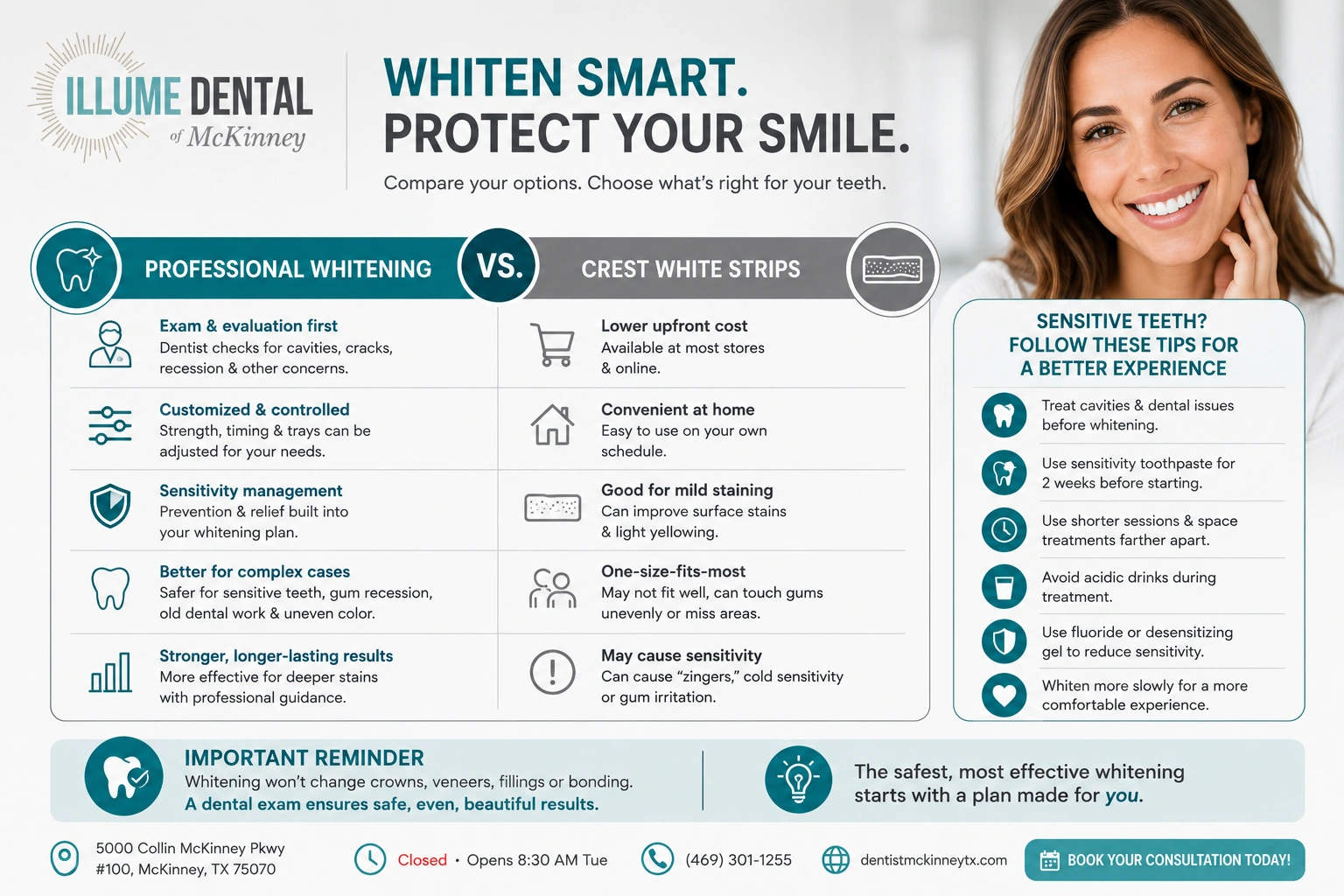
Crest White Strips can work well for mild surface staining.
Pros:
- lower cost
- easy to buy
- convenient at home
- good for mild yellowing
Cons:
- less customized fit
- can touch gums unevenly
- may miss crooked or rotated teeth
- can cause zingers or cold sensitivity
- will not whiten crowns, veneers, bonding, or fillings
For a healthy mouth, strips may be a reasonable starting point. But if your teeth already feel sensitive, they can become miserable fast.
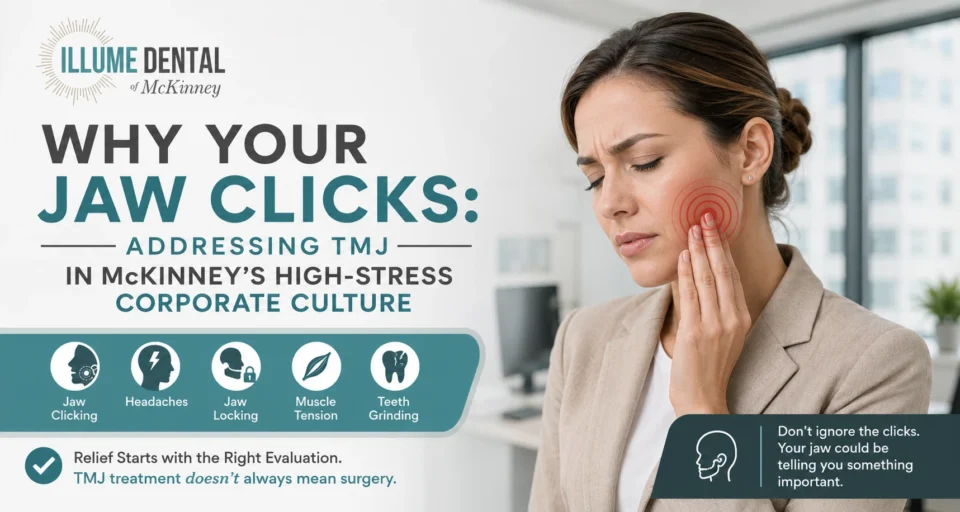
 If your jaw clicks every time you yawn, chew, or open your mouth wide, you're probably wondering one thing: Should…
Professional Whitening: Pros and Cons
Professional whitening is typically better when you want stronger results, better supervision, or a more controlled plan.
Pros:
- dentist checks for cavities, cracks, recession, and gum issues first
- trays or in-office systems can be more controlled
- strength and timing can be adjusted
- sensitivity prevention can be built into the plan
- better guidance if you have older dental work
Cons:
- higher cost
- still may cause sensitivity
- not every stain responds
- maintenance is still needed
Professional whitening is not automatically painless. It is just easier to manage safely. Proper maintenance can also help preserve teeth whitening changes.
The Biggest Difference: Pre-Whitening Exam
This is where professional whitening has the edge.
A dentist can tell you whether your “yellow tooth” is actually caused by:
- enamel staining
- internal discoloration
- old bonding
- a crown that will not whiten
- gum recession
- tooth trauma
- decay
- or thin enamel showing darker dentin underneath
White strips cannot tell the difference.
What If You Already Have Sensitive Teeth?
Do not start with the strongest product you can find.
A safer plan may include:
- treating cavities first
- switching to sensitivity toothpaste for two weeks before whitening
- using shorter whitening sessions
- spacing treatments farther apart
- avoiding acidic drinks during treatment
- using fluoride or desensitizing gel
- whitening more slowly instead of aggressively
Fast whitening is not always better whitening.
Cost: What Patients Should Expect
Crest White Strips are usually the cheaper option upfront.
Professional whitening costs more because it may include an exam, custom trays, stronger whitening materials, desensitizing support, and dentist guidance.
But the cheapest option is not always cheapest if it causes severe sensitivity, uneven results, or highlights old dental work that now needs replacement.
Bottom Line
Crest White Strips are best for: healthy teeth, mild staining, low budget, and patients who can tolerate some sensitivity.
Professional whitening is best for: sensitive teeth, older dental work, gum recession, uneven color, cosmetic goals, or patients who want a safer plan before whitening.
If you are unsure which option fits your teeth, Illume Dental of McKinneycan help you understand whether whitening is safe, what shade change is realistic, and how to reduce sensitivity before you start.
Teeth Sensitive After Whitening?
Get safe, professional whitening with less sensitivity. Call today to schedule your consultation.